Aesthetic dentistry · Cologne · On request
Tooth jewellery.A small detail.
A considered decision.
Would you like a single gem or a delicate gold decoration? We discuss whether tooth jewellery is an option for your teeth — including care, risks and later removal.
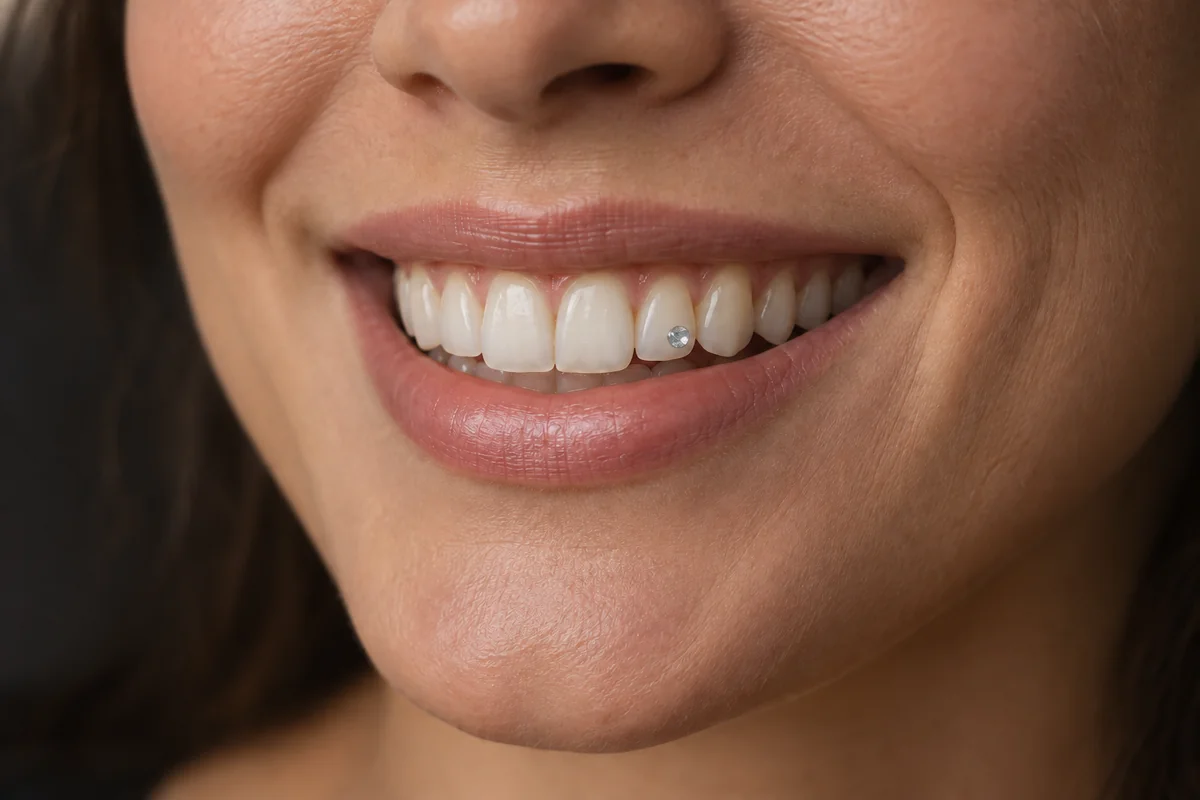 AI-generated
Discussed personally
Your wish is individual.
So is the decision.
We offer tooth jewellery on request. We clarify the materials and shapes available during our discussion. Whether the intended tooth is suitable is just as important.
We examine the tooth surface and gums and discuss daily cleaning. Existing fillings or ceramic restorations form part of this assessment. Please tell us about known material allergies, particularly to metals. The specific composition of the jewellery and bonding material needs to be suitable; we cannot make a blanket promise that they are allergy-free. We may advise against fitting it.
Your concerns in focus
What would you like to clarify before having tooth jewellery?
The tooth surface, care and possible removal are all part of the decision.
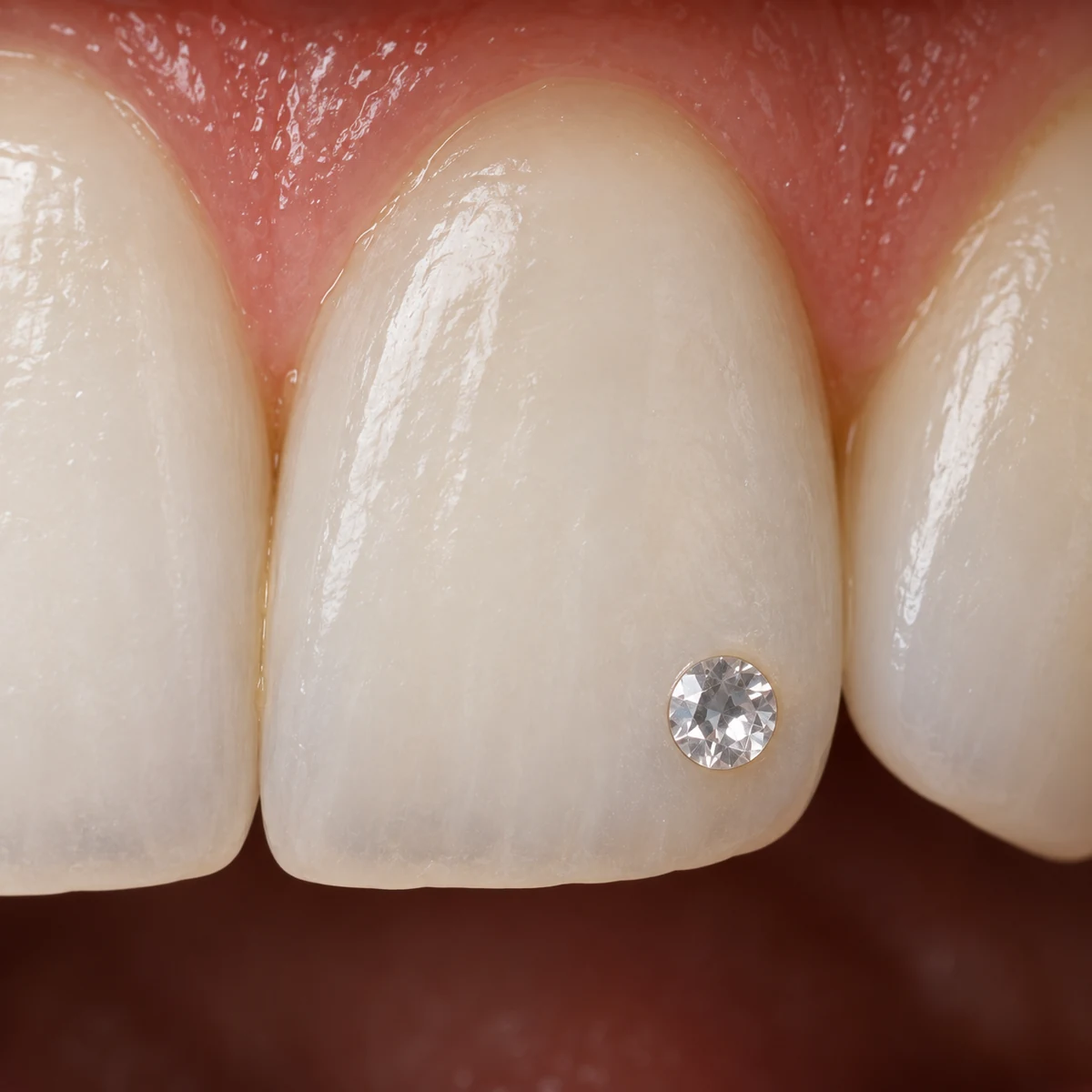 AI-generated
I would like to understand the risks
Consider the tooth surface
Plaque can build up around the edges of tooth jewellery and promote decay or gum inflammation. Enamel damage is also possible; the American Dental Association advises against tooth jewellery because of the risks.
Possible risksI would like to understand how it is attached
Examination and discussion first
Before possible placement, the tooth surface, gums and existing restorations are assessed. No hole is drilled for bonded tooth jewellery, but the surface is prepared for attachment.
Placement and careI would like jewellery removed
Have the surface checked
Removal should be carried out by a dentist so that bonding residue can be removed and the surface checked. An entirely unchanged tooth surface cannot be universally promised.
Checks and removalBefore deciding
Even a small accent
needs attention.
Plaque can accumulate around the edges of tooth jewellery. This can promote decay and gum inflammation. Enamel damage is also possible, particularly with incorrect placement or removal.
A dental examination does not make this cosmetic change risk-free. We therefore discuss the disadvantages before any possible placement. You can decide against it at any time.
Professional organisations such as the American Dental Association advise against tooth jewellery because of possible health risks.
If you choose to proceed
Position, attachment
and care go together.
After examination and explanation, we agree on a suitable piece and its position. No hole is drilled for bonded tooth jewellery. The tooth surface is prepared for adhesive bonding; the jewellery is attached with a dental bonding material.
How to clean the area and what to bear in mind immediately after the appointment also depend on the material used. You receive advice tailored to your treatment. We make no fixed promise about how long the jewellery will stay in place.
Day to day
Care for it carefully.
Brush regularly with fluoride toothpaste and clean between your teeth. The edges around the jewellery also need attention. At a check-up or professional dental cleaning, please mention the area.
If something changes
Have it checked at the practice.
If the jewellery becomes loose, the area hurts or the gums are irritated, arrange a check-up. Please do not use household glue or try to prise the jewellery off yourself.
Removal should also be carried out by a dentist. Bonding residue is removed and the surface checked. An entirely unchanged tooth surface cannot be universally promised.
Information to help you decide
Weigh up a small detail carefully
Tooth jewellery is not without risk.
Understand the risks first
Plaque can remain around jewellery edges. Decay, gum inflammation or enamel damage are possible; the American Dental Association therefore advises against tooth jewellery.
Have the tooth examined
Before possible placement, the tooth surface, gums and existing restorations are assessed. An examination does not make the procedure risk-free; choosing not to proceed remains an option.
Consider care
Even small decorative pieces create additional edges. Discuss how the area can remain accessible for cleaning and which changes you should mention at check-ups.
Plan for removal
Later removal also belongs in a dentist's hands. The surface needs checking afterwards; an entirely unchanged tooth surface cannot be promised.
Clarify costs beforehand
Materials, attachment and later removal may each incur costs. Ask about private costs in advance and do not assume reimbursement is guaranteed.
Frequently asked questions
Good to know.
What does tooth jewellery cost?
Materials and the work involved determine the individual costs. Tooth jewellery is a cosmetic service requested by you. Dental services and their fees under the German dental fee schedule (GOZ) are agreed in writing in a treatment and cost plan beforehand. Reimbursement by your insurer is not guaranteed.
Can tooth jewellery be placed on a crown or veneer?
This cannot be promised in general. An existing restoration must be taken into account when choosing materials and assessing possible damage. Please have the area examined first.
What happens if the jewellery comes off?
Have the tooth checked at the practice. We only decide whether reattachment would be appropriate after examining the surface and possible cause.
Can I have it removed later?
Removal by a dentist is generally possible. The approach depends on the piece, attachment and condition of the tooth. This may also involve separate costs, which we discuss with you beforehand.
On request
Let us discuss your wishes.
Together, we establish the options and limitations for your teeth.
Book a tooth jewellery consultationOr call us on 0221 669 401 80.