
Tooth preservation · Cologne
Inlays in Cologne.
Inlay, onlay or partial crown: the way a damaged back tooth can be restored depends on its remaining structure.
Understanding the defect
What is replaced?
What is preserved?
An inlay is made outside the mouth and then fitted into the prepared tooth. It replaces missing tooth structure within the chewing surface. If tooth cusps are also weakened, a more extensive restoration may be appropriate.
Direct filling
Composite is built up directly in the tooth. It can be used for many defects and can often be repaired if damage is limited. Size alone does not rule out a direct filling.
Inlay
A custom-made insert closes the defect without covering the tooth cusps. The remaining parts of the tooth must be sufficiently stable for this.
Onlay or partial crown
The restoration includes weakened cusps or larger areas of the chewing surface. The terms overlap to some extent. To help you decide, we explain on the tooth which surfaces are to be covered.
Full crown
Severely damaged teeth may require a crown that more fully encloses the prepared tooth. First, we check whether a restoration preserving more tooth structure would be sufficient. Find out more under Crowns and dental restorations.
Explained with a model
An inlay restores part of the chewing surface.
The insert is made separately and fitted into the prepared tooth. The three explanations show what matters for coverage, material and fit.
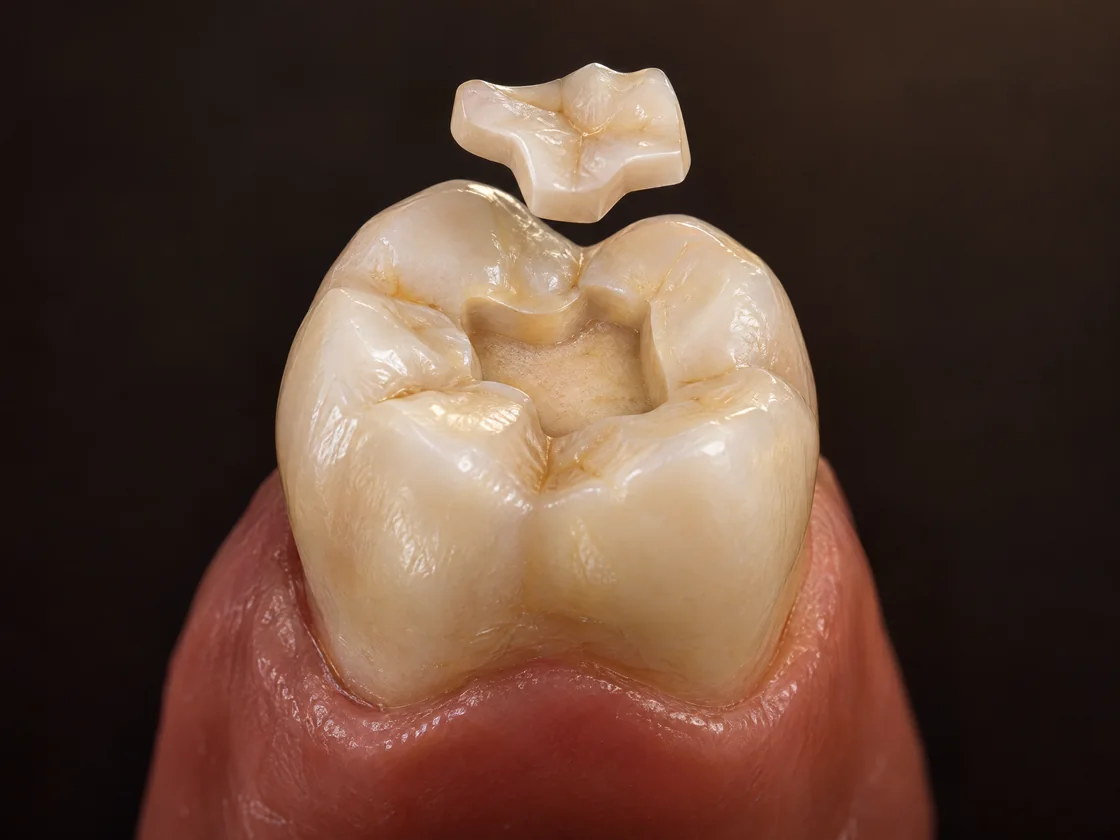 AI-generated
The tooth cusps are preserved
An inlay replaces tooth structure without covering the cusps. An onlay or partial crown can include weakened cusps; the remaining tooth structure is the deciding factor.
Compare inlays, onlays and partial crownsChoose the material according to the findings
Space, chewing forces, bonding and known intolerances matter when choosing the material. We discuss the restoration we can plan before it is made by the external laboratory.
More about materialsMake the restoration and check the fit
A scan or impression records the prepared tooth and its surroundings for manufacture by the external laboratory. Before fitting it, we check the fit, contacts and bite.
See the treatment pathwayAn illustrative teaching model, not a patient case. The illustration does not replace a dental examination.
The choice of material
Ceramic or gold?
For general context: ceramic can be matched to the tooth colour, while gold alloys remain visible. We discuss which restoration we can plan for your tooth after examination and before it is made by the external laboratory.
Factors to consider include the space for the restoration, chewing forces, the options for securing it and known intolerances. The material used to secure it also forms part of this assessment.
Considering the alternatives together
We explain why we recommend a particular approach and what it would involve. An inlay is neither automatically necessary because an old filling is large nor inherently superior to composite.
Feel free to bring previous treatment records and information about known reactions to materials. This helps us tailor the consultation to your situation.
The treatment pathway
Planned for your tooth.
Before a new restoration, we consider whether decay, a fracture or another finding needs treatment. We then plan the shape, material and appointments.
Prepare & record
The tooth is prepared according to the findings. An impression or digital scan records the situation together with the neighbouring teeth and opposing jaw.
Make
An external dental laboratory makes the restoration using these records. A temporary restoration usually protects the prepared tooth until fitting.
Fit & secure
We check the fit, contacts and bite. The restoration is then secured using a method appropriate to its material. Further reviews form part of aftercare.
Planning preparation and fitting
A restoration from the external laboratory generally requires separate appointments for preparation and fitting. Whether further appointments are needed depends on your findings. We discuss the process before starting.
Costs & reimbursement
What does an inlay cost?
The price depends on the extent of the defect, the material, manufacture and the treatment steps needed. You receive a clear cost plan in advance.
Inlays go beyond the filling care covered by German statutory insurance. For a medically necessary filling, the amount for the corresponding statutory benefit is credited. You pay the remaining costs yourself; a written agreement on additional costs is concluded before treatment. Fees are based on the GOZ, with material and laboratory costs added. The additional-cost arrangement does not apply when an intact filling is replaced solely at the patient's request.
This is distinct from the fixed-subsidy system for crowns and dental prostheses. Whether private or supplementary insurance covers further costs depends on your contract. If possible, submit the plan before treatment begins.
Useful information for your decision
What matters with an inlay
Fit starts with the existing tooth.
Assess the remaining structure
Not every larger defect automatically needs an inlay. What matters is how stable the remaining tooth walls are and the forces they must bear.
Distinguish the extent of coverage
An inlay lies within the tooth cusps. If weakened cusps need to be included, a more extensive restoration such as an onlay may be an option.
Compare materials
Ceramic can be matched to the tooth colour; gold alloys remain visible. Space, forces, bonding and known reactions to materials also inform the decision.
Understand manufacture
A scan or impression provides the basis for the external dental laboratory. A temporary restoration usually protects the prepared tooth until fitting. The appointments needed are discussed beforehand.
Clarify the full treatment and cost
Ask about preparation, manufacture and securing the restoration, as well as possible private additional costs. Reimbursement should be clarified with your insurer using the individual plan.
Everyday life & aftercare
Questions about your inlay.
How long does an inlay last?
Many restorations remain functional for years. A fixed lifespan cannot be promised for an individual tooth. New decay, fractures, forces from grinding and care affect its course. Clean your teeth and the spaces between them daily; new decay can also develop at the edge of an inlay. We show you suitable aids and tailor reviews and, if needed, professional teeth cleaning to your situation.
What happens if an inlay is damaged or loose?
Have the area examined and do not try to glue a loose restoration back yourself. We check the tooth and inlay. Depending on the damage, adjustments, a repair, re-cementing or a new restoration may be possible.
How long should I avoid eating after fitting?
This depends on how the restoration is secured and whether local anaesthetic was used. Wait until sensation has fully returned and follow our advice for your tooth. A single waiting time does not suit every technique.
How do I care for the restored tooth?
Clean your teeth and the spaces between them regularly. The junctions between tooth and restoration remain susceptible to plaque and decay. We show you suitable aids and tailor reviews and any professional teeth cleaning to your needs.
Consultation in Cologne
Which restoration
does your back tooth need?
We discuss fillings, inlays and partial crowns in light of your findings and explain the work involved and the costs.
Book an inlay consultation