A tired jaw in the morning. Clenching during the day. Pain when chewing. These observations deserve attention. A dental examination can help identify what is behind them and what to do next.
TMD and teeth grinding are sometimes related, but they describe different things.
Three useful distinctions
Understand first. Then decide.
01
Bruxism
Clenching is not always audible.
Bruxism describes chewing muscle activity: grinding, clenching or bracing the jaw. It can occur while awake or asleep.
01Awake: often unnoticed in daily life
02Asleep: not under conscious control
When does it matter?
Bracing without tooth contact can also be part of it. Bruxism alone is not automatically a disorder. Symptoms, damage and individual risks determine its significance.
02
TMD
Consider muscles and joints too.
Temporomandibular disorders (TMD) are conditions involving pain or impaired function of the chewing system, particularly the chewing muscles and jaw joints.
01Chewing muscles: tension and pain
02Jaw joints: movement and function
Is TMD the same as grinding?
No. They can occur together, but do not have to. Similar symptoms may also have other causes. The examination therefore includes distinguishing dental conditions and other sources of pain.
03
Occlusal splint
Protection with a clear purpose.
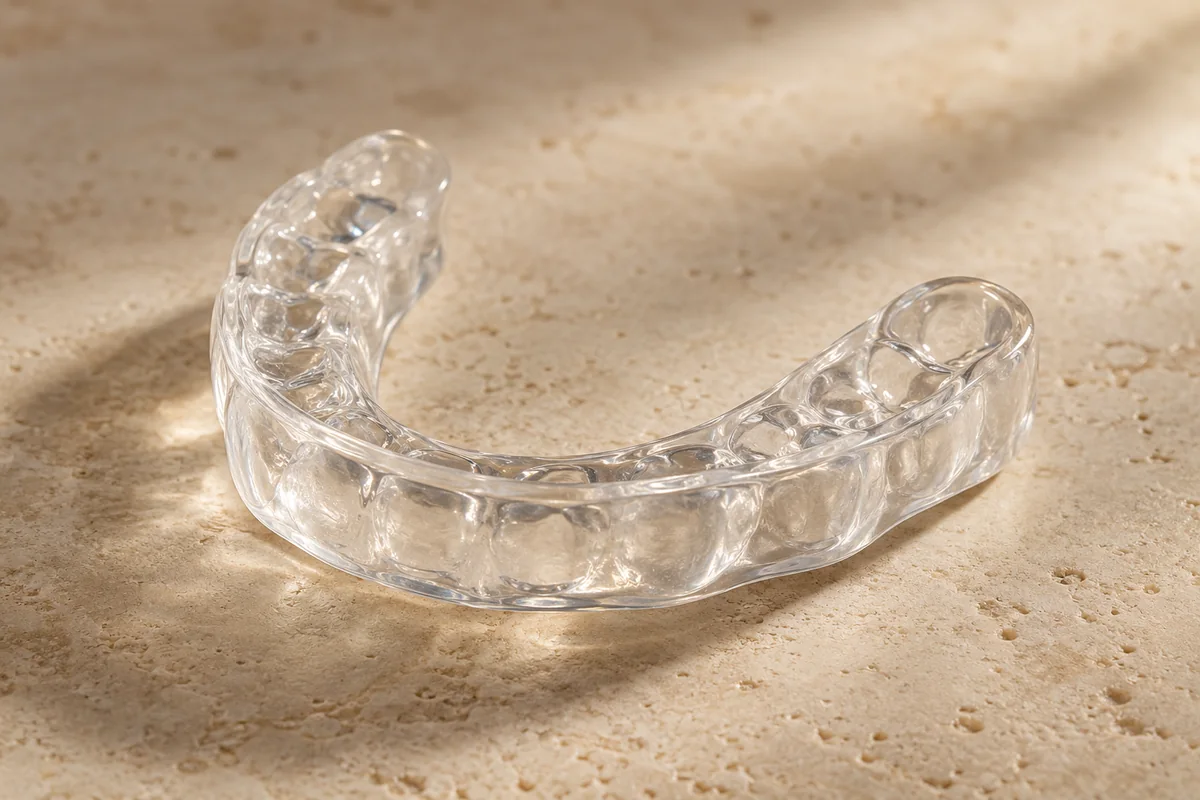
A splint can protect teeth and restorations from mechanical stress. Whether it is appropriate depends on the findings and the treatment aim.
01Define the aim
02Check the fit
03Review progress
Does a splint stop grinding?
It does not reliably eliminate the muscle activity permanently. Relief from TMD pain cannot be promised either. New pain while wearing a splint should be assessed by a dentist; please do not adjust it yourself.
AI-generated
Illustrative example of an occlusal splint. Its shape and design depend on the individual clinical findings.
No single sign establishes TMD or bruxism. It helps to note when you first noticed something and the situations in which it occurs.
Pain when chewing or yawning
Recurring discomfort in the cheeks, in front of the ear or in the jaw should be examined.
A jaw that catches
Restricted mouth opening or repeated locking warrants assessment. Urgent warning signs are listed with the quick check.
Tired chewing muscles in the morning
Also mention any night-time grinding sounds that someone else has noticed. These are clues, not a diagnosis.
Changes to your teeth
New sensitivity, chipped edges or increasing wear can have various causes. This is why the teeth are also examined.
Sleep that leaves you tired
Observed breathing pauses and marked daytime sleepiness should also be discussed with a doctor. Grinding alone does not mean sleep apnoea.
Five questions for orientation
TMD quick check. What have you noticed?
After each choice, general information about that topic appears immediately. The questions help you prepare for a conversation. They are not a scientifically validated test and do not provide a diagnosis, assess your symptoms or recommend a treatment.
Optional, with no sign-in. Your choices are neither saved nor sent, and are not passed to the booking service.
Without JavaScript, no additional guidance is displayed. Use the questions to prepare for a conversation; if you have symptoms or questions, please arrange an appointment.
Discuss it in person rather than self-diagnose.
Choosing “No” does not rule out TMD, bruxism or other conditions. If you have symptoms or questions, please arrange an in-person examination. Your usual check-ups remain important.
For TMD, initial care usually focuses on conservative, reversible measures. Not everyone needs a splint or the same combination of approaches.
Notice your habits
For daytime clenching, reminders may help you consciously relax your chewing muscles. Suitable exercises should be demonstrated for your individual needs.
Protect the teeth where needed
If an occlusal splint is an option, its purpose, wearing instructions and reviews are discussed. Protection and pain management serve different purposes.
Support movement and manage symptoms
Physiotherapy may form part of treatment for muscle or joint symptoms. The examination guides which exercises are appropriate.
Consider sleep and other pressures
Relaxation, sleep habits and further medical assessment where needed may be important. Mention any medicines you take; do not stop them on your own.
Look further if pain persists
Depending on progress, other clinical disciplines and pain management support may be useful. The plan is reviewed in light of symptoms and findings.
Prepare for your examination
From your observations to the next step.
01
Describe your symptoms
When did it start? What changes the pain? You are welcome to bring brief notes, a list of medicines and any splint you already use.
02
Examine the teeth and jaw
Depending on your symptoms, the assessment includes the teeth, chewing muscles, jaw joints and range of movement. Further investigations depend on the specific clinical question.
03
Agree on a plan together
We discuss the findings and possible next steps, including the treatment aim, alternatives, what is involved and an appropriate time for review.
Frequently asked questions
Other questions you may have.
Does every clicking sound need treatment?
Painless joint sounds without restricted movement are common and usually need no treatment. If pain, restricted movement or repeated locking develops, this should be examined.
Is teeth grinding always caused by stress?
No. Stress can contribute, but does not explain every case. Sleep, inherited factors, substances such as caffeine or alcohol, and certain medicines may also play a role.
Does my bite need to be permanently changed?
Not as a routine approach. The S3 guideline advises against reshaping or permanently building up teeth to treat the cause of bruxism. Restoring teeth that are already damaged is a separate question.
Can I start by discussing what I have noticed?
Yes. You do not need to diagnose yourself or decide on a splint beforehand. An examination and a conversation are the starting point.
With your consent, we use Google Ads to attribute clicks on our appointment booking links and phone number to adverts. Google processes technical usage data and sets or reads cookies. Data may be processed in the USA. Advertising measurement does not load without your consent. Google Analytics and personalised advertising are not enabled. Google Maps loads separately when you choose to open the map. You can change your choice here at any time.