Dentistry · Cologne
Fixed dental restorations in Cologne.
Crowns & bridges.
Our focus is on fixed restorations: crowns, bridges and implant-supported restorations. We plan with you based on your teeth, your wishes and the medical options.
Book a restoration consultation
Telephone: 0221 669 401 80
The options
Preserve, restore,
replace missing teeth.
A severely damaged tooth needs a different plan from a gap. We therefore begin by assessing the existing teeth, gums and bite.
Crown or partial crown
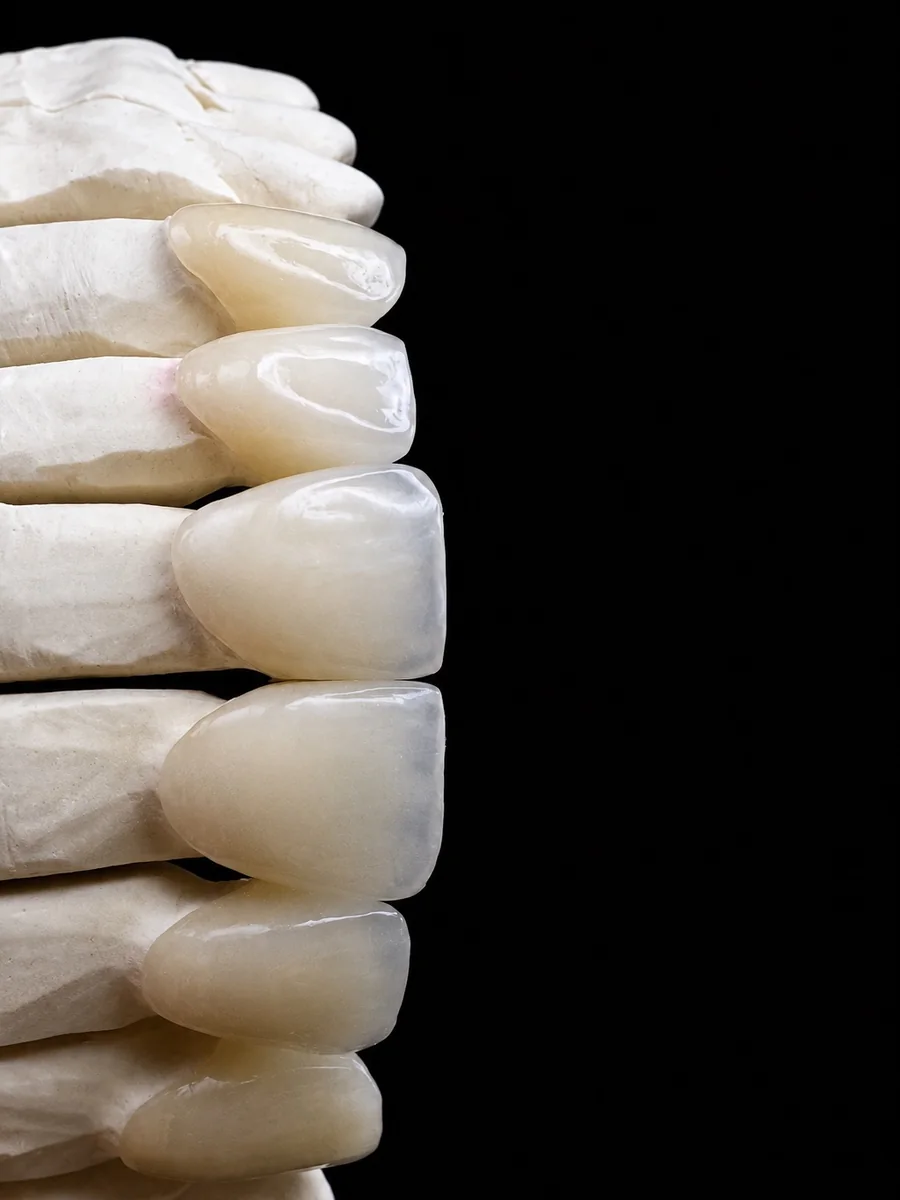
A crown covers a prepared natural tooth. It may be an option when a filling cannot adequately restore the defect. A partial crown can leave suitable undamaged areas uncovered.
Bridge
A bridge spans a gap and is supported by suitable abutments. In a conventional tooth-supported bridge, neighbouring teeth are prepared for this purpose. Implants can also support bridges.
Preserve tooth structure
We assess how much healthy tooth structure remains and which restoration is suitable. A partial crown may be sufficient if the whole tooth does not need to be covered.
Implant-supported restorations
Dental implants act as artificial tooth roots. Individual crowns or fixed bridges can be attached to them. Implant treatment includes a surgical and a prosthetic part.
Explained using a model
Understand a crown using a model.
The crown covers a prepared natural tooth. Start the short animation to see a simplified illustration of fitting. Other forms of dental restoration serve different purposes.
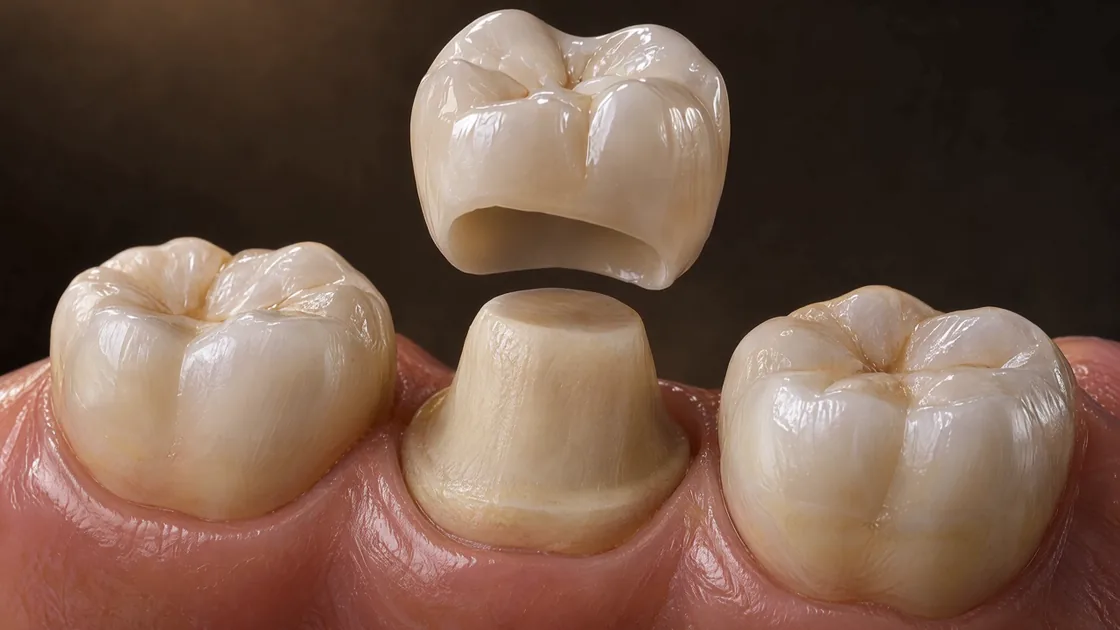 AI-generated
Your own tooth remains the foundation
A crown requires enough sound tooth structure to support it. Before planning, we therefore also assess the tooth root, supporting structures and any preliminary treatment needed.
The crown restores the outer shape
A crown covers the prepared tooth. Its shape, material and contacts are planned to suit the situation. We work with an external dental laboratory for laboratory-made restorations.
The margin needs care
A crowned tooth can still develop disease. The junction with the tooth and the spaces between teeth in particular need thorough cleaning and regular checks.
Caring for restorations every dayIllustrative teaching model, not a patient case. The illustration does not replace a dental examination.
Our focus
Firm support.
Individually planned.
For a fixed restoration, the supporting teeth or implants must be suitable. The positions of missing teeth, the remaining tooth structure and the forces during chewing all inform the plan.
We discuss how the restoration fits into your bite and how to clean crown margins and areas beneath a bridge effectively.
What matters in the long term
Fit, loading and care are as important as shape and colour. Regular check-ups help identify changes in teeth, gums and restorations.
If a fixed restoration is not appropriate or not desired, we also discuss removable alternatives. The suitable solution depends on your findings.
A missing tooth
Bridge or implant?
If the neighbouring teeth are healthy, an implant can avoid the preparation needed for a conventional bridge. If they already have large fillings or crowns, a bridge may be an appropriate approach.
An implant requires surgery, suitable bone and time to heal. A bridge needs strong supporting teeth or implants. Neither option suits every clinical situation.
What guides the decision for you
We compare the extent of treatment, the prognosis of existing teeth, care and costs. Your wishes and the medical requirements determine which approach is appropriate.
For certain gaps in the back teeth, monitored acceptance of the existing situation may also be an option after professional assessment. Function, support and the expected future course are decisive.
Material & design
All-ceramic restorations
are not all the same.
Various materials can be used for crowns and bridges, including metal-ceramic and all-ceramic materials. All-ceramic options include glass ceramics and zirconia ceramics, for example.
Their properties and uses differ. We choose the material and design according to the position, available space, loading and extent of the restoration. The colour of the tooth underneath can also play a part.
Planning and dental technology work together
The restoration should suit your bite and neighbouring teeth. An external dental laboratory makes it according to our plan. We coordinate shape, colour and contacts with the dental technicians. A try-in allows the planned restoration to be assessed before final fitting.
Ceramic can be damaged, just like other materials. We therefore combine advice on materials with a discussion of which checks, repairs or protective measures might be needed over time.
From planning to everyday life
The steps are
discussed in advance.
Examination & planning
We assess the teeth, gums and bite, carry out necessary preliminary treatment and explain the alternatives. You receive a treatment and cost plan.
Preparation & fabrication
An impression or scan provides the basis for the dental laboratory. Depending on the restoration, teeth are prepared and given temporary restorations in the meantime.
Fitting & aftercare
We check fit, bite and handling. You learn how to clean your restoration. Further appointments depend on your findings and how you adapt to it.
Fixed subsidy and personal contribution
German statutory health insurers subsidise medically necessary dental restorations according to the findings. The basic subsidy is 60 per cent of the average cost of the specified standard treatment, rising to 70 or 75 per cent with the relevant evidence of preventive check-ups. These percentages do not automatically apply to the bill for your chosen restoration.
Additional services or a different type of restoration may increase your personal contribution. Private services are billed under GOZ. A hardship provision may apply for low incomes; the health insurer assesses eligibility. Have the treatment and cost plan approved before treatment begins. Private and supplementary insurers reimburse according to their policy terms.
Information to help you decide
Fixed restorations should suit your everyday life
Consider function, care and the work involved together.
Understand the starting point
Restoring a damaged tooth and closing a gap are different tasks. The examination also includes the other teeth.
Weigh up alternatives
Crowns, partial crowns, bridges and implant-supported restorations serve different purposes. Ask which teeth would be involved and what each option might entail.
Plan for care
Crown margins and areas under a bridge must be accessible for cleaning. Appropriate cleaning aids and clear instructions are part of the treatment.
Continue care
Decay can still develop under crowns and in supporting teeth. Suitable cleaning and regular check-ups therefore remain important after restoration.
Review the plan in advance
Ask for separate explanations of standard treatment, your chosen restoration and your personal contribution. The statutory fixed subsidy is based on the findings, not your total bill. The cost plan and possible reimbursement are clarified before treatment begins.
Your questions
Everyday life with dental restorations.
Can I eat normally with dental restorations?
Crowns and bridges are intended to support chewing. Your bite may feel unfamiliar at first. We give you advice for the initial period. If you have pain, an uncomfortable bite or a loose restoration, please arrange a check-up.
Can my own tooth remain the foundation?
For a crown or partial crown, the tooth must be strong enough to support it. We assess the remaining structure, tooth root and supporting tissues. If the tooth can be preserved, it can form the foundation of the restoration.
How do I keep the restoration clean?
Bridge units, crown margins, supporting teeth and implants need targeted cleaning. We show you suitable aids and plan check-ups and, if needed, professional cleaning.
Plan together
A restoration
that suits your everyday life.
We explain the options for your dental situation and take time to discuss the next steps.
Book a restoration consultation