Aesthetic dentistry · Cologne
Veneers in Cologne.Ceramic, individually planned.
Thin ceramic shells could change the shape and colour of your front teeth. At SMILE meets DESIGN, planning begins with your wishes — and with what your teeth need.
The principle
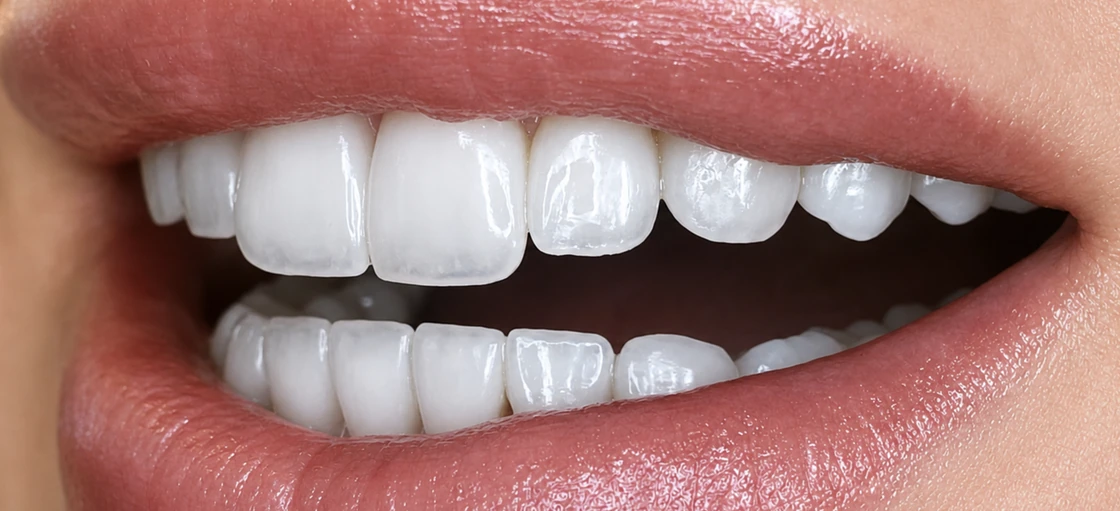
No tooth has just one colour.
Neither does a well-made veneer.
A natural tooth shows different shades and lets light pass through differently at the biting edge than at the neck. These subtle transitions are a starting point for designing a veneer: a thin shell bonded to the tooth.
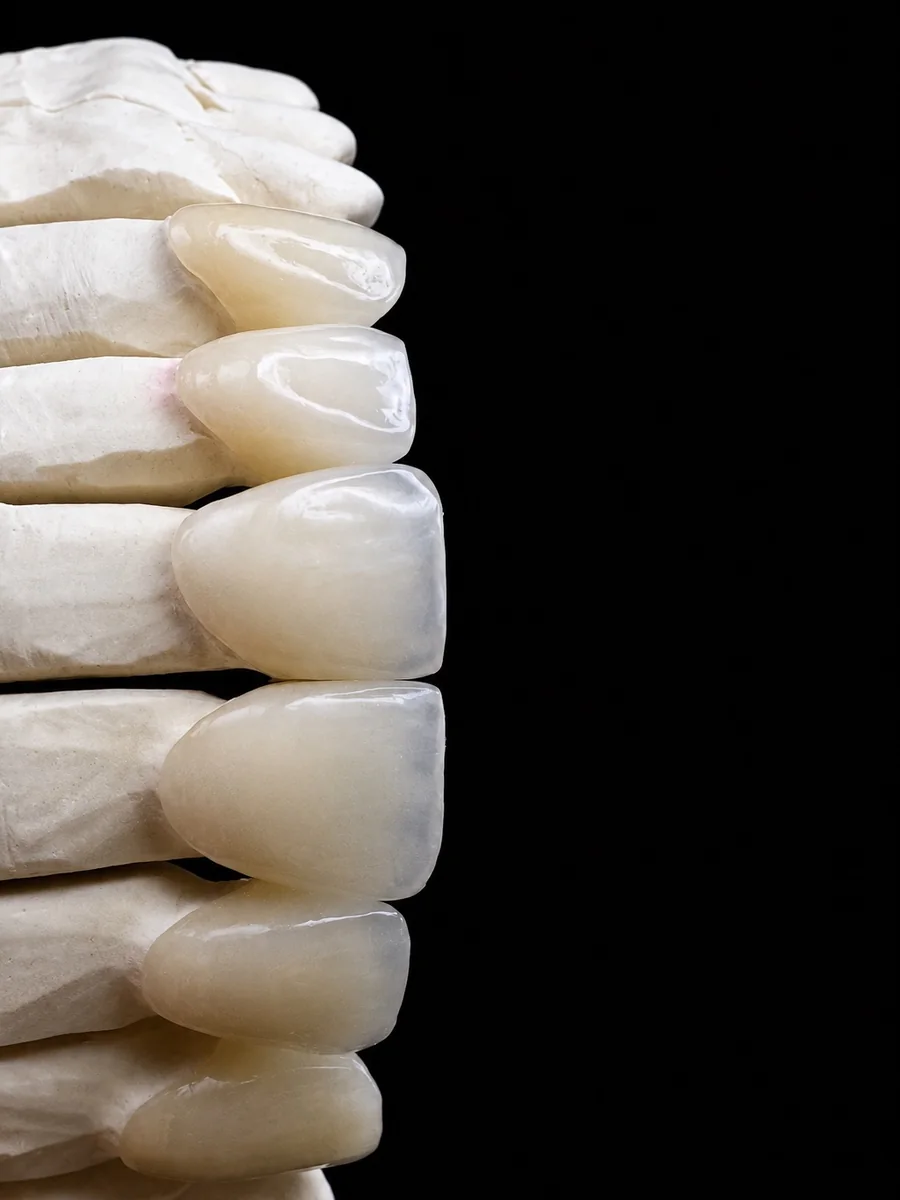
We work with an external dental laboratory for laboratory-made restorations. The colour, surface and shape of ceramic veneers are coordinated according to the individual plan. We discuss the possible materials and manufacturing methods before treatment.
How much should change is decided beforehand. At Dr. med. dent. Niusha Barahmand Pour’s practice in Cologne, we assess the face, smile line, tooth position and bite — as well as the condition of the teeth and gums.
Your concerns in focus
What would you like to know about veneers?
Explore three questions that matter before deciding on ceramic.
The shape or edges bother me
Shape starts with the findings.
Changes in tooth shape, small gaps or damaged edges can be reasons for a consultation. Whether ceramic is an option also depends on tooth structure, the bonding surface and the bite.
Understand the requirementsI want to preserve tooth structure
How much preparation would be needed?
A veneer without preparation requires enough space and a suitable tooth position. If tooth structure would need to be changed, the extent and implications are discussed beforehand.
More about preparing teethI would like to see a preview
Look at a shape together.
A mock-up can temporarily show a planned tooth shape in the mouth and support the discussion of your wishes. It remains a planning aid, not a promise of the final result.
The preview within the processA guide for the conversation, not a diagnosis or treatment recommendation. Your selection is not stored or transmitted.
Suitability & alternatives
Does ceramic suit
your starting point?
A visible concern alone does not determine the treatment.
When veneers might be an option
For example, for changes in tooth shape, small gaps, damaged edges or discolouration that cannot be sufficiently addressed in other ways. Factors include the existing tooth structure, the bonding surface for the ceramic and the forces when biting together.
The number of veneers also follows from planning. Sometimes the concern affects a single tooth, sometimes several visible front teeth. A fixed number cannot be determined before the examination.
What we clarify first
Decay, inflamed gums or defective restorations may require preliminary treatment. For significant misalignment, orthodontic correction may be more appropriate or may come before ceramic treatment. Grinding, clenching and severe wear must be considered in the plan.
If colour is the main concern, Teeth whitening may be an option. For small additions to the shape, Composite Bonding may be sufficient. Choosing not to make a change also remains an option.
Preserving tooth structure
Veneers without removing enamel?
Non-prep describes a restoration without prior tooth preparation; ceramic can be used for this too. Whether it would be appropriate depends particularly on tooth position, available space and the desired shape. Added ceramic must not make the tooth inappropriately bulky.
Other starting points may require targeted preparation. We discuss beforehand how much tooth structure would need to be changed. Preserving enamel is an important factor in bonding and is considered during planning.
The process at our practice
From the first conversation
to the follow-up check
The steps work together. The number and spacing of appointments depend on the findings and preliminary treatment.
Consultation & examination
We discuss your wishes, examine the teeth and gums and consider the bite and existing restorations. We also discuss alternatives.
Photos & digital scan
Photographs and an intraoral scan support planning of shape and proportions. Depending on the question, Smile Design adds to our assessment together.
A preview where helpful
A mock-up could temporarily show the planned tooth shape in the mouth. It helps discuss your wishes and assess the design; it is a planning aid, not a promise of a result.
Preparing the teeth
The agreed preparation is carried out where required. Whether temporary restorations would be needed depends on the treatment plan.
Fabrication in the dental laboratory
The ceramic is made individually. Tooth colour, shape and surface are coordinated according to the plan developed together.
Try-in & bonding
Before bonding, we check fit, colour and bite. This is followed by a check-up and care advice. We agree further appointments according to your needs.
Would you like to discuss your options? Book a veneer consultation

Discuss your individual situation
What do veneers cost
at our Cologne practice?
The work involved depends on the number of teeth, your starting point, necessary preliminary treatment, materials and laboratory work. We bill aesthetic veneer treatments according to the German fee schedule for dentists (GOZ).
Before treatment begins, you receive an individual treatment and cost plan. Purely cosmetic services requested by you and their fees are agreed in writing within it in advance. This lets you take time to consider the planned steps and costs.
A purely aesthetic treatment is usually self-funded. Clarify beforehand, directly with your private or supplementary insurer using the plan, whether any services will be reimbursed.
On our dedicated website, you can read more about veneer costs and the factors involved .
You can learn more about your dentist in her Portrait of Dr. Niusha Barahmand Pour.
Longevity
Many years are possible.
A fixed lifespan cannot be promised.
In a retrospective long-term study at Innsbruck University Hospital involving 318 ceramic veneers in 84 people, the estimated survival rate after ten years was 93.5 per cent. This describes the restorations studied, not results from our practice or a personal prognosis. A restoration may also remain in place while still requiring adjustments or repairs.
The initial findings, bonding surface, fabrication and loading influence the course over time. Grinding and clenching can increase the risk. A recent clinical study also highlights the importance of preserved enamel for longevity.
Aftercare
Care for the restoration over time
Like natural teeth, veneers need daily care: brush twice a day with fluoride toothpaste and clean between the teeth. Ceramic does not protect the tooth underneath from decay.
At check-ups, we assess the restorations and gums. How often professional teeth cleaning would be appropriate is decided individually. For grinding, a fitted protective splint may form part of aftercare.
Do not use your teeth as tools to open packaging. If a veneer becomes loose, a piece breaks off or your bite feels different, contact the practice for a check-up.
Explore further
More information on veneers.de
Our dedicated website gives individual questions more space: how is a veneer made, which findings might make it suitable, and how should long-term studies be interpreted?
Materials & craftsmanship on veneers.de
Findings & treatment options on veneers.de
Longevity & studies on veneers.de
Information to help you decide
Before ceramic: five questions to help you decide
A change should suit your teeth in the long term too.
What would you like to change?
Describe as specifically as possible whether the tooth shape, colour or an edge bothers you. This determines which options are worth comparing in the first place.
What alternatives are available?
Depending on the findings, a small composite addition, whitening or orthodontic correction may be options. Ceramic is not the first step for every aesthetic concern.
What remains of the tooth?
Ask whether tooth structure would need to be removed and why. After preparation, the tooth’s original condition cannot be restored.
What affects longevity?
Grinding, the bite and the existing tooth structure belong in the plan. Ceramic can also be damaged and may later need repair or replacement.
What does the cost plan include?
Ask for preparation, ceramic and possible follow-up services to be explained. For private services, possible reimbursement should be clarified directly with the insurer before treatment starts.
Frequently asked questions
What you may want to know beforehand
Are veneers possible for crooked teeth too?
That depends on tooth position and the bite. A visible correction using ceramic would not change the actual position of the teeth. With significant misalignment, orthodontic correction may therefore be more appropriate or may come first. We discuss the options after the examination.
Is it always possible without tooth preparation?
No. Non-prep is only an option if there is enough space for the added ceramic and the planned shape is suitable. In other cases, preparation would be needed. Before you decide, we explain which tooth structure would be changed.
How do veneers differ from composite bonding?
Ceramic veneers are made in a laboratory and then bonded in place. With composite bonding, tooth-coloured material is shaped directly on the tooth. This may be sufficient for small additions; the material and extent depend on the findings, loading and your goals. Both procedures may need later care or adjustments.
How many appointments should I allow for?
Several steps are needed: examination and planning, a preview and preliminary treatment where appropriate, preparation, try-in and bonding, and a follow-up check. How these steps are spread across appointments depends on your situation. We discuss the process and intervals during planning.
Can I return to my original teeth later?
After preparation, the original condition cannot be restored. If such a restoration is removed, a new one is usually needed. Even with non-prep veneers, later removal should not be planned as a residue-free or risk-free return to the starting point.
What if I grind my teeth?
This is an important part of the examination. Increased loading can raise the risk of damage to veneers. Depending on the findings, grinding would first need to be taken into account and a protective approach planned; in some situations, another restoration would be more appropriate.
What do veneers cost, and does health insurance pay?
Costs depend on the findings and the work involved. Before treatment, you receive an individual treatment and cost plan based on GOZ. Purely cosmetic services requested by you and their fees are agreed in writing beforehand. Purely aesthetic veneers are usually self-funded; clarify any possible reimbursement with your insurer using the plan before treatment begins.
What if an edge chips later?
Have the tooth and restoration examined. Depending on the damage, repair or replacement may be an option. Please do not try to glue ceramic back yourself; arrange a check-up.
Consultation in Cologne
Veneers begin with a conversation.
We clarify what you would like to change and which approach may suit your teeth. You will find SMILE meets DESIGN at Sankt-Apern-Straße 17–21, in central Cologne.
Book a veneer consultationOr call us on 0221 669 401 80. Contact & directions