Your dental questions

Your question.
Clearly answered.

Bleeding gums, a damaged tooth or questions before treatment? Find a clear first answer and explore what matters in more detail.

Find my question

A closer look

A picture makes it clearer.

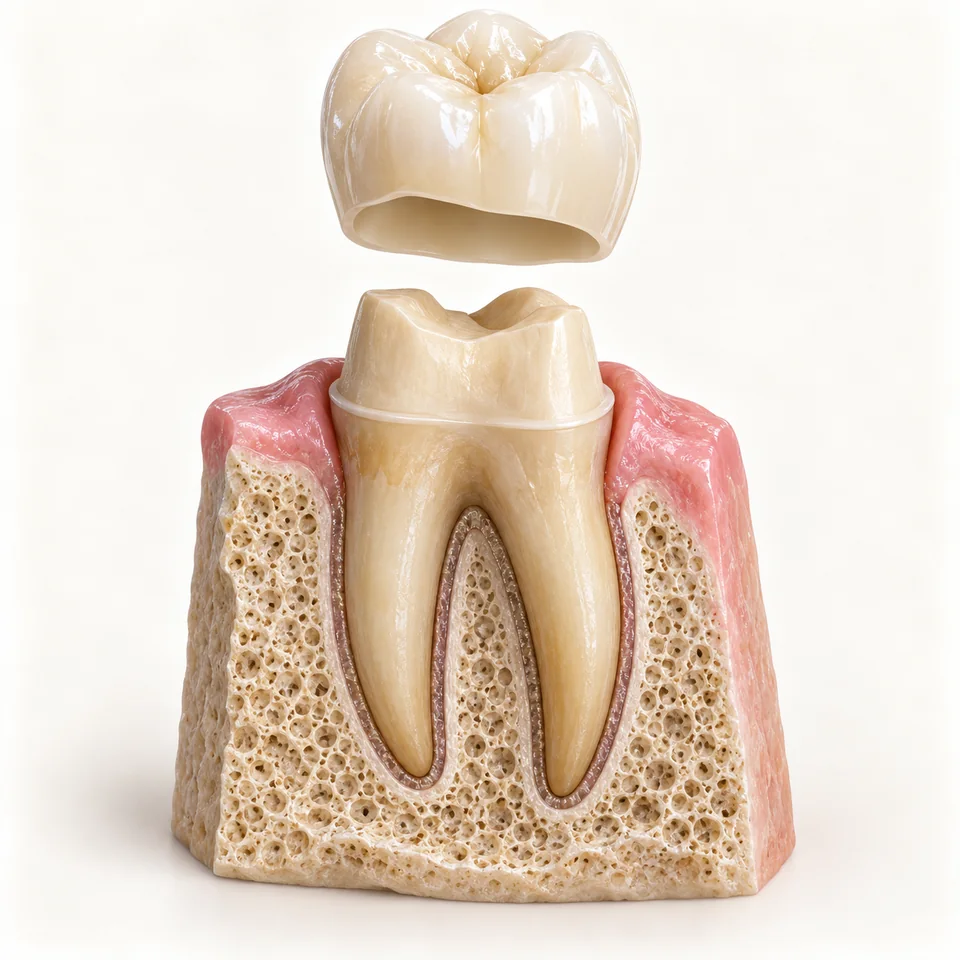
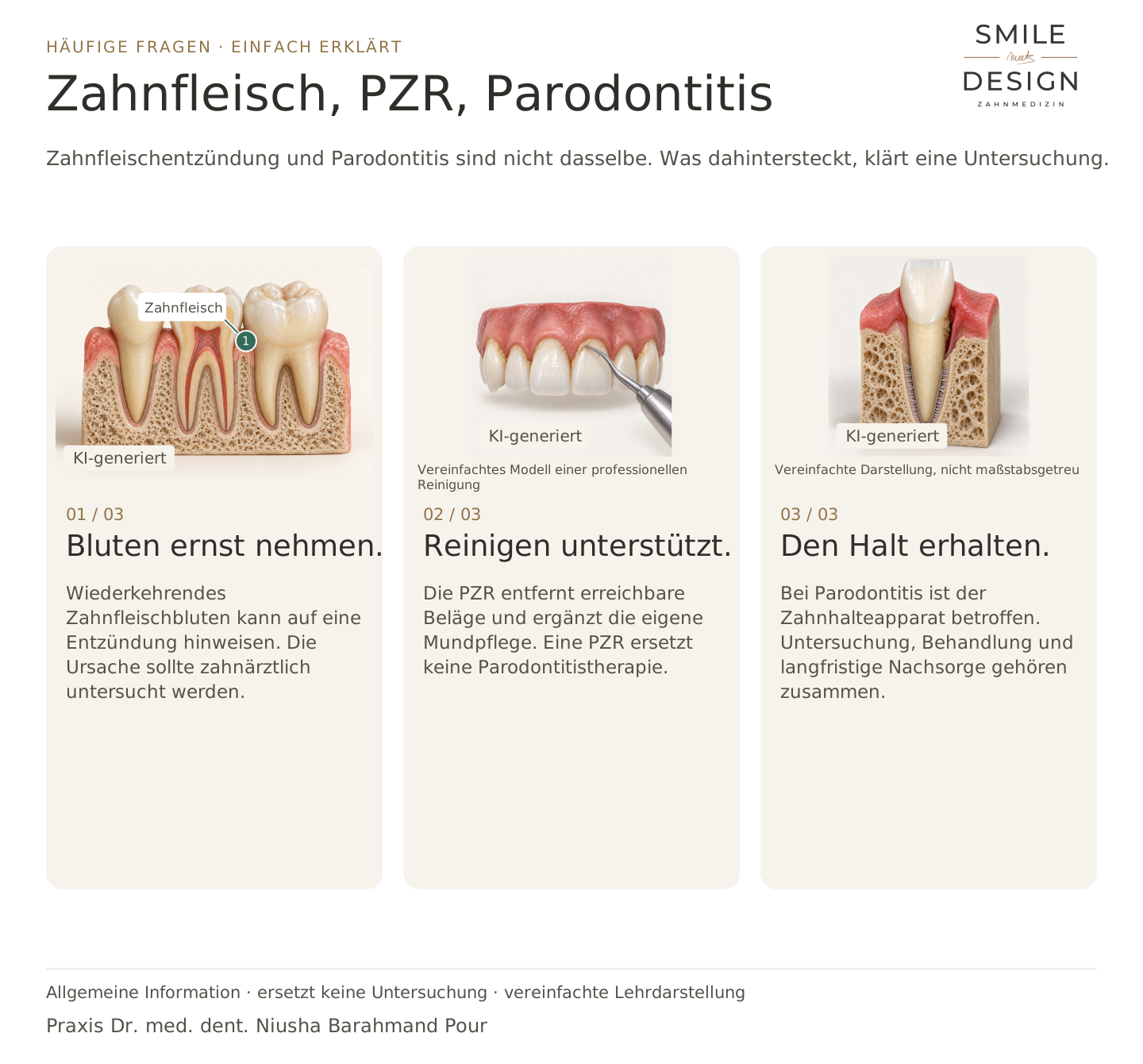
A cross-section model shows teeth, gums and bone. AI-generated0:27

Explained in 27 seconds

Why is professional cleaning not the same as periodontal treatment?

Three steps connect home care, professional cleaning and treatment of the tissues supporting your teeth.

Take bleeding seriously.

Repeated gum bleeding can indicate inflammation. A dental examination should identify the cause.

Cleaning supports care.

Professional cleaning removes accessible deposits and complements home care. It does not replace periodontal treatment.

Protect the supporting tissues.

Periodontitis affects the tissues supporting your teeth. Examination, treatment and long-term follow-up belong together.
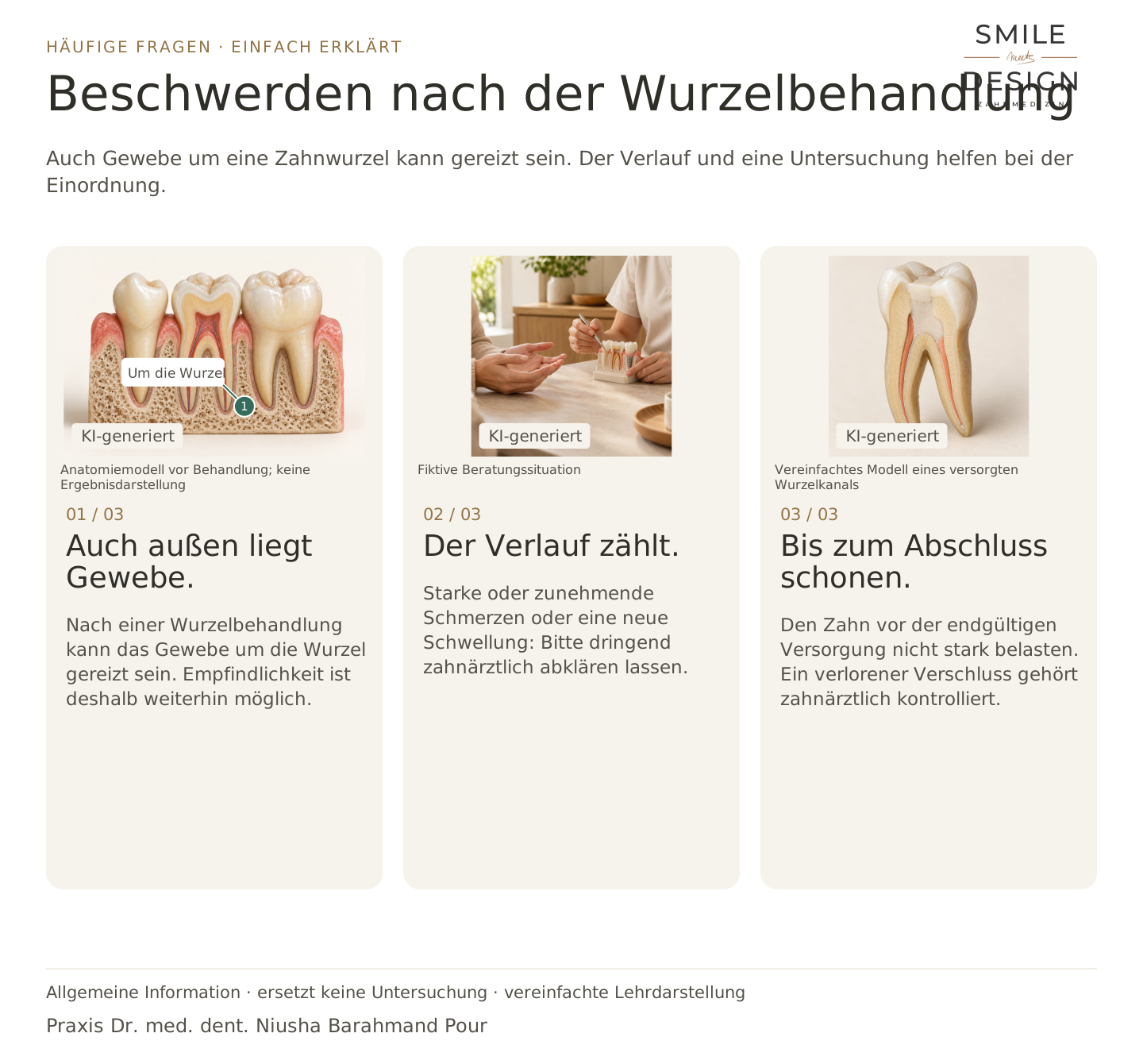
About periodontal treatmentInfographic (German)

Cross-section anatomy model: sensitive tissues also surround the roots. AI-generated0:27

Explained in 27 seconds

Why can a root-treated tooth still be sensitive?

The tissues around the root also matter. The way symptoms develop and a dental examination help clarify the cause.

The surrounding tissues matter.

After root canal treatment, tissues around the root can still be irritated. Sensitivity is therefore possible.

Watch the course of symptoms.

Severe or increasing pain or new swelling needs urgent dental assessment.

Protect the tooth until completion.

Avoid heavy biting on the tooth before the final restoration. A lost temporary seal needs dental attention.

Root canal treatment & aftercareInfographic (German)

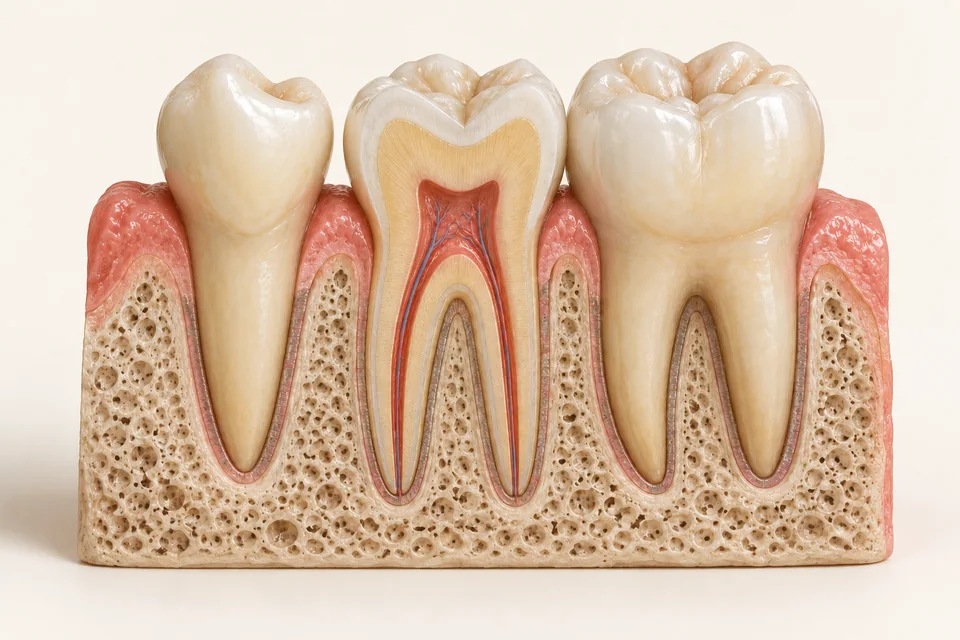
Model of a crown above a prepared tooth. AI-generated0:27

Explained in 27 seconds

Damaged tooth or missing tooth?

The starting situation helps determine which type of restoration may be suitable.

Part of the tooth is missing.

The restoration depends on how much healthy tooth remains. A crown is one possible option.

A whole tooth is missing.

Depending on the findings, different restorations may be suitable for a gap, such as a bridge or an implant.

Examination guides the choice.

Teeth, gums, bone, cleaning and personal preferences influence the choice. No single solution suits everyone.

Explore dental restorationsInfographic (German)

Simplified teaching illustrations. They explain general principles and cannot show what applies to your teeth. The films are in German, without audio; the explanations beside them are in English.

What is on your mind?

Find an answer.

30 answers

Prevention & gums

Is professional cleaning the same as tartar removal?

Not quite. Tartar removal mainly removes hardened deposits. Professional cleaning also addresses soft plaque, surface stains and everyday oral care. It complements brushing at home rather than replacing it. The appropriate measures depend on the examination. Established periodontitis needs targeted treatment beyond an ordinary professional cleaning.

Compare tartar removal and professional cleaning

Sources: KZBV · IQWiG

How often do I need professional cleaning?

There is no single schedule for everyone. Gum health, plaque, access between teeth and individual disease risks influence the interval. We discuss it after an examination and adjust it when circumstances change. Following periodontitis treatment, structured maintenance is needed; this involves more than a routine cleaning appointment.

Understand your prevention plan

Sources: KZBV · KZBV

Why do my gums bleed even though I brush?

Bleeding can indicate gum inflammation. Even regular brushing can leave plaque along the gumline or between teeth. Other causes are possible too. Recurring bleeding should be examined. Continue cleaning gently: harder scrubbing or mouthwash alone will not reliably address the underlying cause. Tell us where and when the bleeding occurs.

Understand bleeding gums

Sources: uke.de

Are gingivitis and periodontitis the same?

No. Gingivitis affects the gums. Periodontitis also affects the tissues supporting the tooth, and tissue and bone can be lost. An examination shows whether disease is present and how advanced it is; absence of pain does not rule it out. Professional cleaning alone does not replace periodontitis treatment.

Understand gums and tooth support

Sources: IQWiG

Why is maintenance needed after periodontitis treatment?

Treatment does not end with the first thorough cleaning. Inflammation can return. Supportive periodontal therapy includes checking the gums, pockets and daily cleaning, with removal of deposits as needed. The schedule depends on individual findings. Cleaning between the teeth at home remains important alongside professional care and follow-up.

Explore periodontal maintenance

Sources: KZBV

Are home remedies or mouthwashes enough for inflamed gums?

Gentle, thorough cleaning, including between teeth, is fundamental. Home remedies do not replace examination, removal of hard deposits or necessary periodontal treatment. Antiseptic rinses may help in certain situations. Chlorhexidine is not intended for uncontrolled long-term use; discuss the reason for using it and the duration with your dental practice or pharmacist.

Understand home care and its limits

Sources: gov.uk · NHS

Pain & dental injuries

A tooth has broken – what should I do?

Contact a dentist immediately after a dental injury, even if little damage is visible. Find the fragment and keep it moist, ideally in a tooth rescue box or cold milk. Do not glue it back yourself. For breathing difficulties, unconsciousness or serious associated injuries, call the emergency services on 112 first.

First aid for a broken tooth

Sources: ukbonn.de · NHS

A permanent tooth has been knocked out – what matters now?

Act quickly and seek dental help immediately. Hold the tooth by its crown, not the root. Do not scrub, disinfect or store it dry. If it has not been replanted, put it straight into a tooth rescue box, or cold milk if none is available. Storage is not a reason to delay care.

First aid for a knocked-out tooth

Sources: ukbonn.de · NHS

Is first aid the same for a knocked-out baby tooth?

No: do not replant a knocked-out baby tooth, as this could damage the developing permanent tooth underneath. This injury also needs immediate dental assessment. If you are unsure which type of tooth it is, do not guess from age alone: keep the tooth moist in a tooth rescue box or cold milk immediately and seek advice by phone without delay.

Understand dental injuries in children

Sources: NHS · ukbonn.de

A filling or crown has come out – can it wait?

Call the practice promptly to arrange the next steps, even if it does not hurt. Keep a loose crown safely and bring it to the appointment. Do not use household glue. Avoid chewing hard foods on that side. Severe pain, swelling or fever needs urgent dental assessment rather than routine scheduling.

What to do about a lost restoration

Sources: NHS · NHS · poison.org

Is pain after root canal treatment normal?

The area can feel tender for a few days after treatment. Do not simply wait out severe, worsening or persistent pain. Also report swelling, a bite that feels too high or a lost temporary restoration. Call 112 immediately for difficulty breathing or swallowing. An online explanation cannot identify the cause.

Understand symptoms after root canal treatment

Sources: AAE · NHS

Teeth & restorations

Can I have tooth decay without pain?

Yes. Tooth decay can develop without pain at first. Symptoms do not appear at the same stage in every tooth. Spots, sensitivity or a visible hole can be clues, but they are not a diagnosis on their own. Do not wait for pain before asking about a change. Treatment depends on its extent.

Understand decay and early changes

Sources: NHS

Why do my teeth hurt with cold drinks?

Exposed roots or worn enamel can allow stimuli to travel more easily through the tooth. Decay, cracks or a damaged filling are other possibilities. “Sensitive” does not identify the right treatment. New, recurring or lingering symptoms should be examined. Note which tooth reacts and whether pain continues after the cold stimulus.

Understand sensitive teeth

Sources: mouthhealthy.org

Why do I have bad breath despite brushing?

A toothbrush cannot reach every area. Coating on the tongue, plaque between teeth or inflamed gums may contribute. Dry mouth and other causes are possible too. If bad breath persists despite careful cleaning, an examination is useful. Simply masking the smell with mints or a mouth spray does not establish its cause.

Explore causes of bad breath

Sources: NHS

A bridge or an implant – which fits a missing tooth?

This depends on neighbouring teeth, bone and overall oral health, among other factors. A bridge is supported by teeth or implants. An implant replaces a tooth root and requires surgery. Both need cleaning and follow-up. We discuss the options, treatment scope and costs in relation to your individual situation.

Compare a bridge and an implant

Sources: KZBV · IQWiG

When is a filling enough, and when is a crown needed?

The amount of sound, load-bearing tooth structure matters. A filling repairs a defect; a partial or full crown can also cover weakened areas. Bigger is not automatically better. The restoration should fit the damage and chewing forces. Ask to see which parts of your tooth can be retained and which need protection.

Distinguish fillings and crowns

Sources: KZBV · IQWiG

Alignment & aesthetics

Can clear aligners straighten my teeth?

Clear aligners can gradually change many tooth positions, but they are not suitable for every situation. Teeth, gums and the bite need assessment beforehand. A photograph or online check is not enough. At the consultation, we discuss your concerns, the movements that may be possible and the limits of treatment.

Discuss your concerns about aligners

Sources: bos.org.uk

How long does aligner treatment take?

A useful estimate requires examination and planning. The type and extent of movement, consistent wear and the actual course of treatment influence its length. Follow-up appointments show whether the teeth are moving as planned or adjustments are needed. Planning also includes keeping the new positions stable with a retainer afterwards.

Explore treatment planning

Sources: bos.org.uk · bos.org.uk

Why do I still need a retainer after aligners?

Teeth can shift after correction, including later in life. A retainer helps maintain the positions achieved. It may be fixed or removable. The appropriate type and wearing instructions are discussed individually. If a retainer becomes loose, damaged or no longer fits, contact the practice promptly rather than forcing it into place.

Understand care after straightening

Sources: bos.org.uk

What needs checking before veneers?

Tooth and gum health, available enamel, the bite and possible clenching or grinding need assessment first. Shape, colour and the extent of treatment can then be discussed. Enamel removal cannot be reversed. Before deciding, understand which tooth structure would change and what cleaning and follow-up will be needed afterwards.

Plan veneers carefully

Sources: mouthhealthy.org

Will whitening also lighten crowns and fillings?

No. Whitening changes the colour of natural tooth tissue, not fillings, crowns or veneers. Visible colour differences can result. Tooth health and existing restorations therefore need checking before the desired shade is discussed. Possible sensitivity and whether a restoration might later need adjustment also belong in the treatment plan.

Plan whitening around existing restorations

Sources: BZÄK

Can whitening harm my teeth?

Whitening is not suitable for every tooth and is not free of side effects. Teeth may become sensitive and gums may be irritated. Decay, leaking fillings and other problems must be identified beforehand. We discuss suitable methods and their use after examination. Stop the application and seek advice if you develop severe pain.

Understand whitening suitability and limits

Sources: NHS · BZÄK

Jaw & sleep

Are TMD and tooth grinding the same?

No. Bruxism means clenching or grinding the teeth. Temporomandibular disorders, or TMD, affect the jaw joints and chewing muscles. They can occur together, but do not have to. Pain, limited mouth opening or changes when chewing should be assessed. A short check can prepare a conversation, but cannot diagnose a disorder.

Distinguish jaw disorders and grinding

Sources: nidcr.nih.gov · nidcr.nih.gov

My jaw clicks – does it need treatment?

A sound alone does not automatically mean that treatment is needed. Other symptoms and jaw function matter. Pain, locking or limited opening should be assessed. Do not repeatedly force the jaw to click or move it forcefully. Note when symptoms occur and what makes them better or worse before your appointment.

Prepare to discuss jaw symptoms

Sources: nidcr.nih.gov

Does a night guard stop tooth grinding?

A properly fitted appliance can protect teeth and restorations from further mechanical damage. It does not reliably eliminate grinding or clenching and is not the right solution for every jaw complaint. Follow-up matters. If pain starts or worsens, the appliance and the underlying cause should be reviewed by a dentist.

Understand what a night guard can do

Sources: nidcr.nih.gov

Snoring with breathing pauses – is an oral appliance enough?

Observed breathing pauses or marked daytime sleepiness need medical assessment because sleep apnoea may be involved. A mandibular advancement appliance holds the lower jaw further forward during sleep and can help suitable patients. Whether it is appropriate and effective requires medical and dental assessment, followed by checks during treatment.

Understand snoring and treatment pathways

Sources: NHS · ada.org

Appointments & costs

What happens at my first SMILE meets DESIGN appointment?

We begin with your concerns and examine teeth, gums and existing restorations. We then discuss findings, options and next steps. Bring a medication list and relevant existing records; if you have statutory insurance, bring your insurance card as well. You do not need to decide on a particular treatment before this conversation.

Prepare for your first visit

Sources: smilemeetsdesign.de

Can I attend with statutory health insurance?

Yes. SMILE meets DESIGN treats people with statutory and private health insurance. Coverage and any personal costs depend on the treatment and your policy. We discuss this before you decide. For dental restorations, individual findings and cost planning are especially important; a general online answer cannot replace confirmation from your insurer.

Read information for new patients

Sources: smilemeetsdesign.de · KZBV

I am anxious and have not seen a dentist for years. Where do I start?

Mention your concerns when making the appointment. An introductory conversation can be the first step, with examination and further care discussed together. It helps to explain what worries you, such as needles, sounds or loss of control. Mention acute pain or swelling immediately so that urgency can be taken into account.

Find a manageable first step

Sources: smilemeetsdesign.de

How can I understand the costs before treatment?

An examination and a concrete plan come first. We discuss the proposed care and possible personal costs. For planned dental restorations, the treatment and cost plan records the proposed treatment and estimated costs; statutory insurers assess the subsidy. Check questions about private or supplementary insurance with your insurer before treatment begins.

Discuss treatment and cost planning

Sources: KZBV

This information provides general orientation and does not replace an examination or individual advice. Severe swelling with difficulty breathing or swallowing requires immediate emergency help: call 112.