
White spots · Caries infiltration · Cologne
White spots.Understanding and
treating them.
A pale mark can have many different causes. We establish what lies behind it and whether infiltration suits your tooth — to preserve tooth substance and achieve as discreet an appearance as possible.
Have white spots assessed How does infiltration work?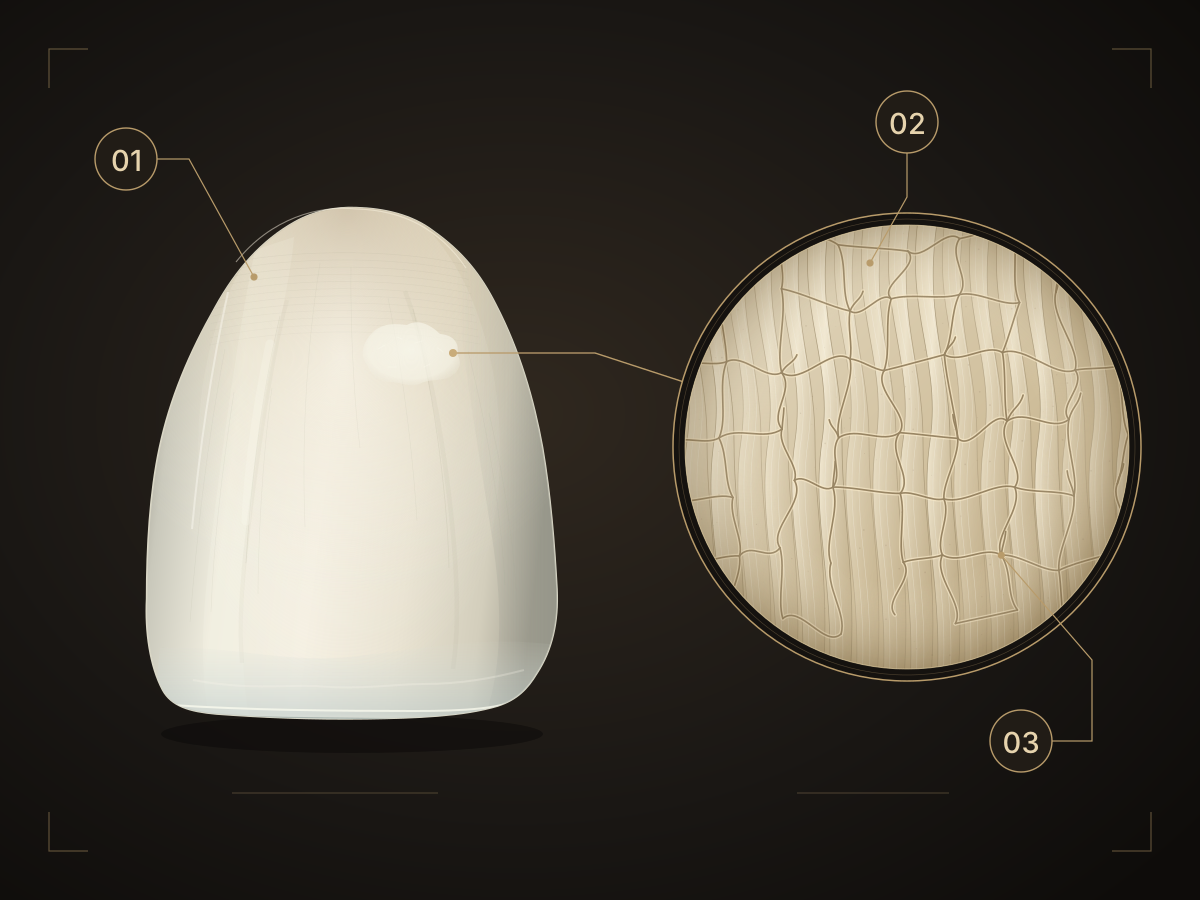 Medical illustration
- 01 Tooth surface
- 02 Enamel structure
- 03 Pore spaces
The cause comes first
A white spot.
More than one explanation.
“White spot” initially describes a visible whitish area. It may reflect mineral loss caused by early tooth decay, for example around former brackets. Changes during tooth development can also leave pale or yellowish-brown areas.
We therefore distinguish changes caused by decay from fluorosis, molar incisor hypomineralisation (MIH) and other enamel defects. Colour or a photograph alone is not enough. We examine the surface, location and extent and ask how long the area has been visible.
White areas after fixed braces
Areas around brackets can be difficult to clean. If the enamel loses minerals there, it may look chalky white. We examine whether the change is still active and how it should be treated. A visible mark does not automatically mean an open cavity — a hole.
Pale marks present since the tooth erupted
Developmental enamel changes are also possible here. Findings on white spots caused by decay cannot simply be applied to them. With MIH in particular, options depend on depth, sensitivity and possible enamel breakdown; another type of treatment may be needed.
Early decay was found at a check-up
“Initial” means at an early stage. While the surface has not yet broken down, preventive or micro-invasive measures may be suitable depending on the tooth surface and findings. Infiltration may be an option. Oral care, fluoride and check-ups remain part of care.
Explained within the enamel
Tiny pores.
A different effect on light.
During infiltration, a low-viscosity resin penetrates accessible pores in the altered enamel structure. It is then cured with light. This can change light scattering and make a whitish area less noticeable.
The procedure does not build new enamel. How far a mark blends in visually depends, among other things, on its cause and depth. A complete colour match cannot be promised.
 Medical illustration
Explore the details
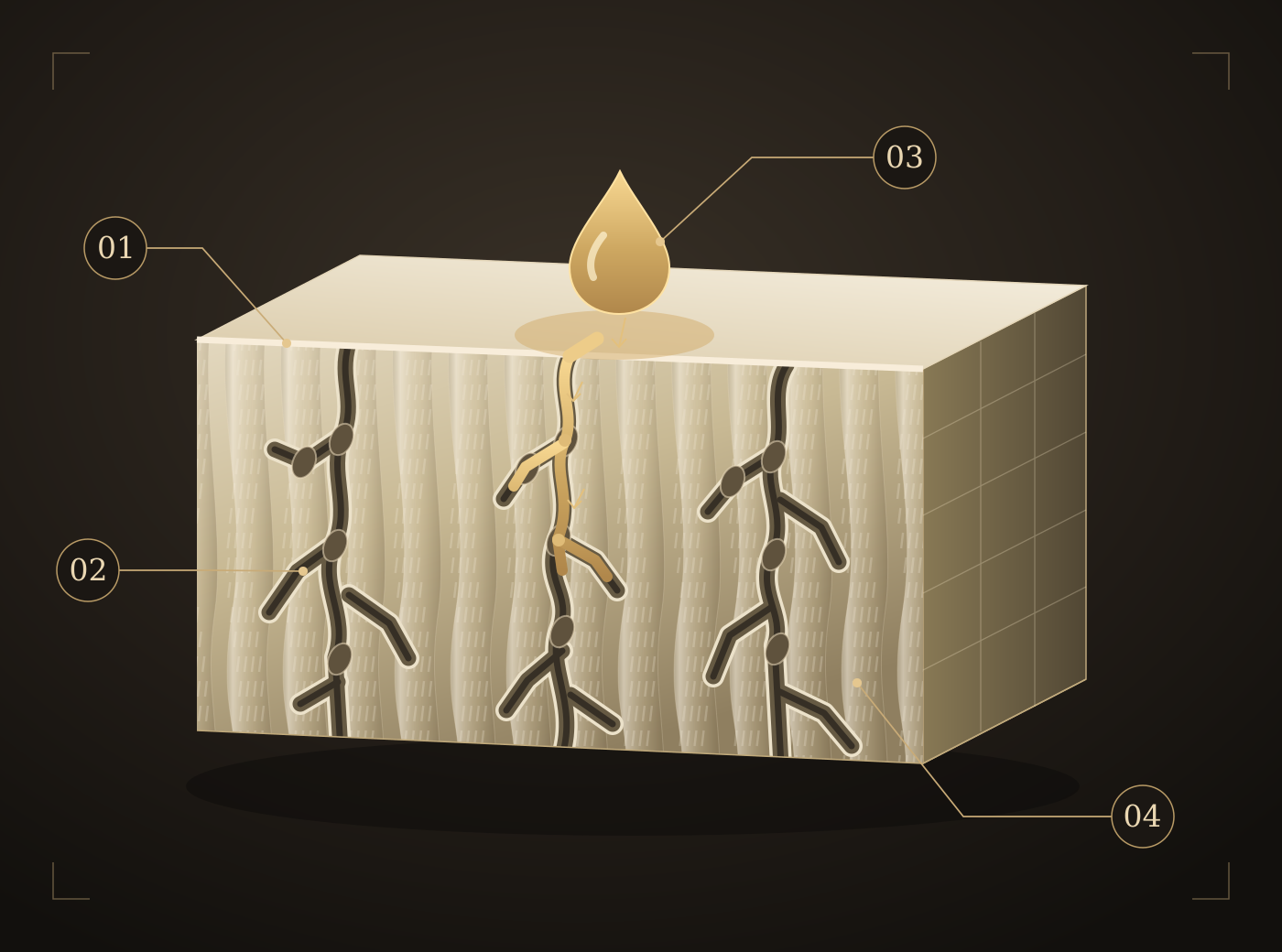
01 Preparing the surface
A thin superficial layer of enamel is removed with etching gel. This makes the pores beneath accessible to the resin. Keeping the area dry and protecting the gums are part of the procedure.
02 Understanding the pores
In white spots caused by decay, mineral loss creates microscopic spaces in the enamel structure. Air or water in these spaces changes the optical contrast with the enamel. This can make an area look whitish.
03 Applying low-viscosity resin
Capillary forces help the resin penetrate accessible pores. It is then light-cured. Infiltrated areas can scatter light differently and therefore appear less white.
04 Preserving existing enamel
The mineral structure remains the foundation of the tooth. Infiltration fills accessible pores with resin; it does not grow new enamel. Prevention and check-ups remain important.
White spots on visible tooth surfaces
Here, improving the visual match may be an aim. Studies show improvements in selected white spots caused by decay during or after fixed braces. They do not allow us to promise that every mark will disappear completely or permanently. View sources
Early decay between teeth
For suitable areas of decay between teeth where the surface has not broken down, infiltration can inhibit progression. This has its own criteria and requires a different approach from visible marks on front teeth. View the guideline
The treatment journey
Four steps.
Individual findings.
Resin infiltration may be an option for selected white spots. Before treatment, we discuss whether it is appropriate and what preparation would be needed.
Examine & assess
The cause, surface and extent are assessed. For decay between teeth, a clinically justified X-ray may contribute to the assessment. Your expectations and possible alternatives are also part of the discussion.
Protect & prepare
The tooth is cleaned and isolated to keep it dry, and the gums are protected. A special etching gel removes a thin superficial layer of enamel to make the pores accessible. Micro-invasive therefore does not mean entirely without removing tooth substance.
Infiltrate & cure
After preparation and drying, the low-viscosity resin is applied. It can penetrate accessible pores and is light-cured. Application follows the clinical findings and product instructions.
Polish & review
Excess resin is removed and the surface polished. We assess the result and discuss care and check-ups. Aesthetic treatment does not replace ongoing decay prevention.
Options & limitations
Choosing the right method
starts with careful assessment.
Infiltration may be suitable for selected areas of early decay where the surface has not yet broken down. If a cavity has already formed, decay is advanced or enamel has broken down, a different treatment plan is needed. Infiltration does not replace necessary restoration of lost tooth substance.
Developmental opacities require a separate assessment; evidence on aesthetic infiltration for MIH is limited. Please tell us about known material allergies and intolerances. We assess the suitability of the intended material and discuss its risks in advance. Keeping the area dry and carefully protecting the gums from etching gel are part of treatment. The procedure must only be carried out by appropriately trained professionals.
What other options are there?
Prevention & monitoring
For early changes caused by decay, tailored oral care, fluoride use and check-ups may take priority. Not every visible mark needs aesthetic treatment.
Targeted surface treatment
Microabrasion may be suitable for some superficial changes. It removes enamel; the possible benefit is weighed against this loss of tooth substance.
Addressing colour or a defect separately
Teeth whitening changes tooth colour but does not treat decay. Where tooth substance is missing, a filling may be necessary. This type of restoration has a different purpose from infiltration.
Good to know
Your questions about
resin infiltration.
Does every white spot mean early tooth decay?
No. A white mark may arise from mineral loss due to decay, but it may also have formed during tooth development. An examination establishes the cause and activity. Not every mark needs treatment.
Can treatment be carried out without drilling?
For suitable early lesions, infiltration may be possible without conventional preparation using a drill. However, the surface is pretreated with etching gel, which removes some enamel. Deeper changes may require additional measures. A blanket promise of “no drilling” would therefore be inaccurate.
Will the mark disappear completely?
This cannot be guaranteed in advance. The cause, extent and depth help determine the possible result. An area can become considerably less noticeable yet remain visible. Later colour changes also vary individually.
Is one appointment enough?
The infiltration itself can be carried out in one appointment. Examination, pretreatment or a planned combination with other measures may require additional visits. We clarify what is involved based on your situation.
What does treatment for white spots cost?
The work involved depends, among other things, on the number, position and extent of the affected areas and the preparation needed. You receive individual cost information in advance. Use these documents to clarify whether your insurer covers the costs; we cannot promise reimbursement.
What care is important afterwards?
Continue to brush carefully with fluoride toothpaste and clean between your teeth with suitable aids. We discuss fluoride measures and check-up intervals suited to your findings personally. An infiltrated area does not make the tooth immune to new decay.
Clinical sources & context
Editorial review: 24 September 2026. The studies examine selected patient groups and specific treatment protocols. Their findings do not automatically apply to every cause of white spots or every material. The ADA guideline addresses caries treatment; it is not a recommendation for aesthetic treatment of every white spot.
- NIDCR: The caries process, early lesions and fluorosis
- EAPD: European recommendations on MIH (2022), including limitations of aesthetic treatment
- ADA: Guideline on nonrestorative treatments for carious lesions (2018)
- Kashash et al. (2024): Randomised study of visual changes in white spots during bracket treatment, with six-month follow-up
- Wang et al. (2023): Randomised study of four treatments for white spots after orthodontic treatment
Read more in Dental insights
Does every white mark mean decay?
Our article explains how white spots develop, what “early caries” means and which questions help before treatment.
Read the Dental insights articleConsultation in Cologne
One mark. Your questions.
Our starting point together.
We examine the area and discuss whether monitoring, prevention or treatment would be appropriate.
Have white spots assessedOr call us on 0221 669 401 80.