
Preserving teeth · Cologne
Dental fillings &
composite bonding.
Restoring a defect. Rebuilding a tooth edge. First, we look at what your tooth needs and how much of its natural substance can be preserved.
Or call: 0221 669 401 80

The findings guide the decision
What is the tooth missing?
Decay, a broken corner or a damaged filling can make treatment necessary. However, not every mark or sensitive area immediately needs a new filling.
We examine the tooth and discuss your symptoms. For early decay without surface breakdown, preventive measures may be considered first. If tooth substance has been lost, we assess how to restore shape and function.
Tooth-coloured composite
Composite combines a resin matrix with fine filler particles. It is shaped directly on the tooth and cured with light. Colour, contact with the neighbouring tooth and the chewing surface are adapted to the situation.
Repairing where appropriate
A small chip does not automatically mean that the entire restoration needs replacement. Depending on the findings, polishing, adjustments or a localised repair may be enough. We also check whether decay has developed again beneath or beside the filling.
Explained with a model
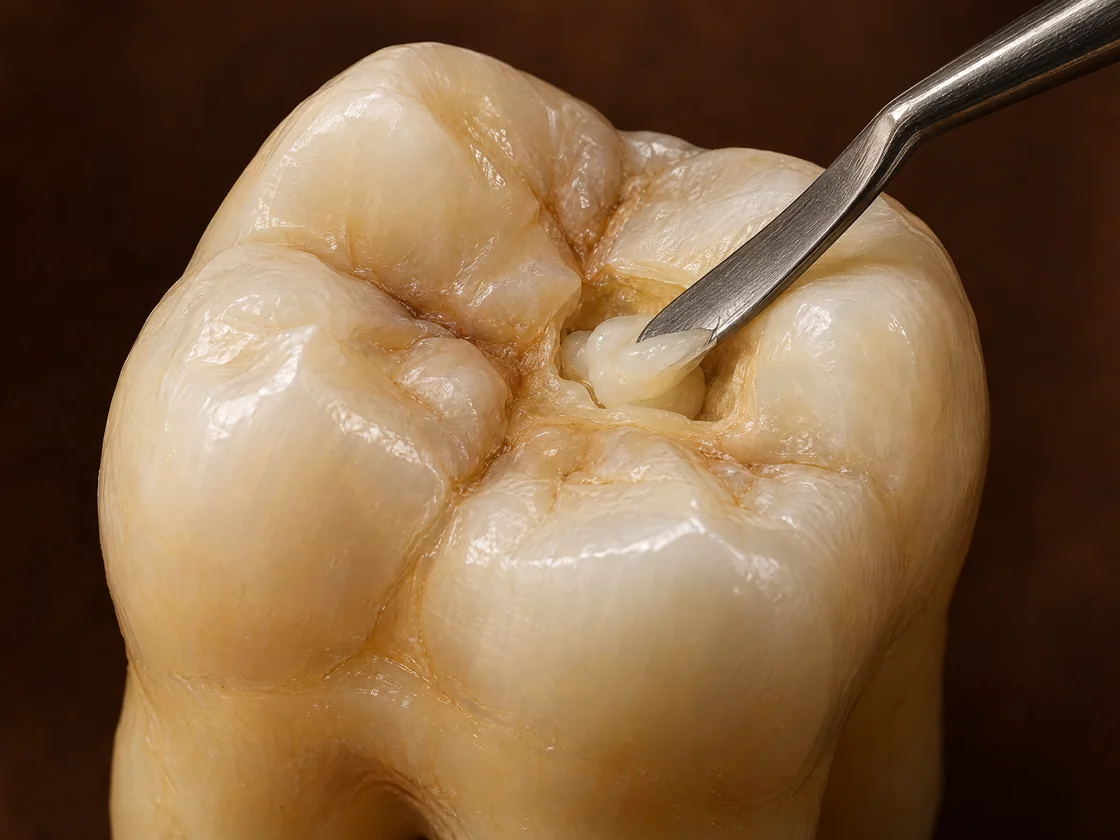
A filling is made directly in the tooth.
The model shows how filling material restores a localised defect. Expand the three explanations.
 AI-generated
Preserving natural tooth substance
The remaining tooth walls and cusps form the framework for the restoration. How much substance can still provide support is an important part of the examination.
Compare restoration optionsShaping material directly
Composite is placed and shaped directly on the tooth, then cured with light. This distinguishes such a filling from an inlay made separately.
What makes an inlay differentChecking the bite and surface
A finished restoration includes suitable contacts, a shaped chewing surface and smooth transitions. We then check how the teeth bite together.
Discuss repair and preservationIllustrative teaching model, not a patient case. The image does not replace a dental examination.
Composite bonding in Cologne
Small changes
to tooth shape.
An uneven biting edge or a small gap may prompt a discussion about bonding. This involves adding composite directly to the tooth shape.
The procedure may involve little or no removal of tooth substance. Whether it suits you depends, among other things, on the enamel present, the desired change and the forces when biting together.
Shape, colour and limitations
Composite can develop wear or staining over time and may occasionally need repolishing or repair. Extensive changes in alignment require orthodontic planning. For other changes in shape or colour, ceramic veneers may be an alternative.
Together, we discuss what intervention would be necessary and what care it would require afterwards. The shape of a healthy tooth alone is not a reason to have it treated.
The treatment
From findings to a suitable filling.
A direct filling can often be made in one appointment. The time needed and approach depend on the defect.
Examine & choose
We establish the cause and extent, explain suitable materials and discuss costs before starting. Local anaesthetic can make treatment easier.
Prepare & build up
The tooth is prepared carefully and kept dry for bonding. The bonding process and composite build-up are adapted to the material and tooth situation.
Adjust & polish
We check the bite, the spaces between teeth and the surface. You receive guidance on when you can eat again and what to do if you experience symptoms.
Filling or inlay?
How much support
remains?
A direct filling is an option for many defects in front and back teeth. For larger defects, we pay particular attention to the stability of the remaining tooth walls and cusps.
An inlay, onlay or partial crown may be appropriate depending on the findings. An indirect restoration is not automatically the better choice, however. The forces involved, remaining tooth, repairability and your treatment preferences are decisive.
We do not replace intact fillings solely because of their age. You can find information about managing existing amalgam fillings under Amalgam replacement.
Careful restoration
A filling that
suits your tooth.
The findings, size of the defect and forces involved determine the suitable material and approach. Our aim is a well-sealed, durable restoration that preserves as much natural tooth substance as possible.
Each complete replacement of a filling can cost further tooth substance. We therefore assess whether an existing restoration can be retained, adjusted or repaired locally. If a new filling is needed, careful planning, correct material handling and checks of contacts and the bite go together.
How long a restoration lasts also depends on the defect size, forces, decay risk and care. Adjustments or later repairs may be needed despite careful treatment.
We explain the extent of treatment and possible private costs in advance. We clarify any applicable statutory insurance contribution based on the planned restoration; private costs are agreed in writing before treatment. With private or supplementary insurance, reimbursement depends on your policy.
Information to help you decide
One filling, several useful questions
The defect determines the restoration.
Establish the cause
Decay, a broken edge and a damaged filling require different considerations. The examination shows which tooth substance can be preserved and what should be restored.
Consider repair
Limited damage does not automatically mean complete replacement. Depending on the findings, adjustments or a repair can help preserve more existing tooth substance.
Choose a suitable material
The size and location of the defect and chewing forces influence the choice. A tooth-coloured material alone is not yet a complete plan for the tooth.
Distinguish wishes from needs
Adding composite to change shape has a different purpose from treating decay. Benefits, durability and possible later adjustments should also be discussed beforehand.
Understand costs in advance
Ask for an explanation of the planned restoration and possible private costs beforehand. Any applicable statutory insurance contribution is clarified individually; private costs are agreed in writing before treatment.
After treatment
What else you would like to know.
Can a tooth be sensitive after a filling?
Temporary sensitivity is possible. Please contact us for a check if you have increasing or persistent pain, swelling or an uncomfortable contact when biting. A filling that is too high or irritation of the tooth pulp can only be assessed after examination.
When can I eat again?
After local anaesthetic, wait until sensation returns so that you do not unknowingly bite your lip or cheek. Further guidance depends on the material used and your treatment.
How long does a composite filling last?
There is no fixed expiry date. Defect size, forces, decay risk and care influence its lifespan. At check-ups, we also examine the margins and discuss whether a change in care, polishing or repair would be appropriate.
Your next step
Examine the tooth.
Discuss the options.
Bring your questions about an existing filling, a defect or a desired change in shape.
Discuss a dental filling