Smoking and gums
Smoking increases the risk of periodontitis and can make treatment more difficult. An examination shows the condition of your gums and the tissues supporting your teeth.
What we check during the examination
Gums & supporting tissues · Cologne
Bleeding or receding gums and loose teeth deserve attention. We investigate the cause and plan treatment with long-term follow-up care.
Understanding the condition
Periodontitis affects the tissues that hold the teeth in the jaw. The interaction between bacterial biofilm and the body's inflammatory response can lead to loss of supporting tissue and bone. This can progress without causing noticeable pain at first.
Gingivitis is inflammation confined to the gums. In periodontitis, the tissues supporting the teeth are already affected. The colloquial German term “Parodontose” is often used to mean periodontitis; an examination establishes whether a condition is present and which one.
Our aim is to control inflammation and prevent further loss wherever possible. Once treated, the tissues supporting the teeth need ongoing attention.
Your concerns in focus
Gums, supporting tissues and follow-up care are closely connected. Choose your topic.
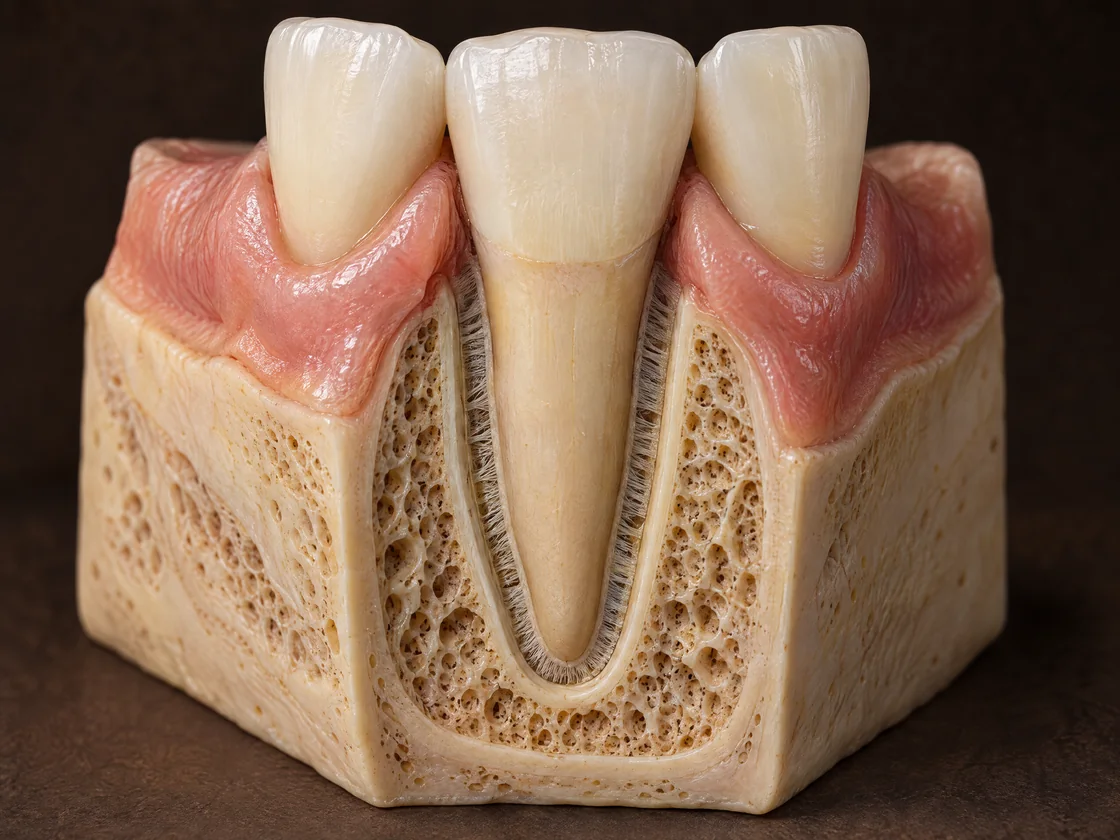 AI-generated
What interests you? Choose a concern. The highlight and explanation reflect your selection.
Smoking increases the risk of periodontitis and can make treatment more difficult. An examination shows the condition of your gums and the tissues supporting your teeth.
What we check during the examinationBleeding gums can be a sign of inflammation. We examine whether this affects only the gums or also the supporting tissues. Recurrent bleeding should be checked.
What we check during the examinationRegular checks and tailored follow-up care remain important after periodontitis treatment, even without symptoms. The appropriate intervals and measures depend on your findings.
More about follow-up careA starting point for discussion, not a diagnosis or treatment recommendation. Your selection is not stored or transmitted.
The 6th German Oral Health Study shows clear differences between the age groups examined. Proportions with severe periodontitis (stages III and IV):
Population data for Germany, collected in 2022–2023 and published in 2025. Staging follows the 2018 classification. These figures do not calculate your personal risk. The remaining proportion does not necessarily have healthy gums.
Early detection
Recurrent bleeding gums, swelling, persistent bad breath or receding gums are reasons for a check-up. Teeth becoming looser or changing position should also be examined. These signs alone do not establish a diagnosis.
Smoking and poorly controlled diabetes can adversely affect the condition. Oral care, medical history and other health factors also play a role. Tell us about any conditions and medicines so that we can plan accordingly.
Screening can provide an initial indication. For a detailed assessment, we measure gum pockets and bleeding, assess tooth mobility and include any necessary X-rays. This helps explain the extent of the disease and treatment needs.
Plaque can build up at filling or crown margins that are difficult to clean. We therefore also check existing restorations. Whether adjustment or replacement would be appropriate depends on their condition.
Planning together
At SMILE meets DESIGN, we discuss the findings with you and explain what each step can achieve. Treatment depends on the severity and activity of the disease and how the tissues respond to the initial measures.
If you have already had treatment or have a plan from another practice, you are welcome to bring the documents. They can help us understand the condition's course so far.
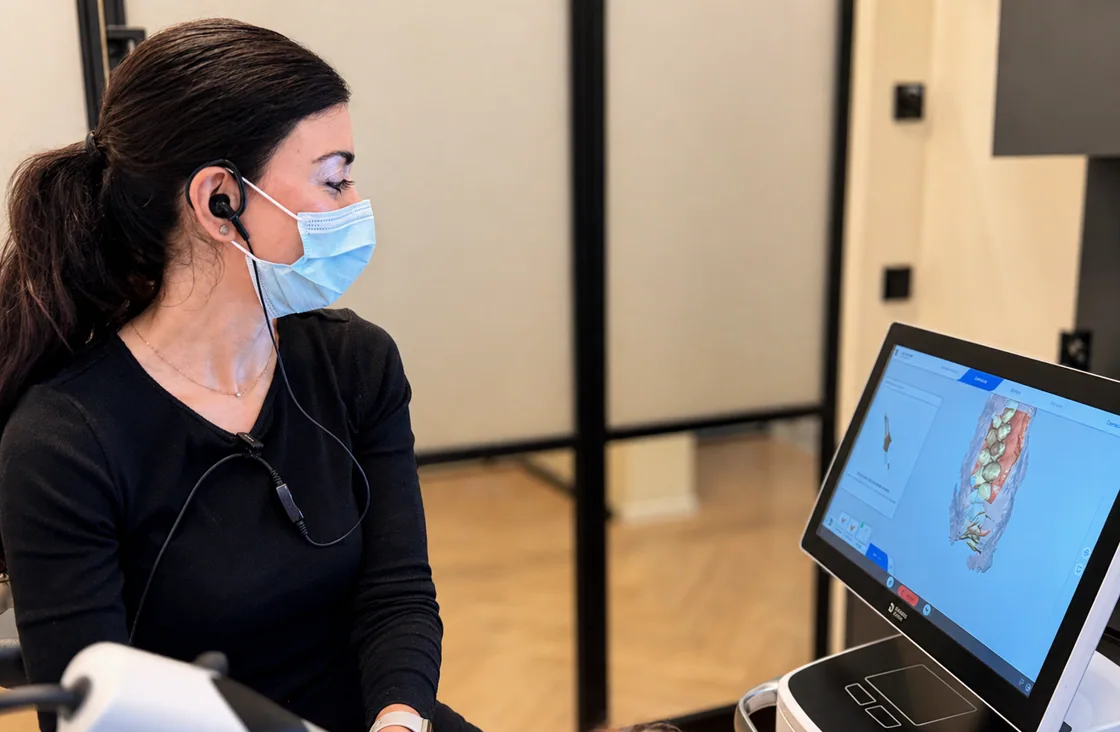
Several steps, one shared aim
You learn which areas need particular care and which aids are suitable. Accessible deposits are removed. Modifiable risks such as smoking or diabetes control are discussed.
Deposits on root surfaces below the gumline are removed with suitable instruments, usually under local anaesthetic. This aims to reduce the bacterial load.
After a healing period, we reassess the findings. Bleeding and remaining pocket depths help show whether treatment has been sufficiently effective.
Persistent deep pockets may require additional measures or surgical access. We discuss the options and where they can be provided according to your circumstances.
Supportive periodontal therapy combines checks, oral care guidance and cleaning according to need. Treatment is adjusted if areas become active again.
Would you like your gums examined? Book a gum examination
Supportive periodontal therapy
Periodontitis can often be stabilised. However, susceptibility to renewed inflammation remains. Follow-up care tailored to your needs therefore continues throughout life — even if you currently have no symptoms.
During supportive periodontal therapy, we check your teeth and gums, review your oral care and remove deposits where necessary. This differs from a general professional dental cleaning. The frequency and scope depend on your findings and risk.
Between appointments, thorough care at home and the agreed measures help maintain stability. If your gums start bleeding more often again or your teeth feel looser, contact us for a check-up.
As swelling subsides, more of the tooth surface may become visible. Spaces may become more apparent and tooth necks may be temporarily more sensitive. We discuss possible changes and suitable care aids with you.
Cleaning alone does not simply allow all lost tissue to grow back. Whether further procedures would be appropriate needs individual assessment.
Costs & planning
Where the requirements are met, German statutory health insurance covers systematic periodontitis treatment under the PAR-Richtlinie. The treatment plan is submitted for approval in advance. The supportive periodontal therapy provided for generally lasts two years; an extension that is medically necessary may be requested under certain conditions.
The medical need for long-term follow-up care does not automatically end after this period. We discuss in good time what ongoing care makes sense and what costs may need to be paid privately.
Privately agreed services are charged according to the German dental fee schedule (GOZ). Before treatment begins, you receive individual cost information or a treatment and cost plan. Use this plan to clarify reimbursement with your private or supplementary insurer in advance.
Information to help you decide
Early examination and long-term care belong together.
Bleeding gums do not automatically mean periodontitis. Recurrent bleeding should nevertheless be examined to distinguish inflammation confined to the gums from disease of the supporting tissues.
Periodontitis can cause few symptoms for a long time. Pocket measurements and other necessary examinations reveal more about tooth support than pain alone.
Smoking and diabetes can affect the condition. Information about illnesses, medicines and previous treatment helps us plan care to suit your situation.
Existing periodontitis needs targeted treatment below the gumline. General professional dental cleaning alone therefore cannot replace systematic therapy.
Care remains important even after improvement. Supportive periodontal therapy combines checks, oral care guidance and cleaning; intervals depend on findings and risk.
Frequently asked questions
No. Bleeding can occur, for example, with inflammation confined to the gums. Recurrent bleeding should nevertheless be examined. Only the findings show whether the supporting tissues are affected.
Periodontitis can cause few symptoms for a long time. A lack of pain therefore tells us nothing certain about the condition of the bone and gum pockets.
Existing periodontitis requires a systematic treatment plan. General professional dental cleaning cannot replace this treatment. We explain the difference between prevention, active treatment and supportive periodontal therapy.
Not automatically. They may be considered as an additional measure in selected situations. Removing deposits and providing ongoing care remain the foundation. The findings determine which additional measures might be appropriate.
Cleaning below the gumline is usually carried out under local anaesthetic. We discuss sensitivity and possible discomfort after the appointment with you. Please tell us if you feel pain or anxiety so that we can adapt the approach.
Stable gum health is an important part of further planning. Whether and when an additional restoration is suitable depends on progress, the remaining tissues and your risk. We cannot promise a fixed waiting period or suitability in advance.
Yes. The agreed checks are specifically intended to detect changes early. Intervals are set individually. Please let us know if you cannot attend an appointment so that we can coordinate your ongoing care.
Periodontology in Cologne
We examine your situation and discuss a clear treatment and follow-up plan.
Book a gum examinationPhone 0221 669 401 80 · Contact & directions