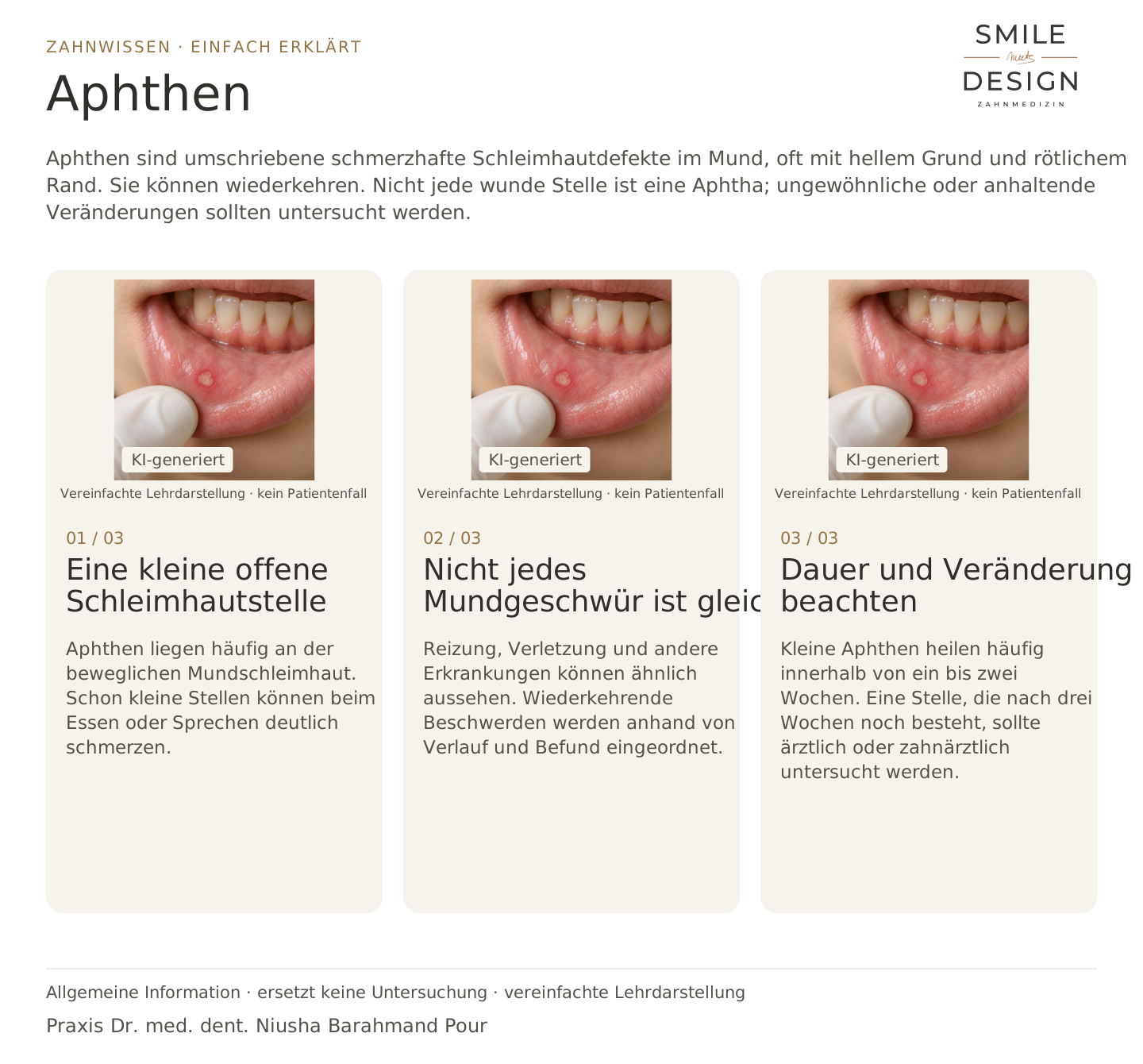
What are aphthous ulcers?
Localised, often painful breaks in the oral lining.

Aphthous ulcers are localised painful breaks in the oral lining, often with a pale centre and red border. They can recur. Not every sore is an aphthous ulcer; unusual or persistent changes should be examined.
For dental trainees & teams
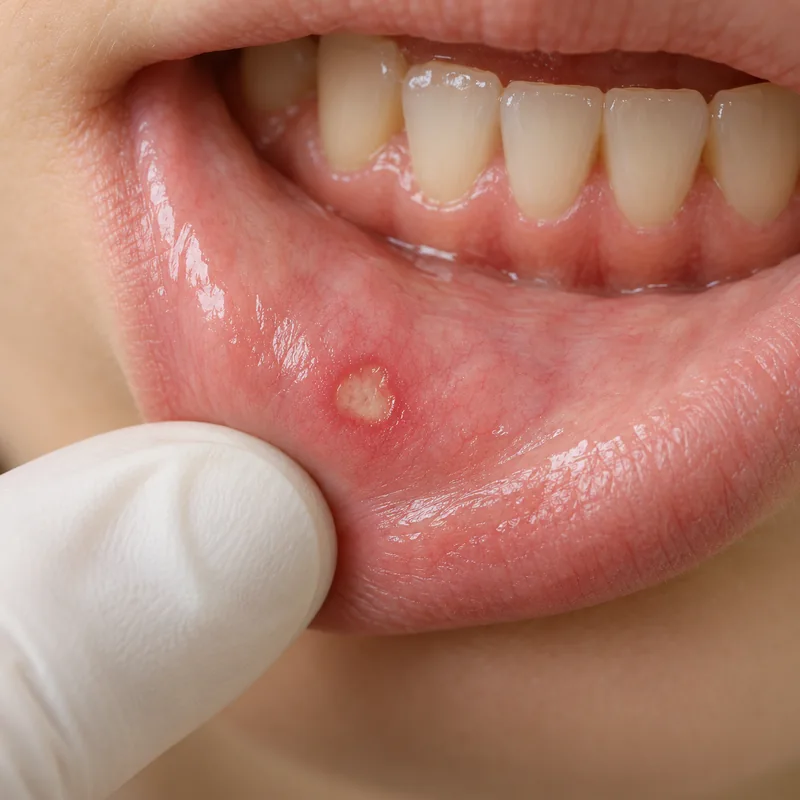
Aphthous ulcers often occur on movable oral lining. Even a small sore can be painful when eating or speaking.
Irritation, injury and other conditions can look similar. Recurrent symptoms are assessed through their pattern and examination.
Small aphthous ulcers often heal in one to two weeks. Any sore still present after three weeks should be examined by a doctor or dentist.
Localised, often painful breaks in the oral lining.
Small ulcers often heal within one to two weeks; other types may last longer.
For unusual or severe symptoms, and if any sore remains after three weeks.
Three steps. Straight to the point.
Explanations are also shown on screen.

Silent film in German · English explanations in the three views above
Aphthous ulcers are not a herpes infection. Location, clinical course and examination help distinguish them.
Typical aphthous ulcers are not contagious. This distinguishes them from some other oral conditions.
For very severe, frequent or unusual symptoms, or difficulty eating or drinking.
No. Appearance alone is not enough. Persistent or changing areas particularly need examination.
A question to discuss with Dr. med. dent. Niusha Barahmand Pour:
Does the pattern fit aphthous ulcers, or does this area need a different assessment?
Symptoms and examination findings provide the basis for personal advice.
Persistent or unusual sores can be assessed by a dentist.
Have the oral lining examinedChoose an appointment on DoctolibBuild on the simple explanation with clinical terms, key distinctions and a knowledge question.
Typical aphthous ulcers are not herpes blisters and are not contagious. Similar changes can have other causes.
Editorial research: 23 October 2026. This explanation covers general principles and does not replace a personal examination. Suitable treatment is discussed following individual assessment.