What is oral thrush?
A fungal infection of the lining of the mouth, usually caused by Candida.

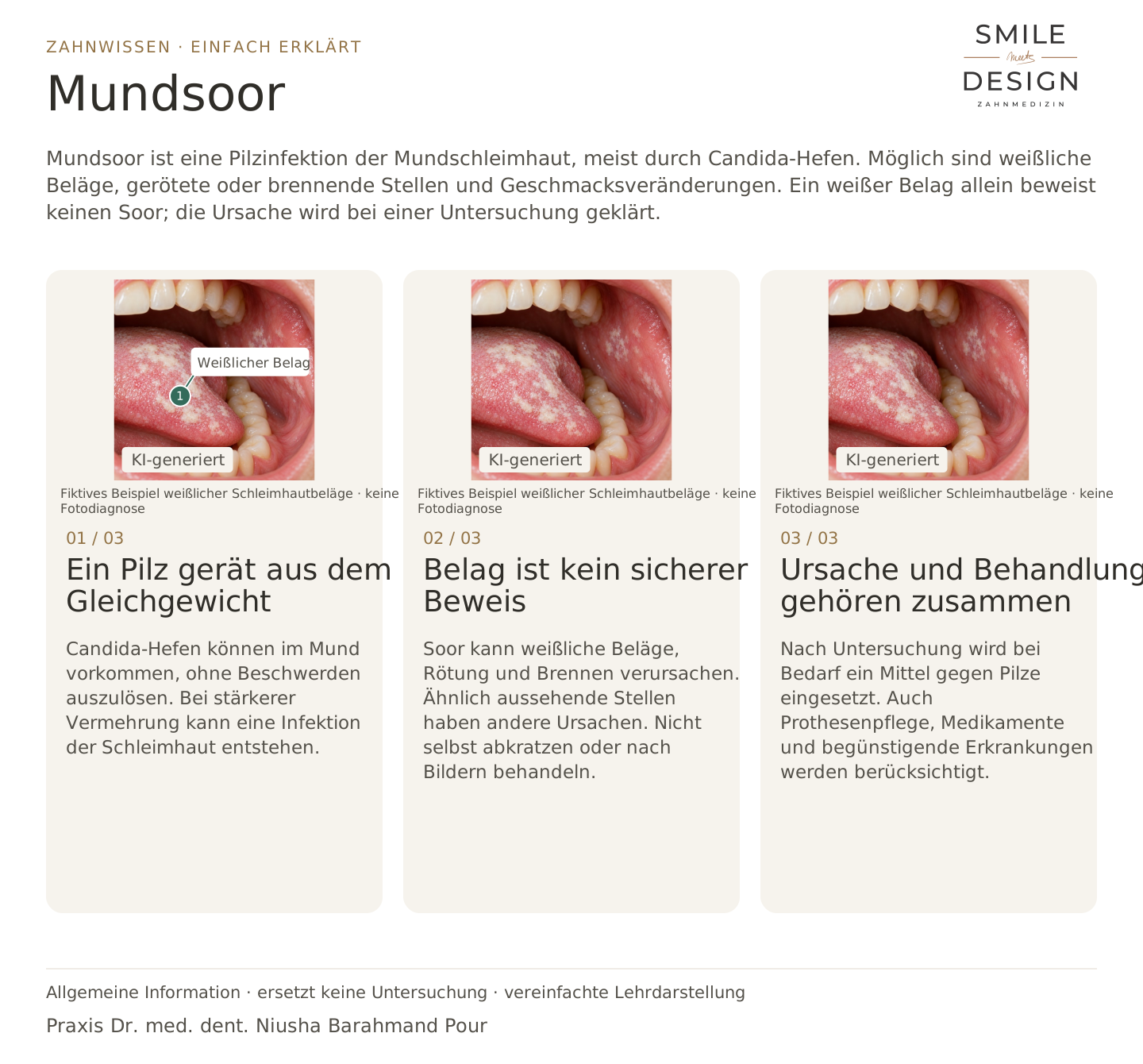
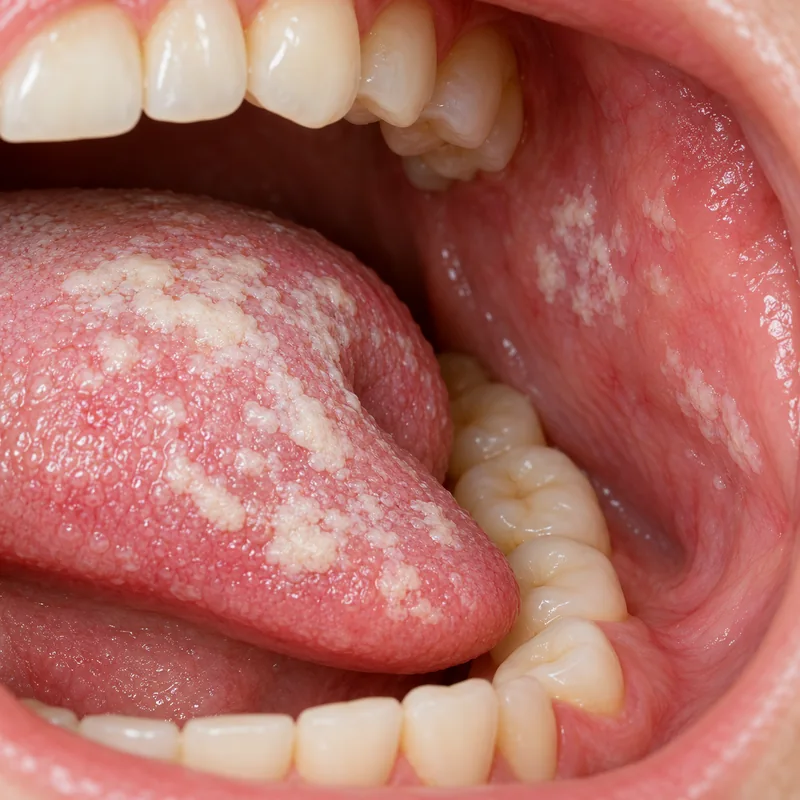
Oral thrush is a fungal infection of the lining of the mouth, usually caused by Candida yeasts. It may cause white patches, red or burning areas and changes in taste. A white coating alone does not prove thrush; an examination helps establish the cause.
For dental trainees & teams
Candida yeasts can be present in the mouth without causing symptoms. Increased growth may lead to an infection of the lining of the mouth.
Thrush can cause white patches, redness and burning. Similar-looking areas can have other causes. Do not scrape them off or treat them based on photographs.
After examination, antifungal medicine may be used if needed. Denture care, medication and conditions that increase susceptibility are also considered.
A fungal infection of the lining of the mouth, usually caused by Candida.
Patches, redness or burning; these signs are not specific.
Have the cause examined and treat a confirmed infection appropriately.
Three steps. Straight to the point.
Explanations are also shown on screen.

Silent film in German · English explanations in the three views above
Thrush is an infection; an ordinary tongue coating is not automatically a disease. Appearance alone cannot reliably distinguish them.
Factors include antibiotics, certain steroid inhalers, dentures and reduced immunity. Do not stop prescribed medication without medical advice.
No. Tongue coating and other changes to the lining of the mouth can look similar. Sometimes a sample helps clarify the examination findings.
Seek medical advice promptly for painful or difficult swallowing, or if your immune system is weakened. Persistent or recurring changes also need examination.
A question to discuss with Dr. med. dent. Niusha Barahmand Pour:
What might explain the changes in my mouth, and could medication or my dentures play a part?
Symptoms, examination findings and personal wishes form the basis of individual treatment planning.
Persistent patches or burning deserve an examination.
Have mouth changes assessedChoose an appointment on DoctolibBuild on the simple explanation with clinical terms, key distinctions and a knowledge question.
Finding Candida alone does not necessarily establish an infection requiring treatment. Symptoms and clinical findings are part of the assessment.
Editorial research: 23 October 2026. This explanation covers general principles and does not replace a personal examination. Suitable treatment is discussed following individual assessment.