When?
After covered healing.

When an implant heals beneath closed gum tissue, it is later made accessible. A healing abutment may then shape the tissue for restoration. Not every implant follows this two-stage approach.
For training & practice ↓
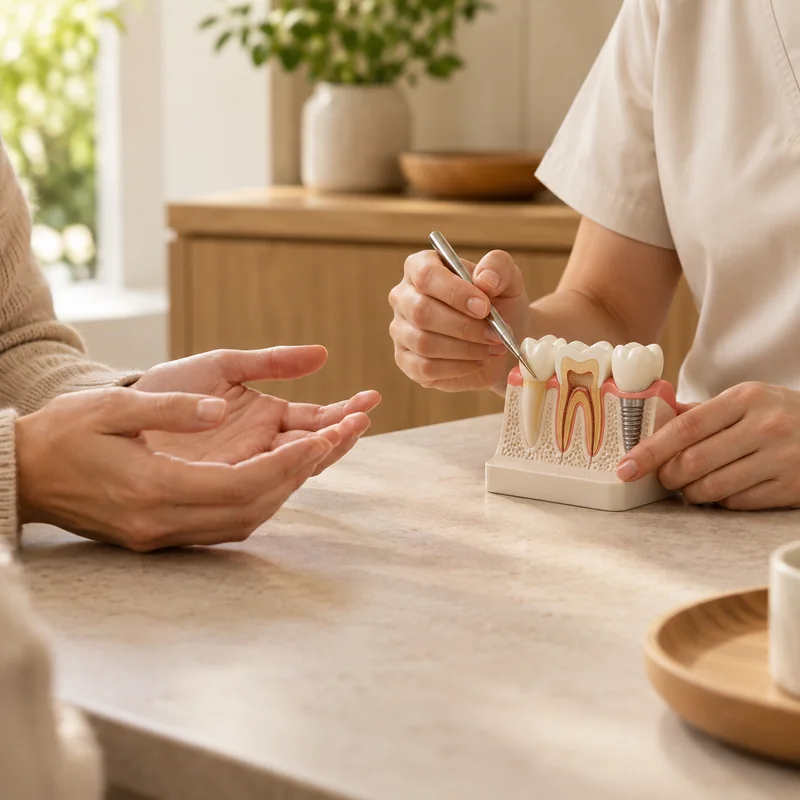
In a two-stage approach the implant initially remains covered.
After reviewing healing, the covering is opened and an appropriate component fitted.
Tissue is reviewed. Impressions or scans and the restoration follow the individual plan, not necessarily on the same day.
After covered healing.
Access and tissue shaping.
Further restorative planning.
Three steps. No audio.
Each scene can also be selected manually.

Silent educational film with German on-screen text and simplified teaching images. Not a patient case or a promised treatment outcome. The full English explanation is available below.
In a two-stage approach the implant initially remains covered.
After reviewing healing, the covering is opened and an appropriate component fitted.
Tissue is reviewed. Impressions or scans and the restoration follow the individual plan, not necessarily on the same day.
Placement inserts the artificial root. Uncovering later provides access to an existing implant.
Routine uncovering makes the existing implant accessible.
No. Other healing protocols leave a component visible from the beginning.
Persistent or increasing pain, swelling or bleeding should be discussed with the treating team; seek prompt help for significant deterioration.
Editorially suggested question to discuss with Dr Niusha Barahmand Pour:
What comes after uncovering in my treatment plan?
Records help clarify the next stage of an implant restoration.
Discuss implant restorationAppointment selection at DoctolibPlacement inserts the artificial root. Uncovering later provides access to an existing implant.
Editorial research: . General information, not an individual diagnosis or treatment recommendation. Teaching illustrations are simplified and do not depict a patient case.