What is a denture?
A removable replacement for some or all teeth in one jaw.

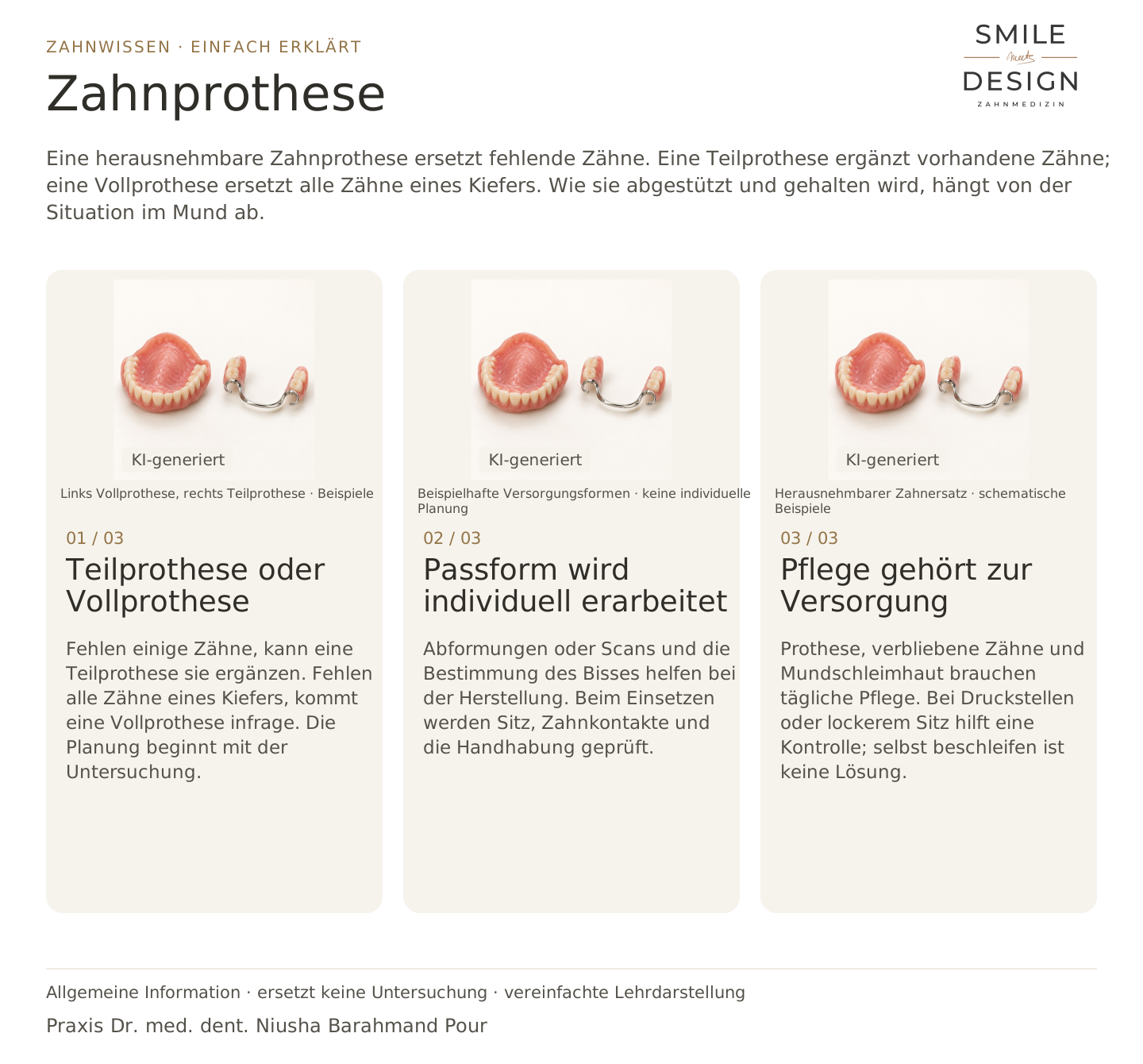
A removable denture replaces missing teeth. A partial denture fills gaps among remaining teeth; a complete denture replaces all teeth in one jaw. How it is supported and held in place depends on the conditions in the mouth.
For dental trainees & teams
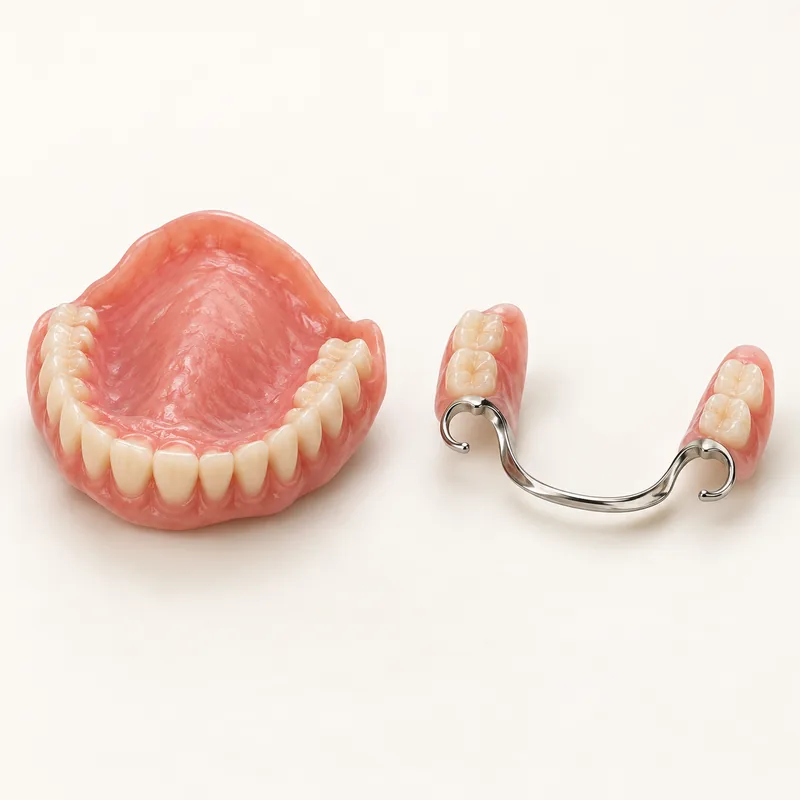
A partial denture can replace some missing teeth. If all teeth in one jaw are missing, a complete denture may be an option. Planning begins with an examination.
Impressions or scans and bite records help guide fabrication. At fitting, the denture's fit, tooth contacts and handling are checked.
Dentures, remaining teeth and the lining of the mouth need daily care. Sore spots or a loose fit need a check-up; grinding the denture down yourself is not a solution.
A removable replacement for some or all teeth in one jaw.
People with missing teeth whose findings, function and everyday needs support this type of restoration.
Examination and planning are followed by an impression or scan, fabrication and fitting. Care, fit and sore spots are checked afterwards too.
Three steps. Straight to the point.
Explanations are also shown on screen.

Silent film in German · English explanations in the three views above
Dental restorations are a broader category that also includes fixed crowns and bridges. This entry concerns restorations that can be taken out of the mouth for cleaning.
Yes. The lining of the mouth, jaw and fit can change. Examinations therefore remain useful even when no natural teeth are left.
Usually yes, to give the tissues a rest. The specific advice and storage method depend on the denture and are explained at the practice.
Persistent sore spots, pain or an unstable fit should be checked. A targeted adjustment is often needed; please do not remove material yourself.
A question to discuss with Dr. med. dent. Niusha Barahmand Pour:
Which type of removable denture suits my findings and would be manageable to care for every day?
Planning at her practice starts with the remaining teeth, function and the individual's wishes.
Fit, care and suitable restoration options can be discussed in person.
Discuss tooth replacement optionsChoose an appointment on DoctolibBuild on the simple explanation with clinical terms, key distinctions and a knowledge question.
Partial and complete describe how many teeth are replaced. The type of support is an additional characteristic.
Editorial research: 23 October 2026. This explanation covers general principles and does not replace a personal examination. Suitable treatment is discussed following individual assessment.