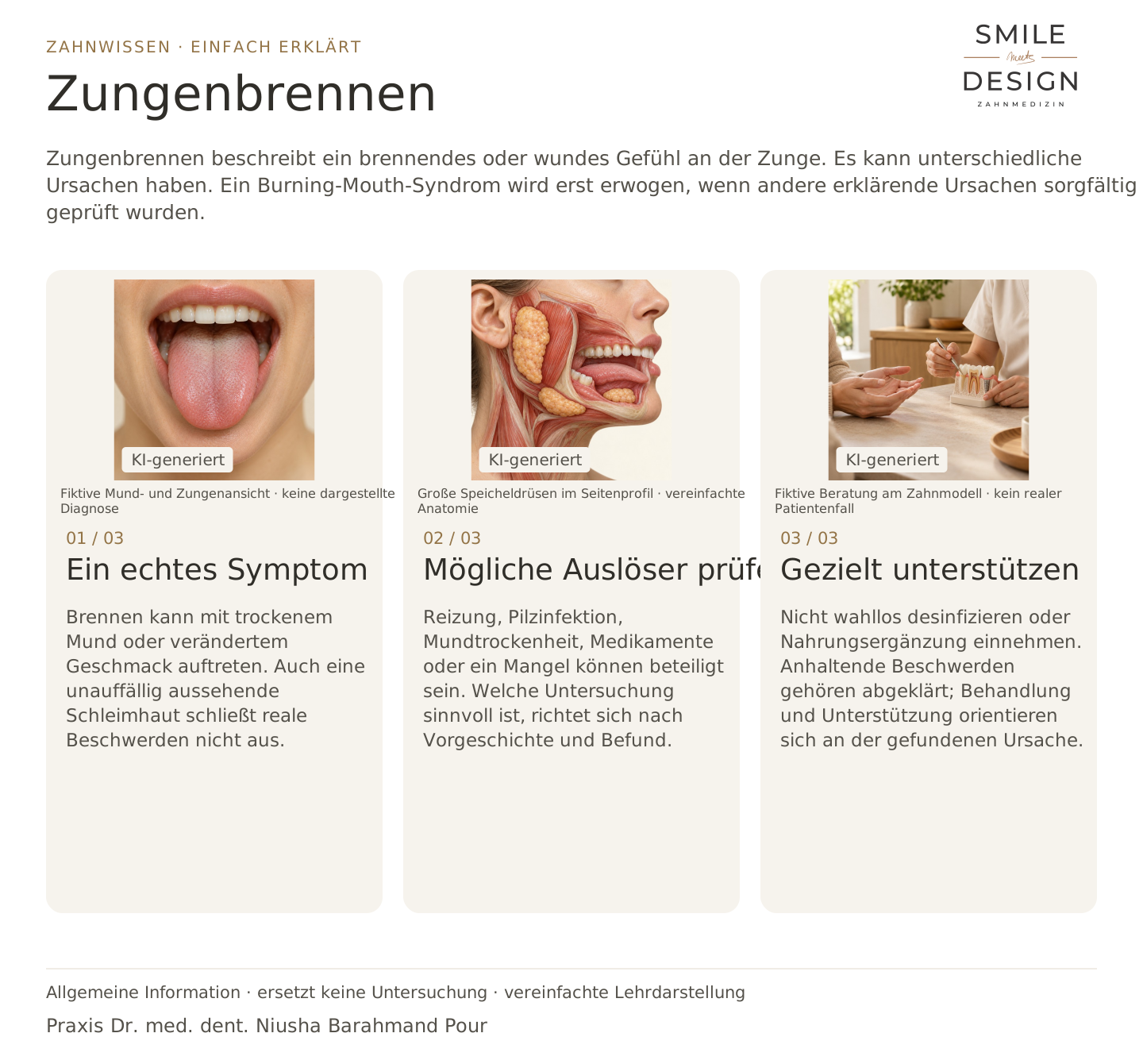
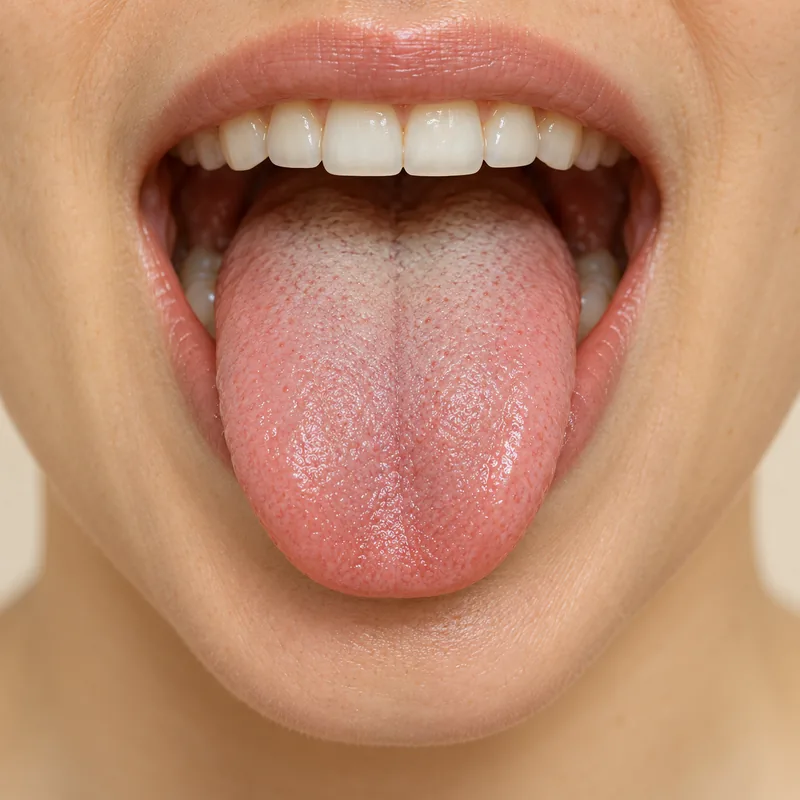
What does it describe?
A burning or sore sensation in the tongue.

Burning tongue describes a burning or sore sensation. It can have different causes. Burning mouth syndrome is considered only after other explanatory causes have been carefully assessed.
For dental trainees & teams
Burning may occur with dry mouth or altered taste. Normal-looking oral tissues do not rule out genuine discomfort.
Irritation, fungal infection, dryness, medicines or deficiencies may contribute. History and examination guide which investigations are useful.
Avoid indiscriminate disinfectants or supplements. Persistent symptoms need assessment; care and support are guided by the cause identified.
A burning or sore sensation in the tongue.
Oral tissues, saliva, medicines and other possible triggers as appropriate.
Have new non-healing areas or bleeding checked promptly; sudden tongue swelling with breathing difficulty requires 112 in Germany.
Three steps. Straight to the point.
Explanations are also shown on screen.

Silent film in German · English explanations in the three views above
Burning is a sensation. An inflamed, coated or injured tongue is a finding that can help direct investigation.
No. That term describes a specific pattern after other causes have been excluded, not every irritated tongue.
No. The pain is real. Altered nerve signalling may contribute to burning mouth syndrome, and distress and pain can influence each other.
A medication list and details of onset, daily pattern, dryness, taste and new oral products. Do not stop medicines independently.
A question to discuss with Dr. med. dent. Niusha Barahmand Pour:
Which causes fit my symptom pattern, and what assessment would be useful?
Individual findings are the basis for discussing appropriate next steps.
Persistent burning deserves careful assessment even when little is visible.
Have tongue discomfort assessedChoose an appointment on DoctolibBuild on the simple explanation with clinical terms, key distinctions and a knowledge question.
A normal-looking photograph proves neither absence of pain nor burning mouth syndrome.
Editorial research: 23 October 2026. This explanation covers general principles and does not replace a personal examination. Suitable treatment is discussed following individual assessment.