When can it occur?
After tooth removal, often with increasing pain after a few days.

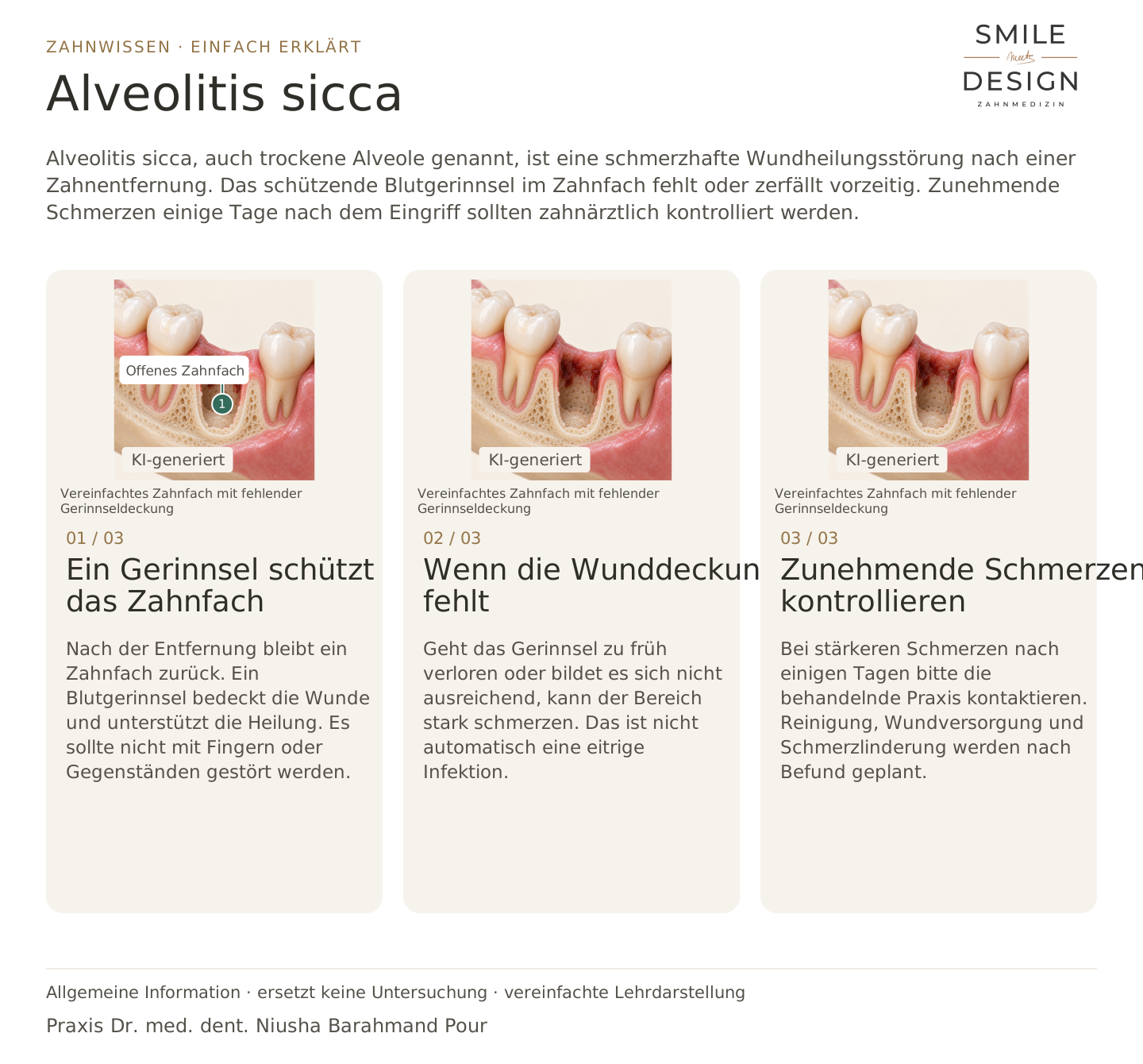
Dry socket, also called alveolar osteitis, is a painful healing complication after tooth removal. The protective blood clot in the socket is absent or breaks down too early. Increasing pain a few days after the procedure should be checked by a dentist.
For dental trainees & teams
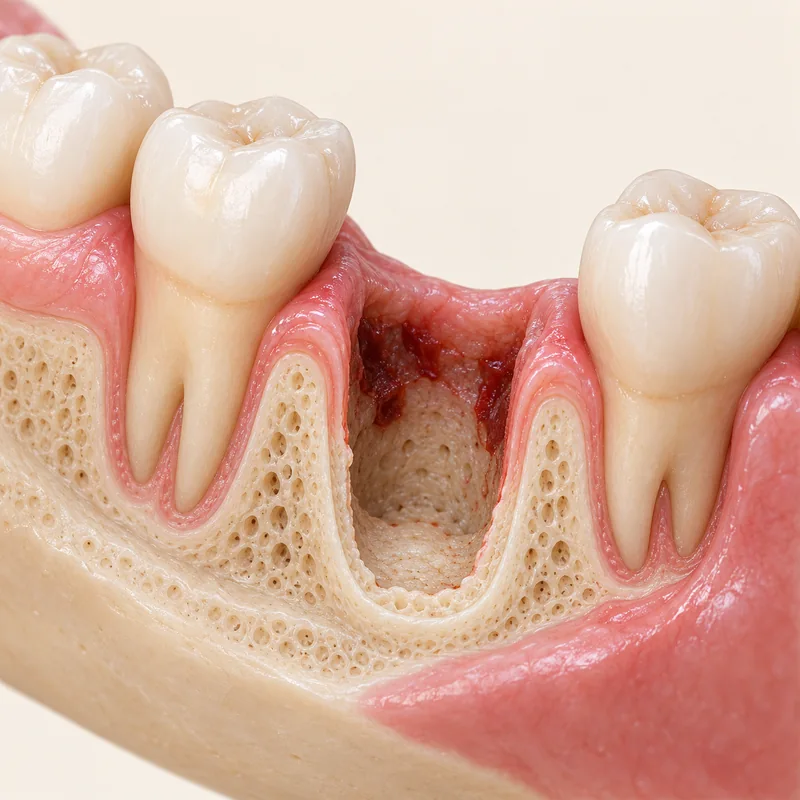
An empty socket remains after extraction. A blood clot covers the wound and supports healing. Do not disturb it with fingers or objects.
If the clot is lost too soon or does not form adequately, the area can be very painful. This does not automatically mean a pus-forming infection.
Contact the treating practice if pain worsens after a few days. Cleaning, local wound care and pain relief are planned according to the findings.
After tooth removal, often with increasing pain after a few days.
The protective blood clot is absent or breaks down too soon.
A dental examination and appropriate local wound care.
Three steps. Straight to the point.
Explanations are also shown on screen.

Silent film in German · English explanations in the three views above
Loss of clot coverage does not automatically mean a spreading infection. Fever, increasing swelling or feeling unwell need further assessment.
No. Some wound pain can be part of early healing. Clearly increasing or poorly controlled pain, fever or swelling should be checked.
No. Antibiotics are not automatically indicated for dry socket without spreading infection. Treatment depends on the examination and general health.
Follow your individual aftercare instructions, do not smoke and do not disturb the wound. In particular, avoid forceful rinsing on the day of extraction.
A question to discuss with Dr. med. dent. Niusha Barahmand Pour:
Is the wound following the expected healing course, or does it need additional local care?
Symptoms, examination findings and personal wishes form the basis of individual treatment planning.
Discuss increasing pain after tooth removal directly with the treating practice or emergency dental service.
Call about symptomsFor acute symptoms, call for prompt assessmentBuild on the simple explanation with clinical terms, key distinctions and a knowledge question.
Dry socket and bacterial wound infection are not interchangeable. Antibiotics do not replace assessment and local wound care.
Editorial research: 23 October 2026. This explanation covers general principles and does not replace a personal examination. Suitable treatment is discussed following individual assessment.