What are wisdom teeth?
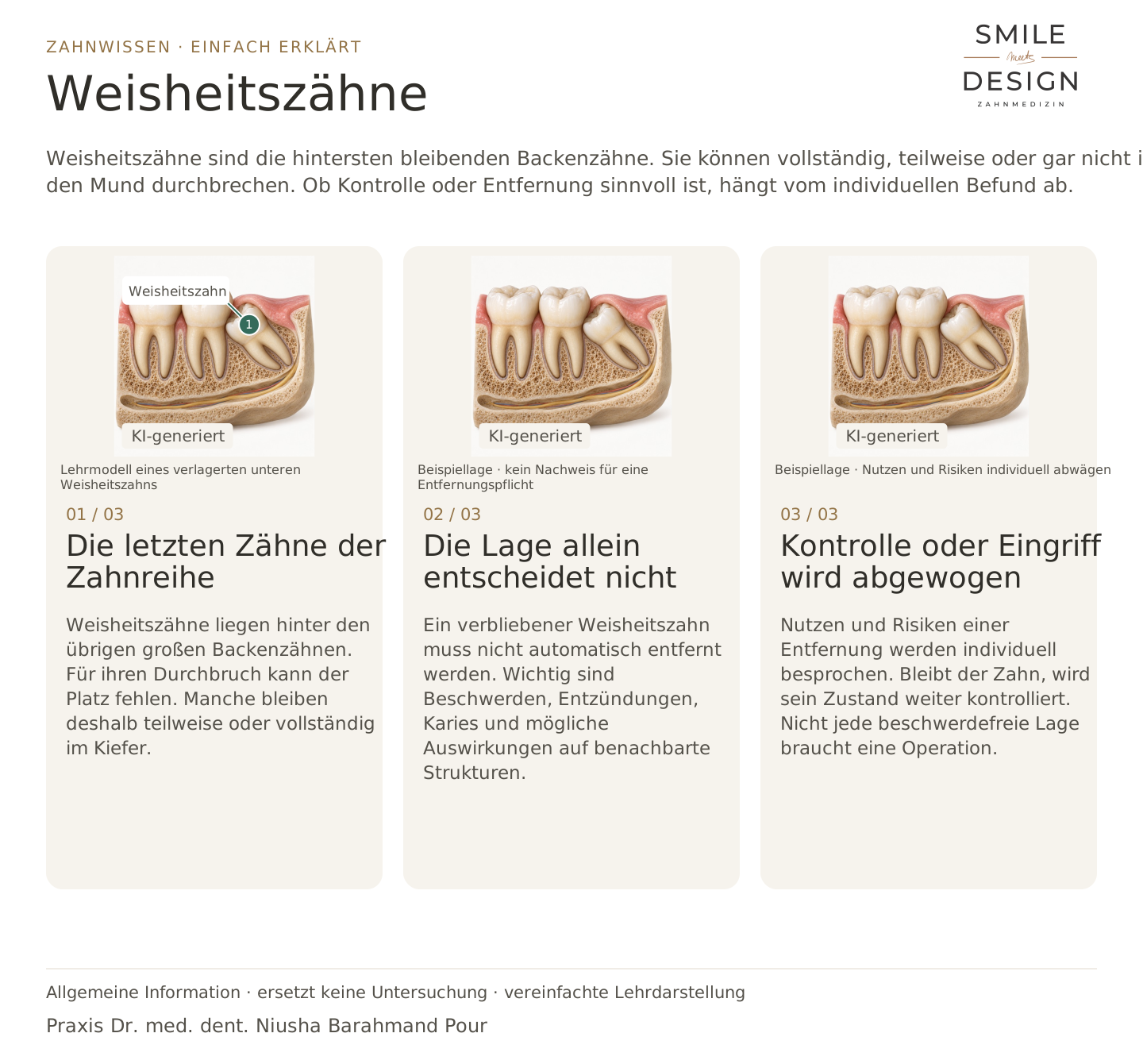
The rearmost permanent molars, technically called third molars.

Wisdom teeth are the rearmost permanent molars. They may emerge fully, partly or not at all into the mouth. Whether monitoring or removal is appropriate depends on the individual findings.
For dental trainees & teams
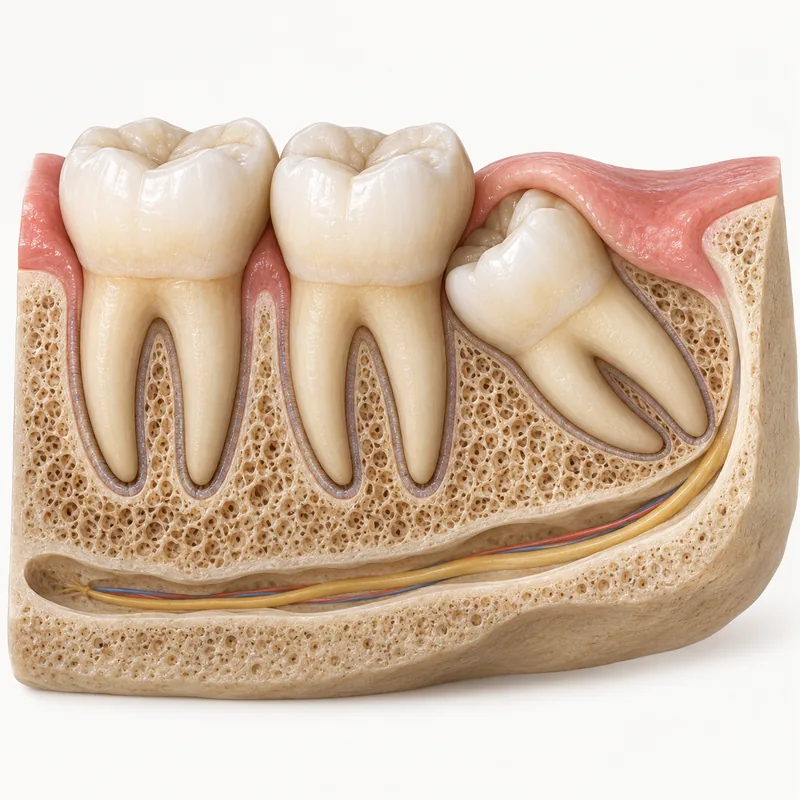
Wisdom teeth sit behind the other molars. There may not be enough space for them to emerge. Some therefore remain partly or completely within the jaw.
A wisdom tooth that has not emerged does not automatically need removal. Symptoms, inflammation, decay and possible effects on nearby structures are important.
The benefits and risks of removal are discussed individually. If the tooth remains, its condition continues to be monitored. Not every symptom-free position requires surgery.
The rearmost permanent molars, technically called third molars.
Part of the tooth crown is visible, while another part remains covered by tissue.
Not as a rule; findings, foreseeable problems and the risks of surgery are weighed up.
Three steps. Straight to the point.
Explanations are also shown on screen.

Silent film in German · English explanations in the three views above
Unerupted describes a tooth that has not emerged. A recommendation for removal is a separate decision following examination and consideration of the options.
The tooth has not fully emerged into the mouth. Part of a partially erupted tooth is visible.
No. Existing or foreseeable problems and the risks of surgery matter, not the position alone.
Changes can still occur later. Examination helps assess the tooth, its surroundings and neighbouring teeth.
A question to discuss with Dr. med. dent. Niusha Barahmand Pour:
Are there problems or foreseeable risks involving my wisdom teeth, and what supports monitoring or removal?
An individual examination and a discussion of suitable next steps are foundations of planning at the practice.
We can discuss the position of your wisdom teeth and possible next steps following an examination.
Have your wisdom teeth assessedChoose an appointment on DoctolibBuild on the simple explanation with clinical terms, key distinctions and a knowledge question.
An unerupted tooth is not automatically diseased. Symptoms, disease-related changes, foreseeable problems and surgical risks are assessed separately.
Editorial research: 23 October 2026. This explanation covers general principles and does not replace a personal examination. Suitable treatment is discussed following individual assessment.