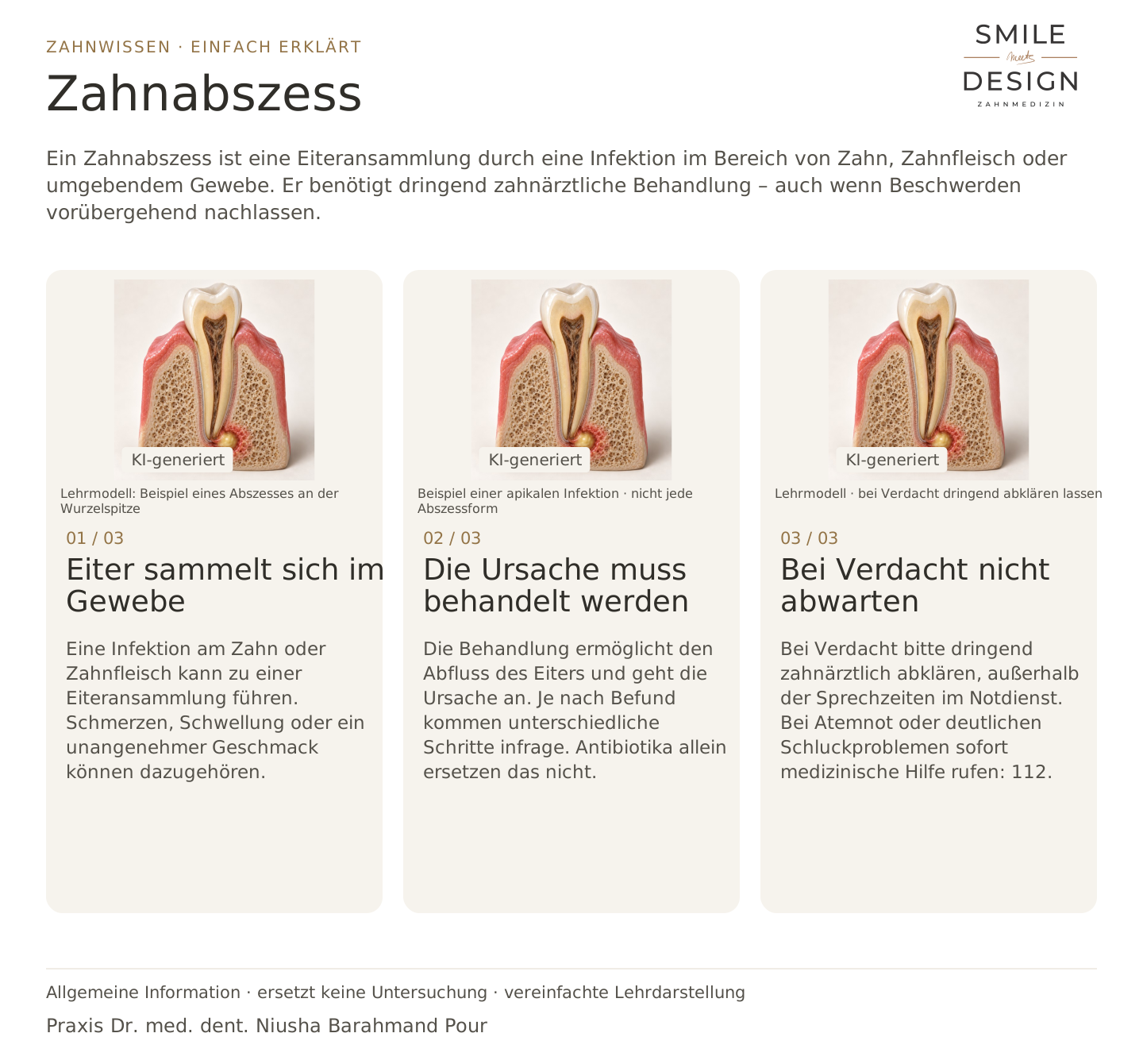
What is a dental abscess?
A collection of pus caused by an infection around a tooth or the gums.

A dental abscess is a collection of pus caused by an infection around a tooth, the gums or surrounding tissue. It requires urgent dental treatment, even if symptoms temporarily ease.
For dental trainees & teams
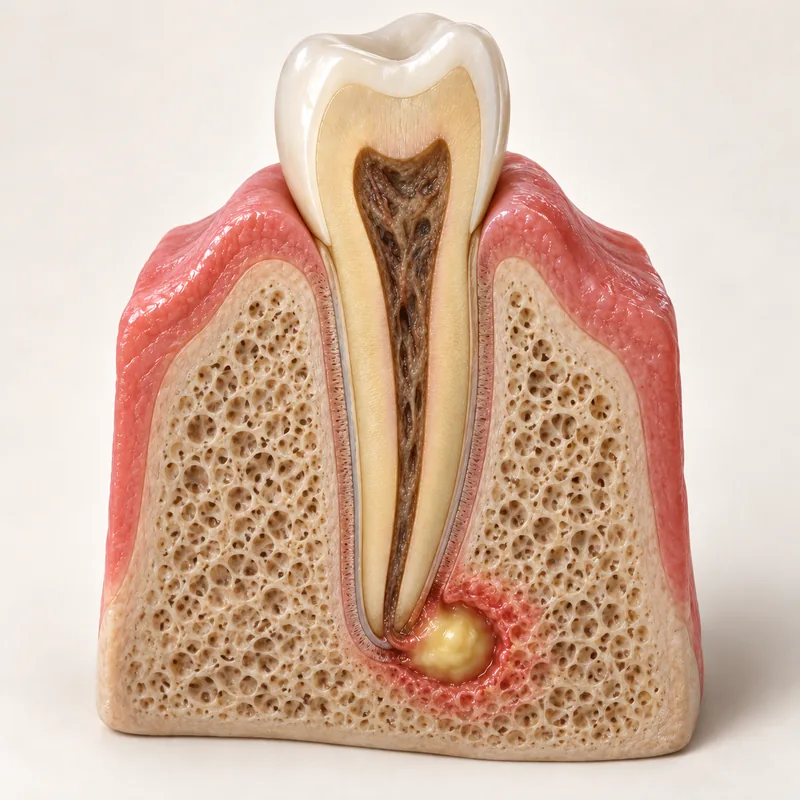
An infection of a tooth or the gums can lead to a collection of pus. Symptoms may include pain, swelling or an unpleasant taste.
Treatment allows pus to drain and addresses the cause. Different steps may be needed depending on the findings. Antibiotics alone are not a substitute.
Seek urgent dental assessment if you suspect an abscess; use the emergency dental service outside opening hours. For difficulty breathing or significant difficulty swallowing, call 112 immediately.
A collection of pus caused by an infection around a tooth or the gums.
The source of infection must be eliminated and pus allowed to drain where necessary.
Seek urgent dental assessment; call 112 immediately for difficulty breathing or significant difficulty swallowing.
Three steps. Straight to the point.
Explanations are also shown on screen.

Silent film in German · English explanations in the three views above
Pulpitis is inflammation of the pulp. An abscess is a collection of pus. Not every toothache is an abscess.
No. Even if pus drains or symptoms ease, the source of the infection still needs dental treatment.
No. Local treatment of the cause is essential. Antibiotics may also be needed if the infection spreads or causes general symptoms, for example; the treating clinician decides.
Difficulty breathing, significant difficulty swallowing or rapidly spreading swelling requires immediate medical help. Call 112 for difficulty breathing or other threatening symptoms.
A question to discuss with Dr. med. dent. Niusha Barahmand Pour:
Where is the source of the infection, and what treatment is needed now?
The examination assesses the findings and necessary next steps; this glossary entry does not replace urgent care.
If you suspect an abscess, contact a dentist urgently. Do not wait for a routine appointment if acute warning signs occur.
Call for urgent assessmentFor acute symptoms, call for prompt assessmentBuild on the simple explanation with clinical terms, key distinctions and a knowledge question.
Local treatment of the cause and antibiotics are not interchangeable. The findings determine whether medication is also needed.
Editorial research: 23 October 2026. This explanation covers general principles and does not replace a personal examination. Suitable treatment is discussed following individual assessment.