Compared with?
Standard care for the same findings.

In German statutory insurance, andersartige Versorgung means a different type of prosthesis from the standard care for the particular findings. An implant-supported crown instead of a specified bridge may be an example. A findings-based subsidy may remain available without automatically covering the additional costs.
For training & practice ↓
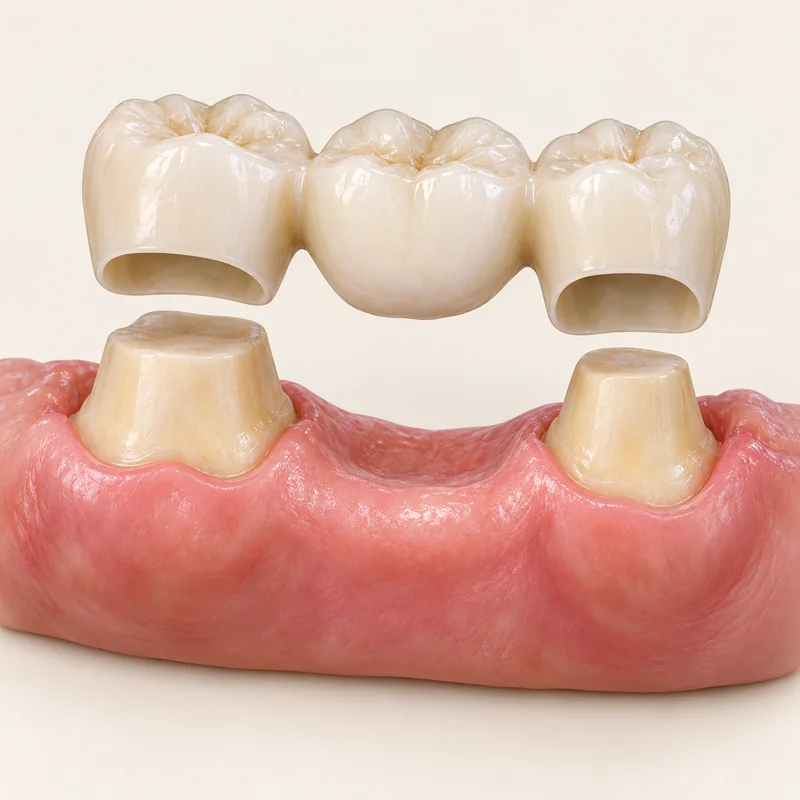
The findings and their standard care are established first. Different-type care is defined relative to that reference.
The chosen option uses a different replacement concept. Suitability, procedures, cleaning and alternatives should be weighed together.
The insurer assesses the treatment-and-cost plan. Understand the approved contribution, billing and remaining costs before treatment.
Standard care for the same findings.
No.
Suitability, approval and contribution.
Three steps. No audio.
Each scene can also be selected manually.

Silent educational film with German on-screen text and simplified teaching images. Not a patient case or a promised treatment outcome. The full English explanation is available below.
The findings and their standard care are established first. Different-type care is defined relative to that reference.
The chosen option uses a different replacement concept. Suitability, procedures, cleaning and alternatives should be weighed together.
The insurer assesses the treatment-and-cost plan. Understand the approved contribution, billing and remaining costs before treatment.
An extra within the standard treatment type can be gleichartig. Andersartig requires a different treatment type; colour alone does not establish it.
No. It classifies the option within the subsidy system; it does not by itself establish the best clinical choice.
No. A possible prosthetic subsidy is not blanket cover for implant treatment.
Yes, subject to statutory requirements. Confirm the individual amount and procedure with the insurer.
Editorially suggested question to discuss with Dr Niusha Barahmand Pour:
What are the benefits and limitations of this different replacement type for me?
Ask for the alternative treatment concepts and patient costs to be explained.
Discuss an alternative prosthesisAppointment selection at DoctolibAn extra within the standard treatment type can be gleichartig. Andersartig requires a different treatment type; colour alone does not establish it.
Editorial research: . General information, not an individual diagnosis or treatment recommendation. Teaching illustrations are simplified and do not depict a patient case.