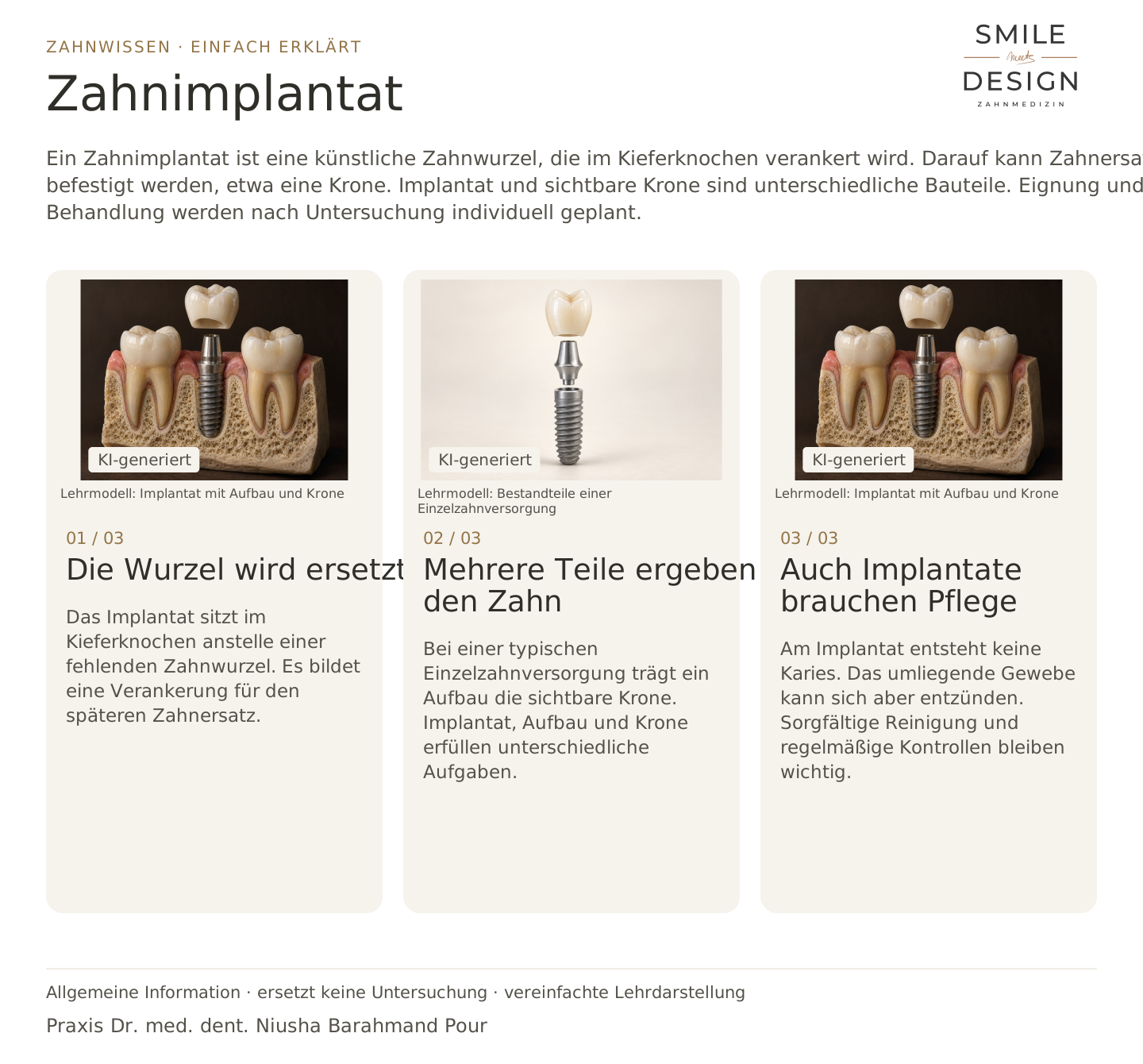
Which part of the tooth does it replace?
The implant takes over the anchoring role of a missing tooth root within the bone. The visible crown fitted later is a separate part of the restoration.

A dental implant is an artificial tooth root anchored in the jawbone. A restoration, such as a crown, can be attached to it. The implant and visible crown are different components. Suitability and treatment are planned individually after an examination.
For dental trainees & teams
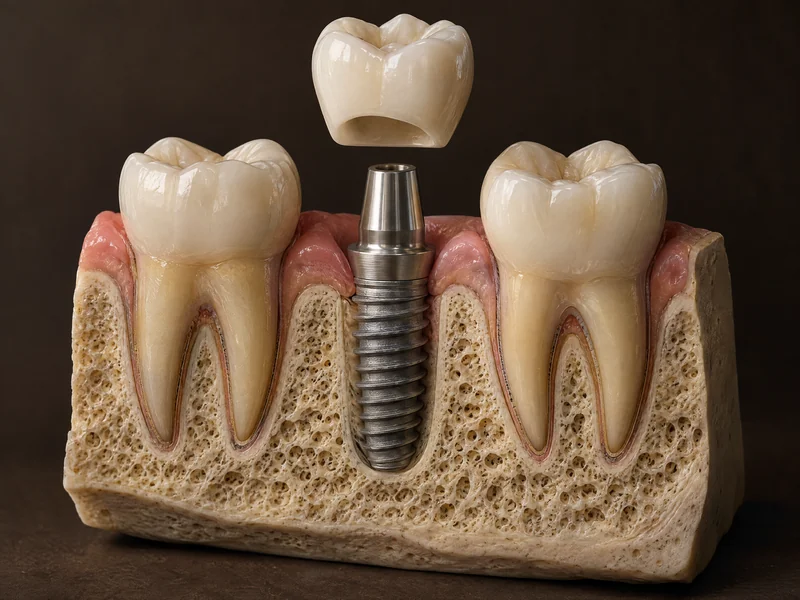
The implant sits in the jawbone in place of a missing tooth root. It provides an anchor for the later restoration.
In a typical single-tooth restoration, an abutment supports the visible crown. Implant, abutment and crown serve different purposes.
An implant cannot develop tooth decay. The surrounding tissues can, however, become inflamed. Careful cleaning and regular checks remain important.
The implant takes over the anchoring role of a missing tooth root within the bone. The visible crown fitted later is a separate part of the restoration.
Bone, surrounding tissue and general health are part of the assessment. The conditions for an implant-supported restoration are not the same for every gap.
Planning is followed by implant placement, often a healing period, and fitting the restoration. The tissues around the implant need ongoing care and regular checks.
Three steps. Straight to the point.
Explanations are also shown on screen.

Silent film in German · English explanations in the three views above
The implant lies mainly within bone and replaces the root. The crown is the visible part of the restoration. Not every crown is supported by an implant.
Not automatically. Bone, surrounding tissues, general health and other factors are assessed before a decision is made.
No. A healing period is often needed first. Earlier restoration is only possible when suitable conditions are met.
Implants can also support bridges or removable dentures. Their number and positioning are planned for the particular restoration.
A question to discuss with Dr. med. dent. Niusha Barahmand Pour:
What is the condition of the bone and gums, and how should the eventual restoration fit into my bite?
Treatment planning at Dr. Barahmand Pour's practice considers the dental starting point and personal preferences together.
If you have a missing tooth, we can discuss the conditions and possible restoration options together.
Discuss your missing toothChoose an appointment on DoctolibBuild on the simple explanation with clinical terms, key distinctions and a knowledge question.
The implant body and visible restoration are different parts. Designs vary; not every restoration requires the same components.
Editorial research: 22 October 2026. This explanation covers general principles and does not replace a personal examination. Suitable treatment is discussed following individual assessment.