Purpose?
Relate the upper and lower jaws.

A bite registration records a particular spatial relationship between the upper and lower jaws. It can use a recording material or digital data. This information helps relate models or digital surfaces and plan a restoration with tooth contacts in mind.
For training & practice ↓
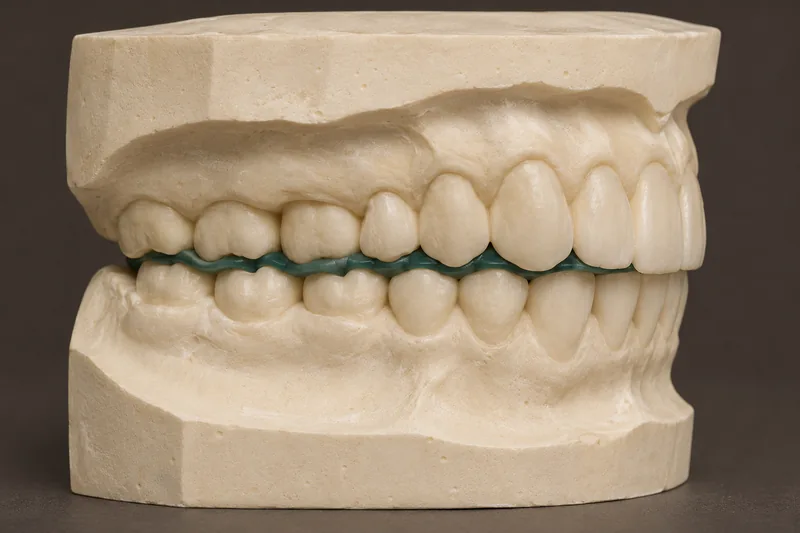
The position recorded depends on the task. Habitual tooth contact and other defined jaw positions are not automatically identical.
The record communicates how the jaws were positioned. It replaces neither a complete impression nor a full functional examination.
After the restoration is made, the bite is checked in the mouth. A dataset alone does not guarantee comfortable chewing.
Relate the upper and lower jaws.
Using material or digital records.
Check contacts in the mouth.
Three steps. No audio.
Each scene can also be selected manually.

Silent educational film with German on-screen text and simplified teaching images. Not a patient case or a promised treatment outcome. The full English explanation is available as text.
One record captures a position. Jaw movements and symptoms may require additional information.
Follow the particular instructions. Excessive or unfamiliar clenching can make the intended record harder to obtain; mention if the position feels unusual.
No. An impression captures surfaces. A bite record chiefly captures the relationship between the opposing arches.
Have it checked. Do not file it yourself or try to adapt it by biting forcefully; an interfering contact can be assessed professionally.
Editorially suggested question to discuss with Dr Niusha Barahmand Pour:
Which position is being recorded, and how will the finished restoration be checked?
Does a new restoration contact first or feel unfamiliar? Have its contacts checked.
Have your bite assessedAppointment selection at DoctolibOne record captures a position. Jaw movements and symptoms may require additional information.
Editorial research: . General information, not an individual diagnosis or treatment recommendation. Teaching illustrations are simplified and do not depict a patient case.