What does occlusion mean?
The contacts between the upper and lower teeth.

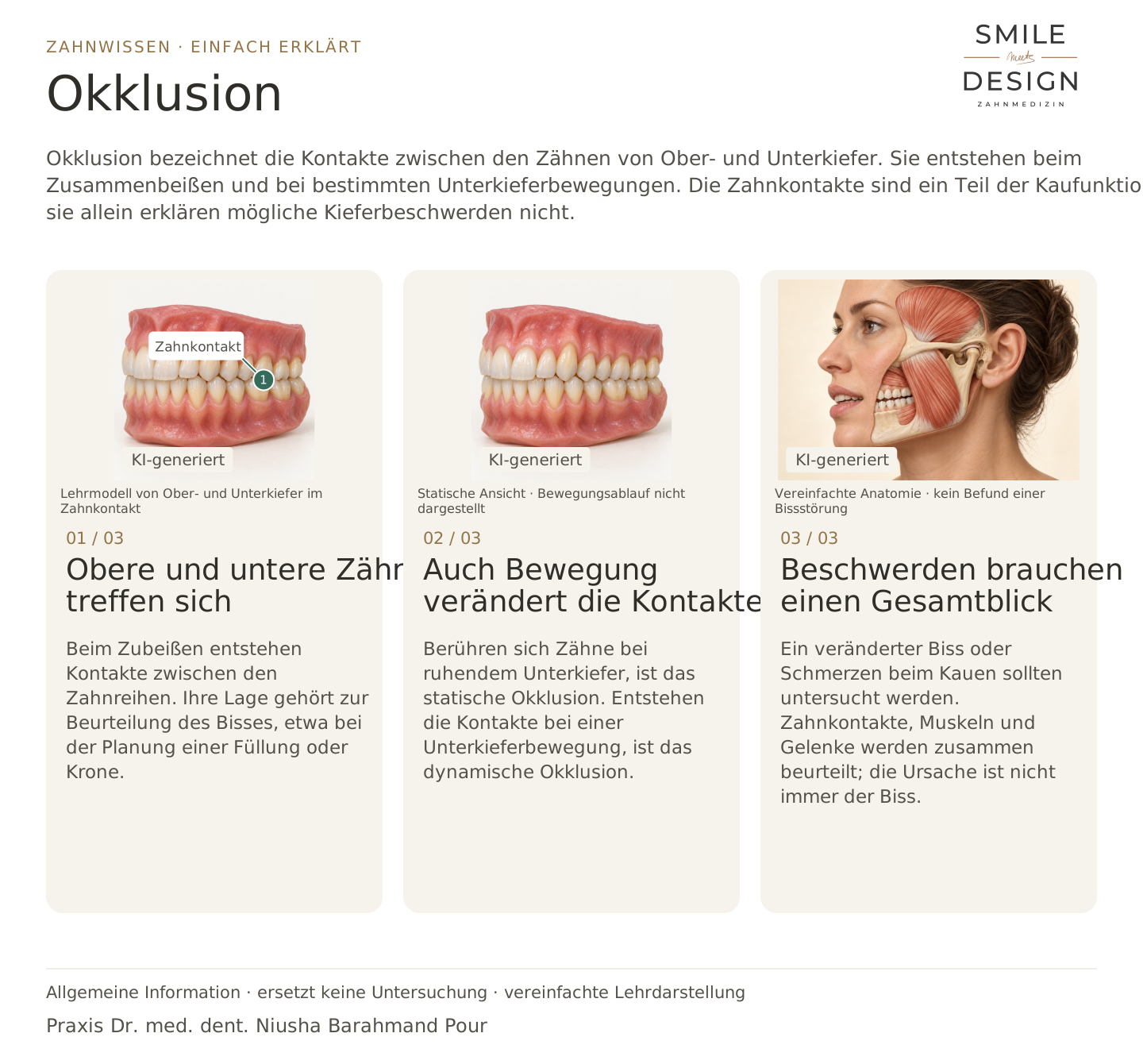
Occlusion describes contacts between the upper and lower teeth. These occur when biting together and during certain lower-jaw movements. Tooth contacts are one part of chewing function; they do not explain possible jaw symptoms on their own.
For dental trainees & teams
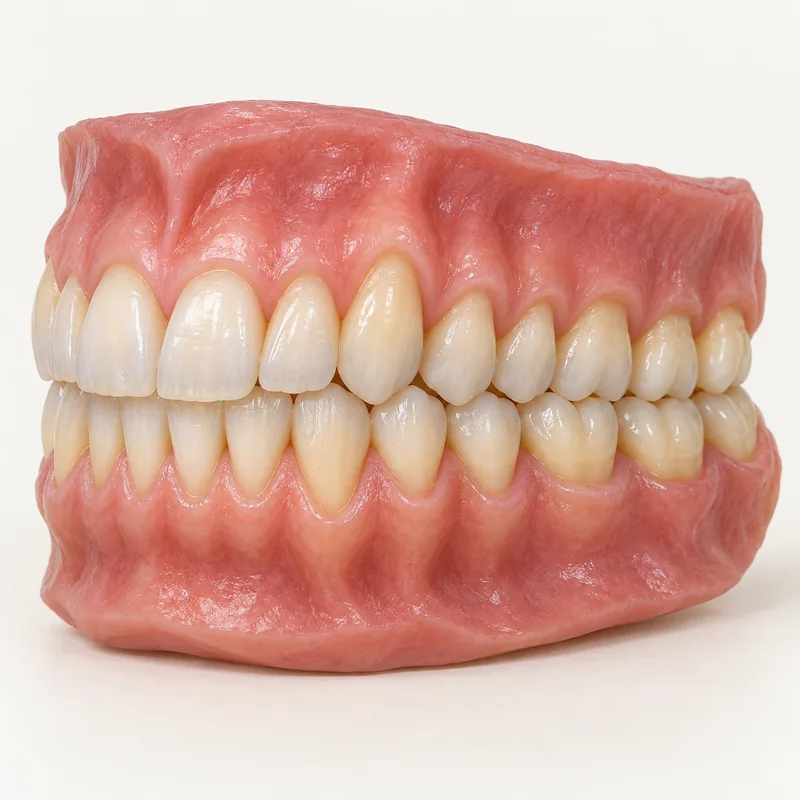
Biting together creates contacts between the rows of teeth. Their location is part of assessing the bite, for example when planning a filling or crown.
When teeth touch while the lower jaw is stationary, this is static occlusion. Contacts that occur during lower-jaw movement are called dynamic occlusion.
A changed bite or pain when chewing should be examined. Tooth contacts, muscles and joints are assessed together; the bite is not always the cause.
The contacts between the upper and lower teeth.
They are part of biting and chewing and change during certain lower-jaw movements.
For example, with fillings, crowns or a changed bite sensation. Symptoms are assessed in context, rather than explained by tooth contacts alone.
Three steps. Straight to the point.
Explanations are also shown on screen.

Silent film in German · English explanations in the three views above
Occlusion describes tooth contacts. CMD describes symptoms or functional disorders of the chewing system. The terms are not interchangeable diagnoses.
No. Different factors may contribute to jaw symptoms. Tooth positions or a single contact are not enough to diagnose craniomandibular dysfunction (CMD).
The new surface should fit the existing tooth contacts. If a tooth feels too high when biting afterwards, the practice should check the contact.
No. Natural tooth structure that has been ground away does not grow back. Whether any correction is needed, and which one, requires examination and a justified treatment plan.
A question to discuss with Dr. med. dent. Niusha Barahmand Pour:
How will my tooth contacts and symptoms be assessed together?
A functioning bite, alongside healthy structures, is a foundation of treatment planning at her practice.
An unfamiliar bite sensation or discomfort when chewing is a reason for an examination.
Have your tooth contacts checkedChoose an appointment on DoctolibBuild on the simple explanation with clinical terms, key distinctions and a knowledge question.
Static and dynamic occlusion differ by whether movement occurs. They describe contacts, not diagnoses of disease in themselves.
Editorial research: 23 October 2026. This explanation covers general principles and does not replace a personal examination. Suitable treatment is discussed following individual assessment.