What is it?
A sugar substitute.

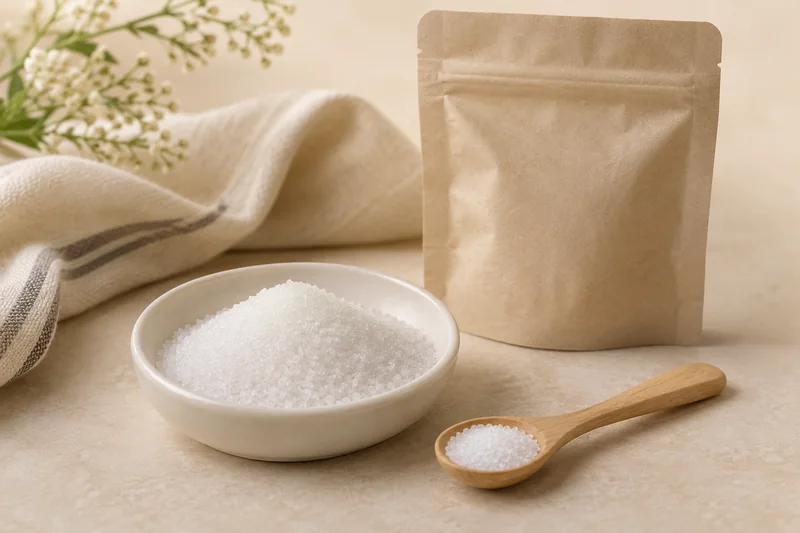
Erythritol is a sugar substitute belonging to the sugar alcohols. Compared with sugar, typical decay-related bacteria convert little of it into tooth-damaging acids. This does not mean that a product containing erythritol treats decay or replaces other preventive care.
For training & practice ↓
The complete ingredient list matters. One ingredient does not automatically make a food tooth-friendly.
Less fermentable sugar can reduce the acid challenge. This does not establish a special additional protective effect for every erythritol product.
Fluoride toothpaste, regular cleaning and appropriate examinations remain important. Erythritol cannot repair a cavity.
A sugar substitute.
Treat decay or replace cleaning.
Sugar and acids in the whole product.
Three steps. No audio.
Each scene can also be selected manually.

Silent educational film with German on-screen text and simplified teaching images. Not a patient case or a promised treatment outcome. The full English explanation is available as text.
Reducing available sugar and treating established decay are different tasks.
No. Both are sugar alcohols, but they are different substances. Findings about one substance or product cannot simply be transferred to another.
No. Sugar-free products can still contain acids. Decay caused by bacterial acids differs from direct acid erosion.
Household products are not intended for professional air-polishing treatment. Do not turn them into a home treatment or an abrasive cleaning mixture.
Editorially suggested question to discuss with Dr Niusha Barahmand Pour:
Which frequent sugar or acid exposures are particularly relevant to my teeth?
Unsure which drinks or snacks matter for your teeth? Preventive advice can put them in context.
Discuss diet and preventionAppointment selection at DoctolibReducing available sugar and treating established decay are different tasks.
Editorial research: . General information, not an individual diagnosis or treatment recommendation. Teaching illustrations are simplified and do not depict a patient case.