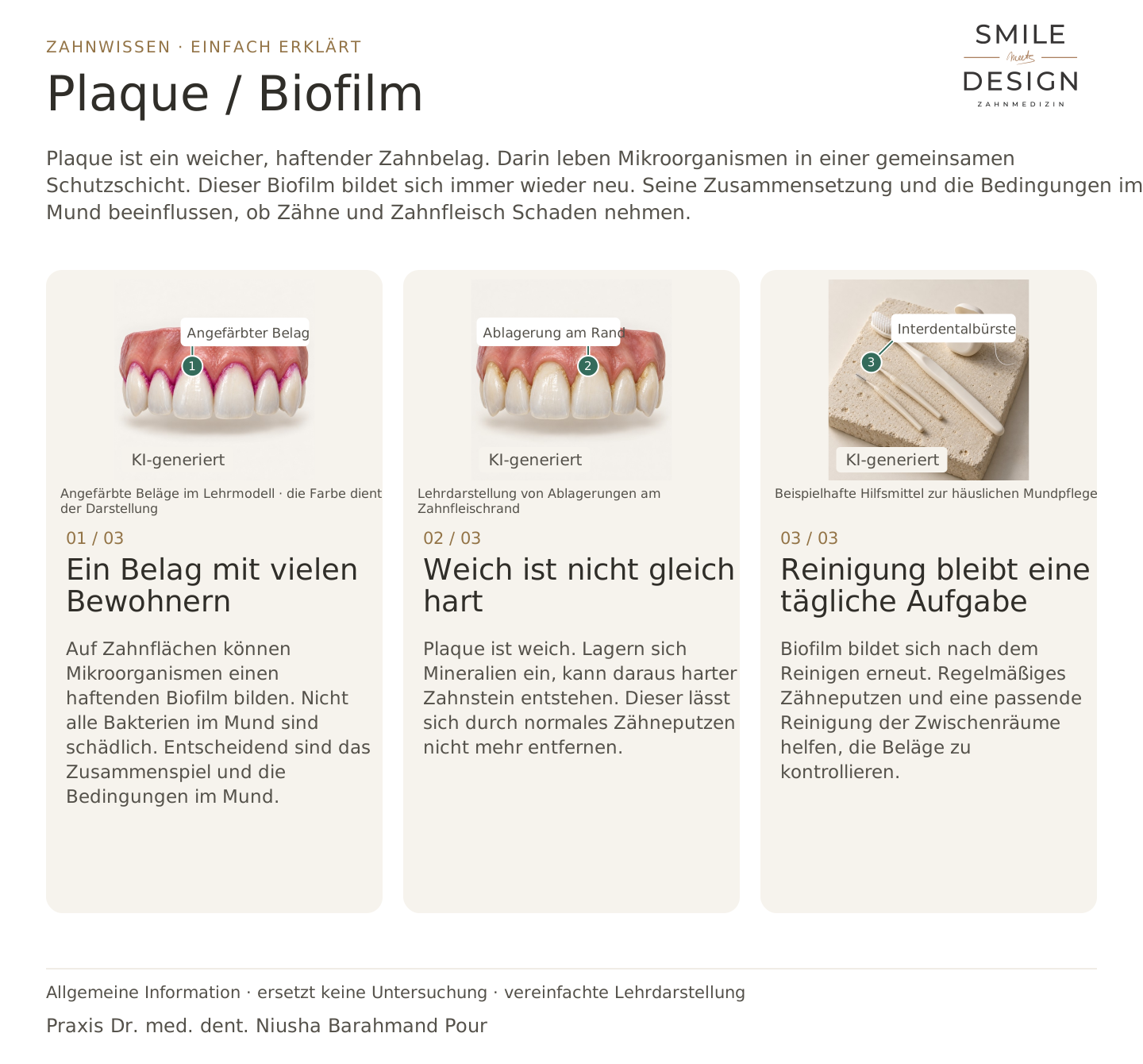
What lives in this coating?
Microorganisms form an adherent community on tooth surfaces. Not all are harmful; the composition and conditions in the mouth matter.

Plaque is a soft, sticky deposit on teeth. Microorganisms live in it within a shared protective layer. This biofilm continually forms again. Its composition and conditions in the mouth influence whether teeth and gums are harmed.
For dental trainees & teams
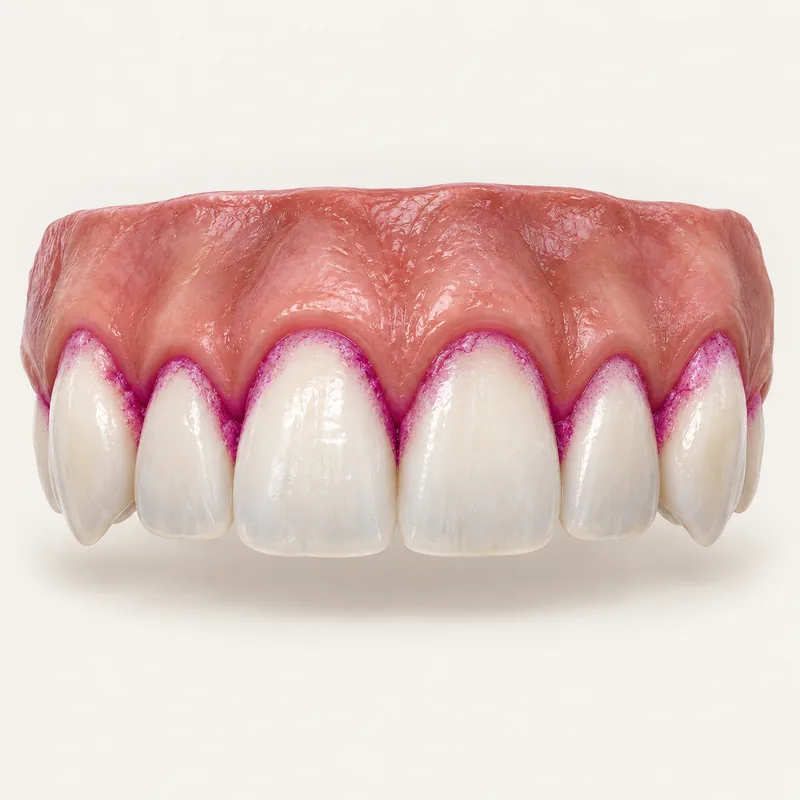
Microorganisms can form an adherent biofilm on tooth surfaces. Not all bacteria in the mouth are harmful. Their interactions and conditions in the mouth are what matter.
Plaque is soft. If minerals build up within it, hard tartar can form. Normal brushing can no longer remove it.
Biofilm forms again after cleaning. Regular brushing and suitable interdental cleaning help keep plaque under control.
Microorganisms form an adherent community on tooth surfaces. Not all are harmful; the composition and conditions in the mouth matter.
Certain bacteria turn sugar into acids that dissolve tooth minerals. Plaque at the gumline can also encourage an inflammatory response.
Biofilm forms again after brushing. A toothbrush and suitable interdental care limit it without needing to make the mouth germ-free.
Three steps. Straight to the point.
Explanations are also shown on screen.

Silent film in German · English explanations in the three views above
Plaque is soft biofilm; tartar is mineralised, hard plaque. Both terms describe deposits, not tooth decay.
No. Plaque is a soft biofilm. Tartar forms through the incorporation of minerals and must be removed professionally.
Microorganisms are part of the mouth. They colonise tooth surfaces again. Daily cleaning limits plaque; it does not make the mouth germ-free.
Certain bacteria turn sugar into acids that dissolve tooth minerals. Plaque at the gumline can also encourage an inflammatory response.
A question to discuss with Dr. med. dent. Niusha Barahmand Pour:
Where does plaque remain on my teeth, and what cleaning method suits those areas?
At the practice, an examination and personal discussion form the basis of oral care recommendations.
We offer personal advice on plaque and daily cleaning.
Discuss your oral careChoose an appointment on DoctolibBuild on the simple explanation with clinical terms, key distinctions and a knowledge question.
Soft biofilm can be controlled mechanically. Mineralised tartar is a hard deposit and needs professional removal.
Editorial research: 22 October 2026. This explanation covers general principles and does not replace a personal examination. Suitable treatment is discussed following individual assessment.