What is the priority?
Arrange professional help promptly; call 112 for serious general injuries.

Front tooth trauma is an accident-related injury to the front teeth and supporting tissues. A tooth may fracture, loosen, move out of position or be knocked out completely. Prompt dental help matters even when pain is mild. Immediate steps differ for primary and permanent teeth.
For dental trainees & teamsFirst aid after a dental injury
Arrange immediate dental care. Do not wait to watch the video or for a routine appointment booked online.
For unconsciousness, breathing difficulty or serious associated injuries: call 112 in Germany.
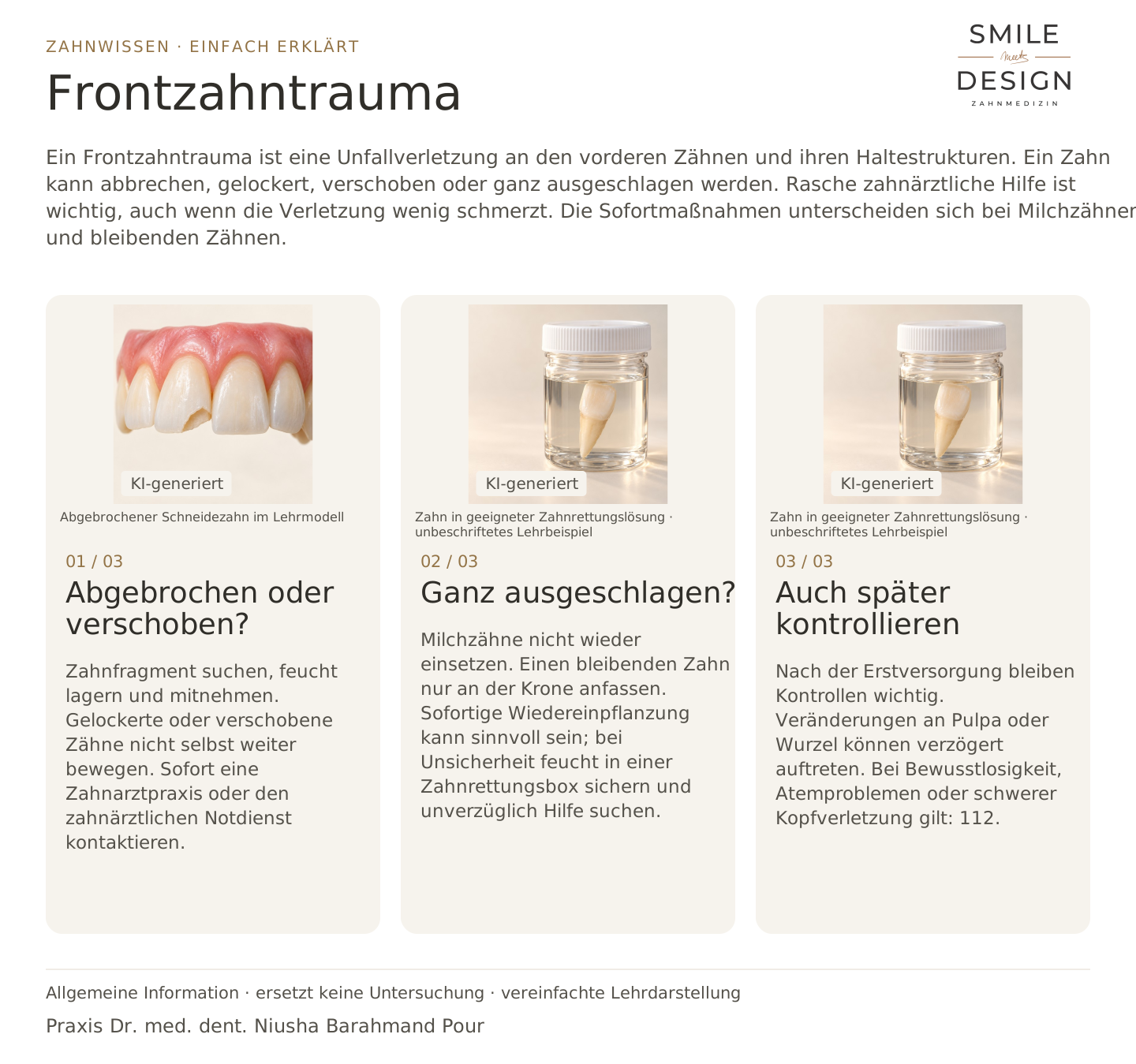
Find the fragment, keep it moist in milk or saline and take it with you. Do not glue it yourself. Seek prompt dental care even if the piece cannot be found.
Do not keep testing it by wiggling or force it back. Contact a dentist or dental hospital immediately.
Distinguish a baby tooth from a permanent tooth. The following steps apply when the entire tooth is out of its socket.
Never replant baby teeth. Hold a permanent tooth only by its visible crown. Do not scrub, brush or disinfect the root. If dirty, rinse briefly and gently with milk or saline.
Only if the tooth type is certain, the person is alert and cooperative, and it can be done safely: gently place it back in its socket facing the correct way, without force. Then bite gently on clean gauze. Immediate dental care is still necessary.
If unsure or unable to replant it, use an available tooth-rescue container with storage medium, or cold milk as an alternative. Never store it dry. Do not delay care searching for a container. Never store a tooth in a child’s mouth: it could be swallowed or inhaled.
During our opening hours. If nobody is available or the practice is closed, immediately contact an emergency dental service or dental hospital.
Call the listed practice before travelling. Take the tooth or fragment with you.
First aid based on IADT/ASD, 2024. The treating team provides individual care. Clinical source.

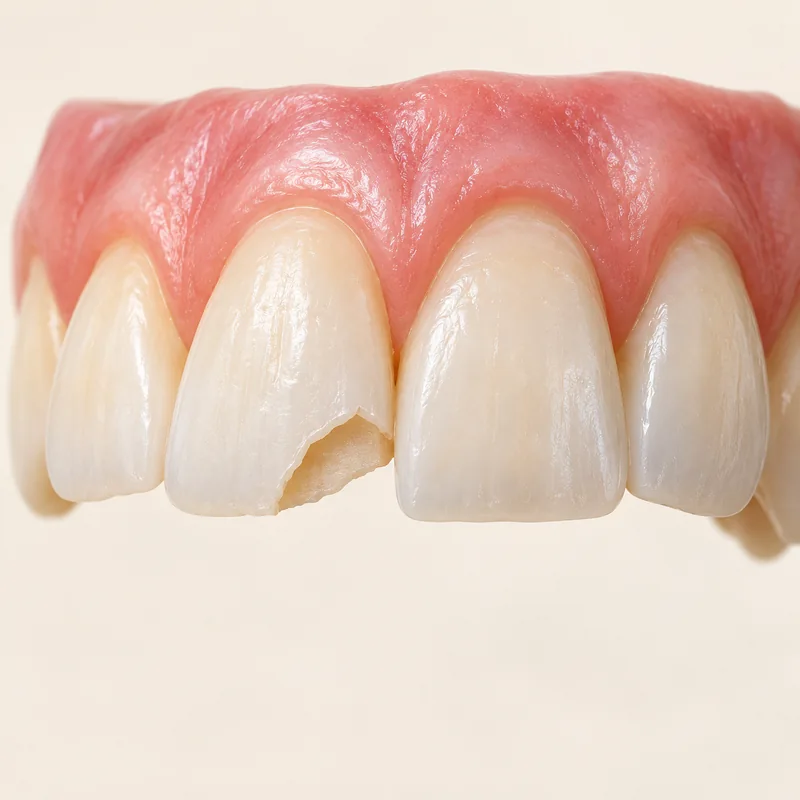
Find the fragment, keep it moist and bring it along. Do not move loose or displaced teeth further yourself. Contact a dental practice or emergency dental service immediately.
Do not replant primary teeth. Hold a permanent tooth only by its crown. Immediate replantation may be appropriate; if unsure, keep it moist in a tooth-rescue box and seek help without delay.
Checks remain important after initial care. Pulp or root changes may develop later. For unconsciousness, breathing problems or a serious head injury, call 112.
Arrange professional help promptly; call 112 for serious general injuries.
The tooth or fragment kept moist. Hold a knocked-out tooth only by its crown; do not scrub or disinfect it.
Dry storage, moving loose teeth yourself and replanting a primary tooth. Do not wait for a routine online appointment.
Three steps. Straight to the point.
Explanations are also shown on screen.

Silent film in German · English explanations in the three views above
Fracture means a break. Luxation means loosening or displacement within supporting tissues. Avulsion means the tooth is completely knocked out of its socket.
Yes. Pain is not a reliable measure of injury severity. Broken, loose or displaced teeth need prompt assessment; a knocked-out permanent tooth needs immediate care.
Do not allow a knocked-out permanent tooth to dry. Milk is a short-term alternative. Do not lose time searching for an ideal solution; arrange help immediately.
Pulp, roots and supporting tissues can develop delayed changes. Review depends on injury type and tooth development.
A question to discuss with Dr. med. dent. Niusha Barahmand Pour:
Which injury was identified, and what follow-up does this tooth need?
At the practice, findings, personal wishes and possible next steps are discussed through a consultation and examination.
For a current dental injury, arrange urgent help by telephone. If the practice cannot be reached, use an emergency dental service.
Contact for urgent assessmentFor acute symptoms, call for prompt assessmentBuild on the simple explanation with clinical terms, key distinctions and a knowledge question.
For knocked-out teeth, distinguishing primary from permanent teeth determines immediate action. If unsure, do not guess: get professional advice urgently and keep the tooth moist.
Editorial research: 23 October 2026. This explanation covers general principles and does not replace a personal examination. Suitable treatment is discussed following individual assessment.