What matters immediately?
Identify the tooth type, hold the crown and keep the root moist.

Tooth avulsion means a tooth has been completely knocked out of its socket in an accident. A permanent tooth needs immediate help: hold the crown only, do not scrub the root and do not let it dry. Knocked-out baby teeth must not be put back.
For dental trainees & teamsFirst aid after a dental injury
Arrange immediate dental care. Do not wait to watch the video or for a routine appointment booked online.
For unconsciousness, breathing difficulty or serious associated injuries: call 112 in Germany.
Never replant baby teeth. Hold a permanent tooth only by its visible crown. Do not scrub, brush or disinfect the root. If dirty, rinse briefly and gently with milk or saline.
Only if the tooth type is certain, the person is alert and cooperative, and it can be done safely: gently place it back in its socket facing the correct way, without force. Then bite gently on clean gauze. Immediate dental care is still necessary.
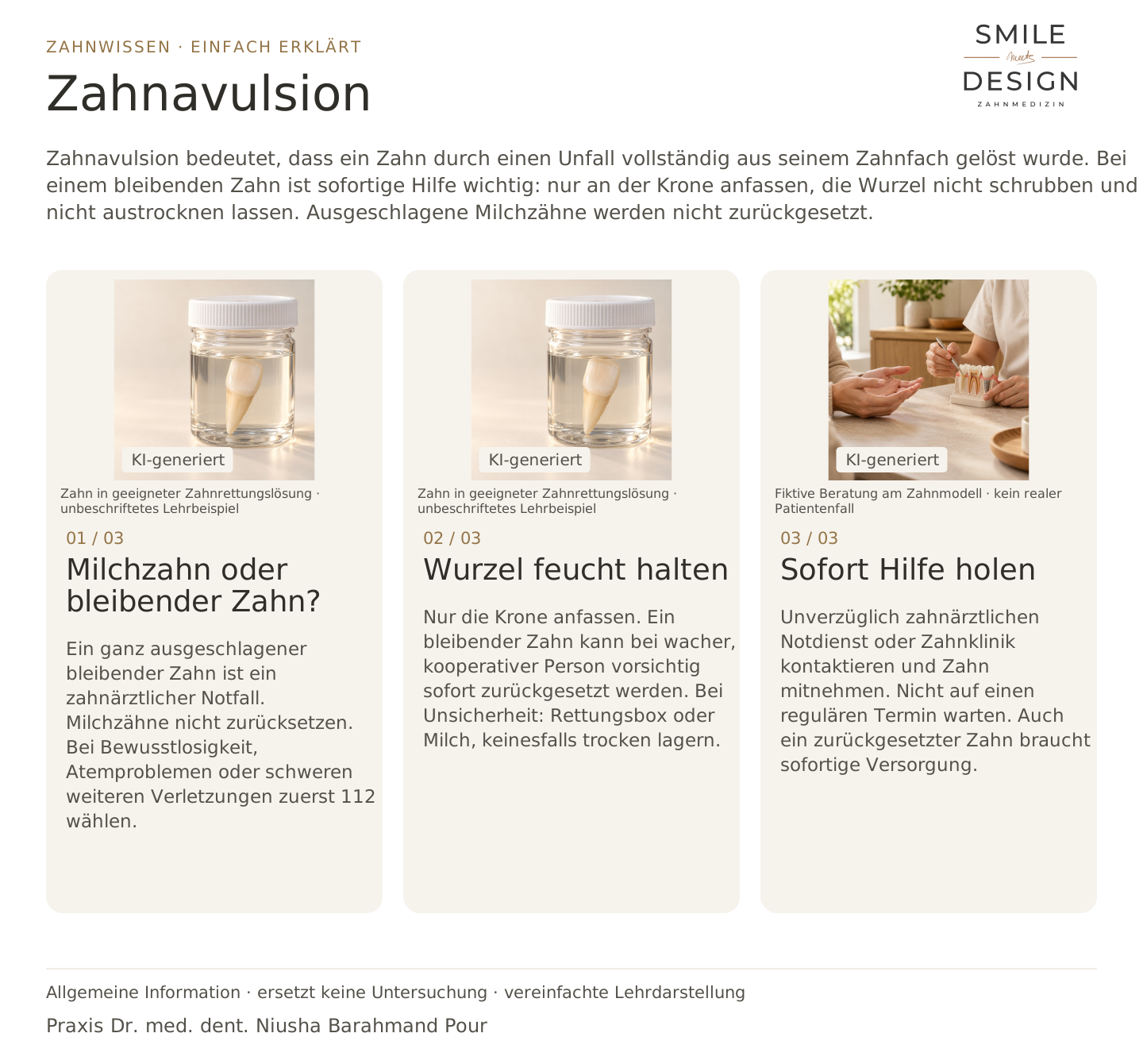
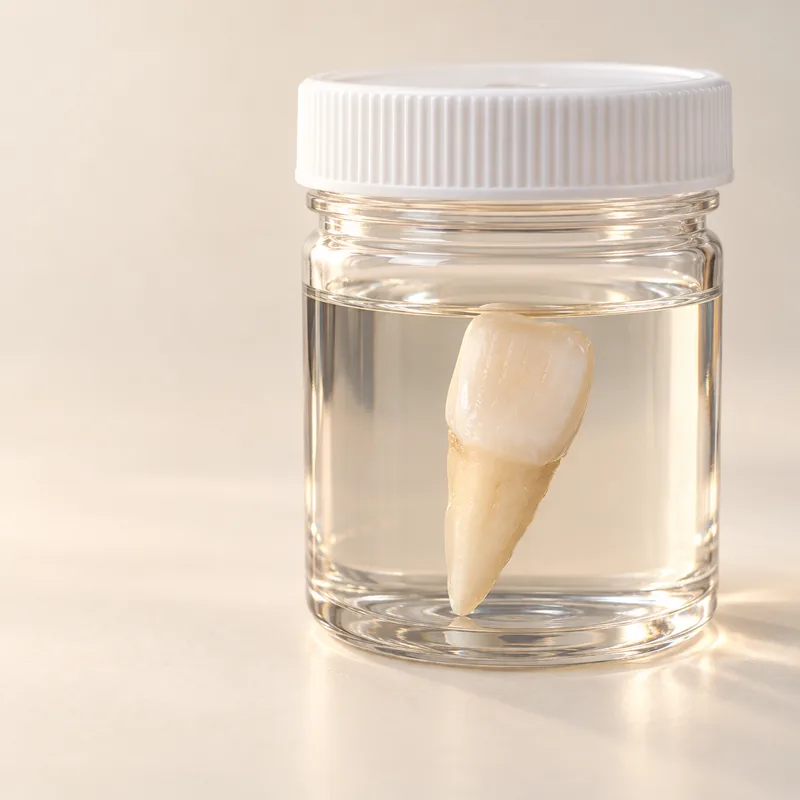
If unsure or unable to replant it, use an available tooth-rescue container with storage medium, or cold milk as an alternative. Never store it dry. Do not delay care searching for a container. Never store a tooth in a child’s mouth: it could be swallowed or inhaled.
During our opening hours. If nobody is available or the practice is closed, immediately contact an emergency dental service or dental hospital.
Call the listed practice before travelling. Take the tooth or fragment with you.
First aid based on IADT/ASD, 2024. The treating team provides individual care. Clinical source.

A completely knocked-out permanent tooth is a dental emergency. Do not replant baby teeth. Call 112 first for unconsciousness, breathing problems or other serious injuries.
Hold only the crown. A permanent tooth may be gently replanted immediately in an alert, cooperative person. If unsure, use tooth-rescue medium or milk; never store it dry.
Contact an emergency dentist or dental hospital immediately and take the tooth. Do not wait for a routine appointment. A replanted tooth also needs immediate professional care.
Identify the tooth type, hold the crown and keep the root moist.
Replant a permanent tooth immediately where appropriate; otherwise transport it in rescue medium or milk.
Immediately to an emergency dentist or dental hospital; serious associated injury: 112 in Germany.
Three steps. Straight to the point.
Explanations are also shown on screen.

Silent film in German · English explanations in the three views above
With avulsion the whole tooth is outside the socket. With luxation it is loosened or displaced but remains in the mouth. Both require prompt professional assessment.
Hold the crown and rinse briefly and gently with milk or saline. Do not rub, disinfect or brush the root. Further first aid depends on being certain it is a permanent tooth.
Place the tooth immediately in an available tooth-rescue container with storage medium. Milk is a temporary option if none is available. Do not delay care while searching for a container. Never store a tooth in a child’s mouth because it could be swallowed or inhaled.
Do not give up on it yourself. Keep it moist and seek immediate care. Time, storage, root development and other injuries affect the options; the accident still needs assessment.
A question to discuss with Dr. med. dent. Niusha Barahmand Pour:
What follow-up will the injured tooth need after immediate emergency treatment?
Symptoms, examination findings and personal wishes form the basis of individual treatment planning.
A tooth knocked out? Arrange immediate telephone advice and emergency dental care now.
Call immediately after a dental injuryFor acute symptoms, call for prompt assessmentBuild on the simple explanation with clinical terms, key distinctions and a knowledge question.
First aid differs fundamentally for baby and permanent teeth. If the tooth type is uncertain, seek immediate professional advice by telephone.
Editorial research: 23 October 2026. This explanation covers general principles and does not replace a personal examination. Suitable treatment is discussed following individual assessment.