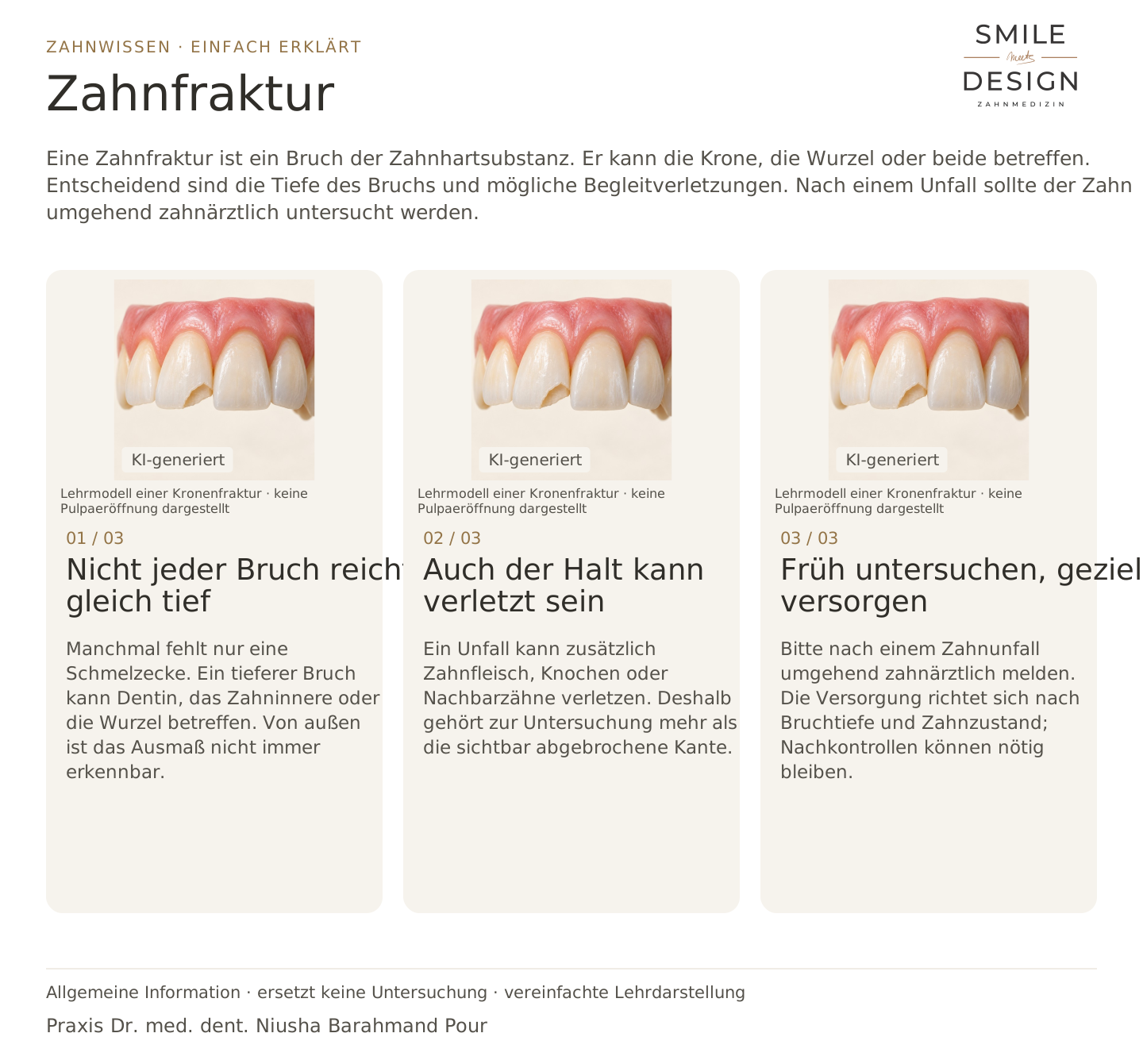
What is broken?
Depending on the injury, enamel, dentine, crown or root.

A tooth fracture is a break in the hard tissues of a tooth. It may involve the crown, root or both. The depth of the break and any associated injuries matter. After an accident, the tooth should be examined by a dentist without delay.
For dental trainees & teams
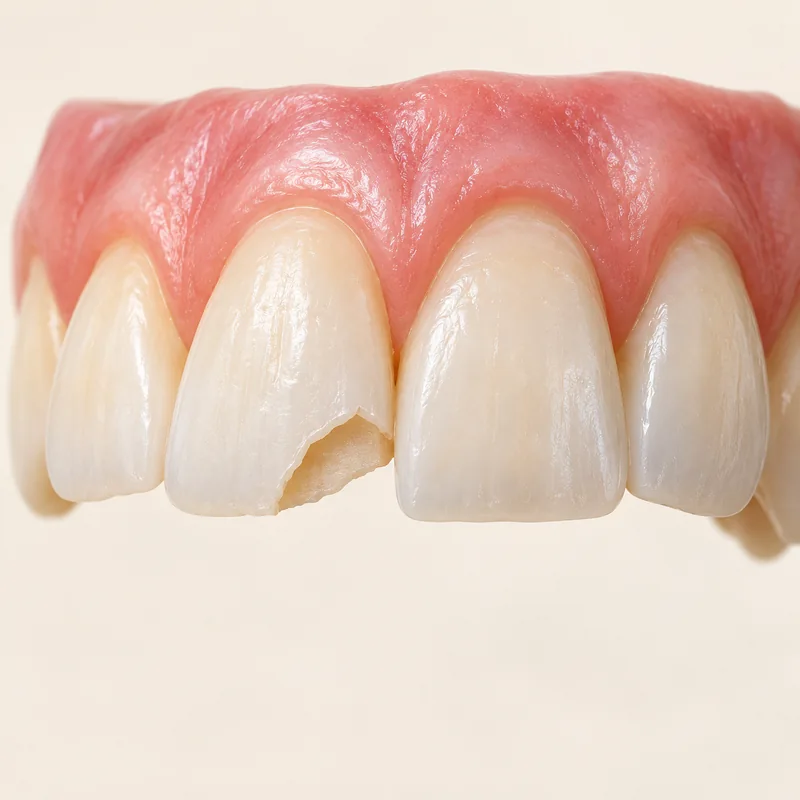
Sometimes only a corner of enamel is lost. A deeper break may involve dentine, the inside of the tooth or the root. Its full extent is not always visible.
An accident may also injure gums, bone or neighbouring teeth. The examination therefore covers more than the visibly broken edge.
Contact a dentist without delay after a dental injury. Treatment depends on the depth of the fracture and the condition of the tooth; follow-up may still be needed.
Depending on the injury, enamel, dentine, crown or root.
Have a tooth examined without delay after an accident.
Fracture depth, pulp condition, root development and associated injuries.
Three steps. Straight to the point.
Explanations are also shown on screen.

Silent film in German · English explanations in the three views above
A fracture is a break in tooth tissue. A luxation injury affects the supporting tissues; the tooth may be loose or displaced. Both injuries can occur together.
No. Some fractures can be treated by reattaching the fragment or rebuilding the tooth. Whether the pulp can be preserved or needs treatment depends on the findings.
Yes. A fragment may help with repair. Do not glue it back yourself; ask the dental practice or emergency dental service how to store it safely.
Not necessarily. Damage can initially be difficult to notice, especially after an accident. An injured tooth without pain should still be examined promptly.
A question to discuss with Dr. med. dent. Niusha Barahmand Pour:
Which structures have been injured, and what follow-up does the tooth need?
Symptoms, examination findings and personal wishes form the basis of individual treatment planning.
After a dental accident, please call directly; outside opening hours, contact an emergency dental service.
Call after a tooth injuryFor acute symptoms, call for prompt assessmentBuild on the simple explanation with clinical terms, key distinctions and a knowledge question.
An uncomplicated crown fracture involves enamel and sometimes dentine without exposing the pulp. In a complicated crown fracture, the pulp is exposed.
Editorial research: 23 October 2026. This explanation covers general principles and does not replace a personal examination. Suitable treatment is discussed following individual assessment.