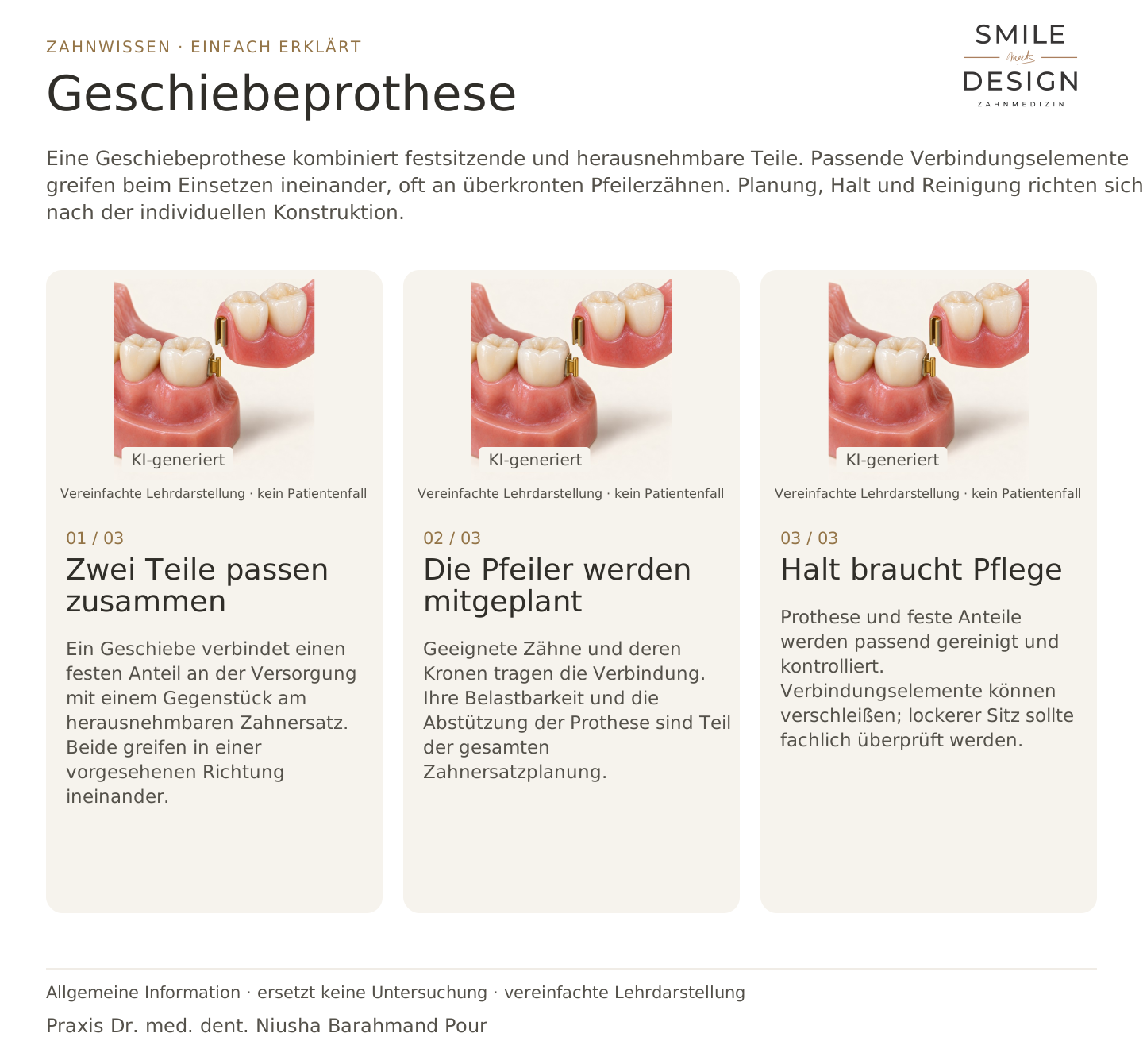
How is it retained?
Matching connectors on the fixed and removable parts engage with each other.

A precision-attachment denture combines fixed and removable parts. Matching connectors engage during insertion, often alongside crowned supporting teeth. Planning, retention and cleaning depend on the individual design.
For dental trainees & teams
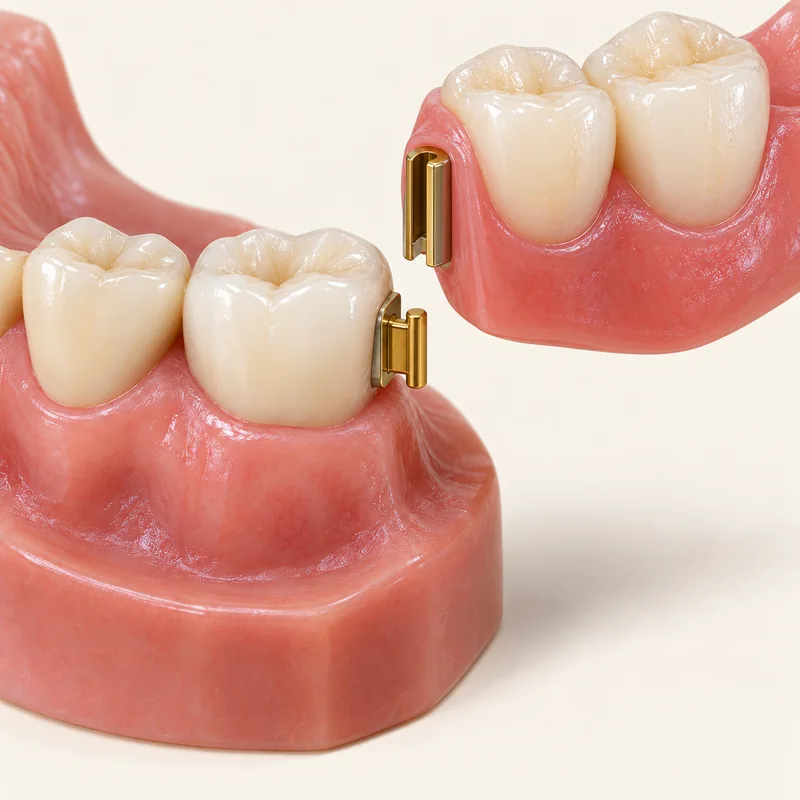
A precision attachment joins a fixed component of the restoration to its counterpart on the removable denture. They engage in a defined direction.
Suitable teeth and their crowns carry the connection. Their load capacity and the support for the denture belong in the overall restoration plan.
The denture and fixed parts need appropriate cleaning and reviews. Connectors can wear; a loose fit should be professionally assessed.
Matching connectors on the fixed and removable parts engage with each other.
Suitability depends on supporting teeth, space, support and daily cleaning ability, among other factors.
Cleaning of both parts, fit checks and assessment of wear or changes in support.
Three steps. Straight to the point.
Explanations are also shown on screen.

Silent film in German · English explanations in the three views above
A precision attachment uses engaging connectors. A telescopic crown has an outer crown fitting over a fixed inner crown.
No. The denture section remains removable even though the connection provides retention while worn.
No. Precision attachments use matching sliding connectors; telescopic restorations use fitting inner and outer crowns.
Yes. Wear or changes in the mouth may require adjustment or replacement of connection components.
A question to discuss with Dr. med. dent. Niusha Barahmand Pour:
Which type of removable restoration suits my remaining teeth and daily cleaning needs?
At the practice, the findings, personal wishes and possible next steps are discussed through a consultation and examination.
Which connection suits the findings can be clarified during individual restoration planning.
Discuss replacement optionsArrange an appointment with the practiceBuild on the simple explanation with clinical terms, key distinctions and a knowledge question.
Precision attachments and telescopic crowns are different connection concepts for combined fixed and removable restorations.
Editorial research: 23 October 2026. This explanation covers general principles and does not replace a personal examination. Suitable treatment is discussed following individual assessment.