Potential users?
People with an edentulous jaw, after assessment.

Implants can provide additional retention for a denture in an edentulous jaw. Everyday terminology varies: it matters whether the restoration is removable and whether the underlying tissues also carry chewing forces.
For training & practice ↓
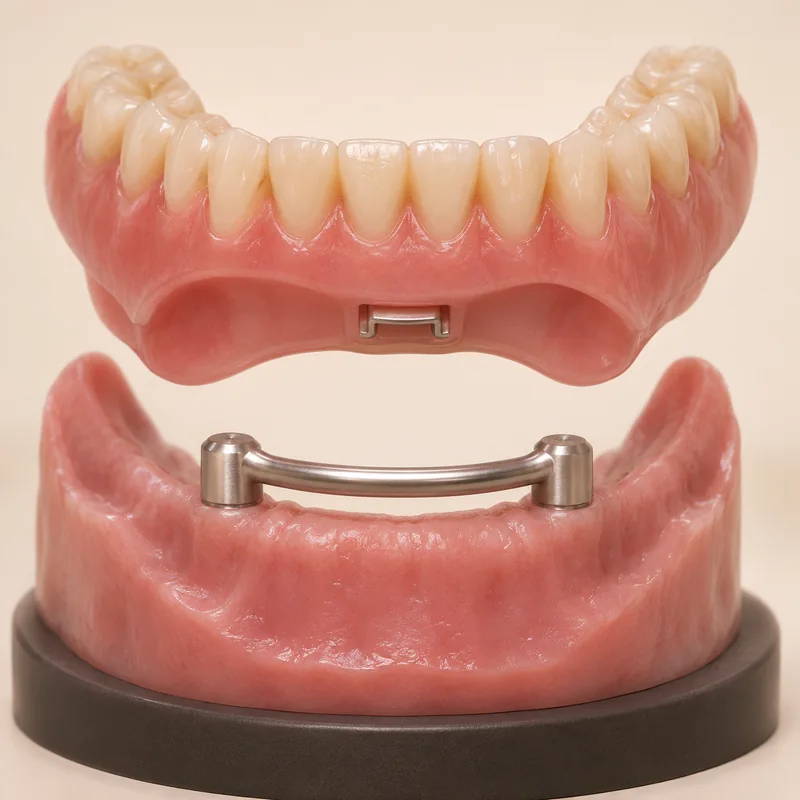
Implants may retain a denture and, depending on design, support its load. These are distinct functions.
Removable options can use individual attachments or a bar. Fixed full-arch restorations have a different construction.
Planning considers hygiene, handling, space and maintenance. Implants and restorations still require review.
People with an edentulous jaw, after assessment.
No.
Findings, design, cleaning and follow-up.
Three steps. No audio.
Each scene can also be selected manually.

Silent educational film with German on-screen text and simplified teaching images. Not a patient case or a promised treatment outcome. The full English explanation is available below.
Implants may retain a denture and, depending on design, support its load. These are distinct functions.
Removable options can use individual attachments or a bar. Fixed full-arch restorations have a different construction.
Planning considers hygiene, handling, space and maintenance. Implants and restorations still require review.
Retention resists lifting; support carries loading. A denture may also rest on the mucosa.
No. A removable implant overdenture can be taken out for cleaning.
No. Upper and lower jaws, bone, opposing teeth and individual circumstances differ.
No. Tissues, implants, attachments and denture fit continue to need review.
Editorially suggested question to discuss with Dr Niusha Barahmand Pour:
Which design could I clean and handle with my individual circumstances?
Retention, handling and hygiene can be discussed when reviewing a complete denture.
Discuss a complete dentureAppointment selection at DoctolibRetention resists lifting; support carries loading. A denture may also rest on the mucosa.
Editorial research: . General information, not an individual diagnosis or treatment recommendation. Teaching illustrations are simplified and do not depict a patient case.