Who is it for?
A toothless upper or lower jaw.

A complete denture is removable replacement of all teeth in an upper or lower jaw. A conventional denture rests on the oral tissues. Retention and comfort depend on factors including ridge shape, fit and saliva.
For training & practice ↓
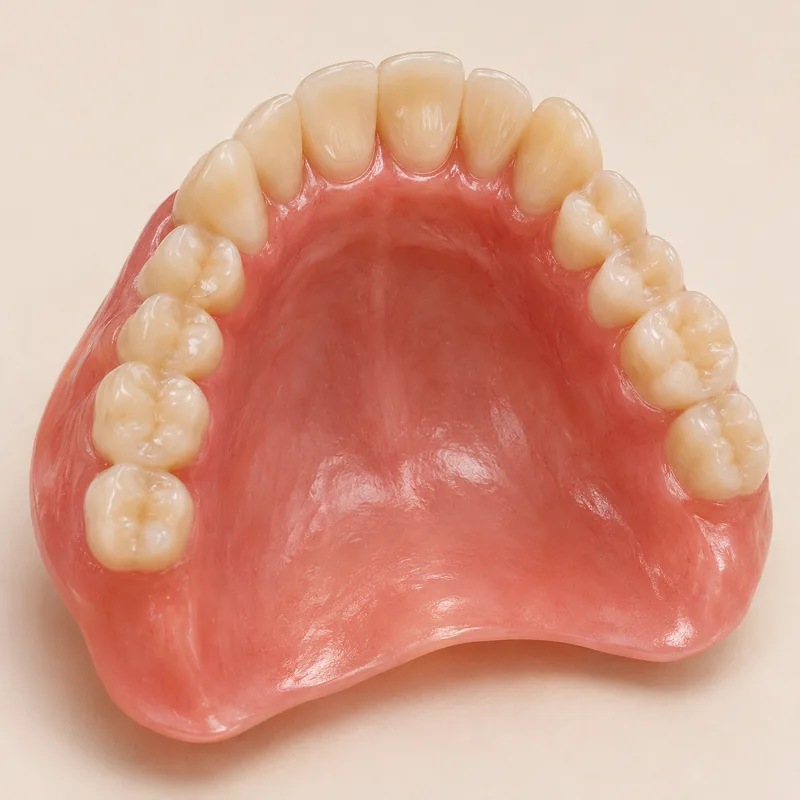
The base carries the replacement teeth and fits over the ridge. Upper and lower jaws differ in shape, support and mobility.
Impressions or suitable digital recording, bite registration and try-in support adaptation. The sequence depends on the clinical situation.
Speech and chewing may need practice. Sore spots or looseness need review; do not grind the denture yourself.
A toothless upper or lower jaw.
Support, bite, tooth arrangement and shape.
Cleaning, fit reviews and reporting sore spots.
Three steps. No audio.
Each scene can also be selected manually.

Silent educational film with German on-screen text and simplified teaching images. Not a patient case or a promised treatment outcome. The full English explanation is available below.
The base carries the replacement teeth and fits over the ridge. Upper and lower jaws differ in shape, support and mobility.
Impressions or suitable digital recording, bite registration and try-in support adaptation. The sequence depends on the clinical situation.
Speech and chewing may need practice. Sore spots or looseness need review; do not grind the denture yourself.
A complete denture replaces every tooth in one jaw. A partial denture replaces missing teeth alongside remaining natural teeth.
No. The ridge and soft tissues can change. Adjustment or relining may then be necessary.
It can also be removable but uses additional attachments. Suitability and treatment requirements need separate assessment.
Both the denture and oral tissues need daily care. Cleaning products and an overnight break are discussed individually; postoperative instructions may differ.
Editorially suggested question to discuss with Dr Niusha Barahmand Pour:
What determines retention in my jaw, and how are sore spots reviewed?
The fit and options for removable replacement can be discussed personally.
Discuss tooth replacementAppointment selection at DoctolibA complete denture replaces every tooth in one jaw. A partial denture replaces missing teeth alongside remaining natural teeth.
Editorial research: . General information, not an individual diagnosis or treatment recommendation. Teaching illustrations are simplified and do not depict a patient case.