What is it?
A separated fragment of dead bone.

A bone sequestrum is a piece of dead bone that has become separated from surrounding living bone. In the jaw it may occur with different conditions or healing problems. A hard edge noticed after a procedure is not automatically a sequestrum and should be assessed if it causes symptoms.
For training & practice ↓
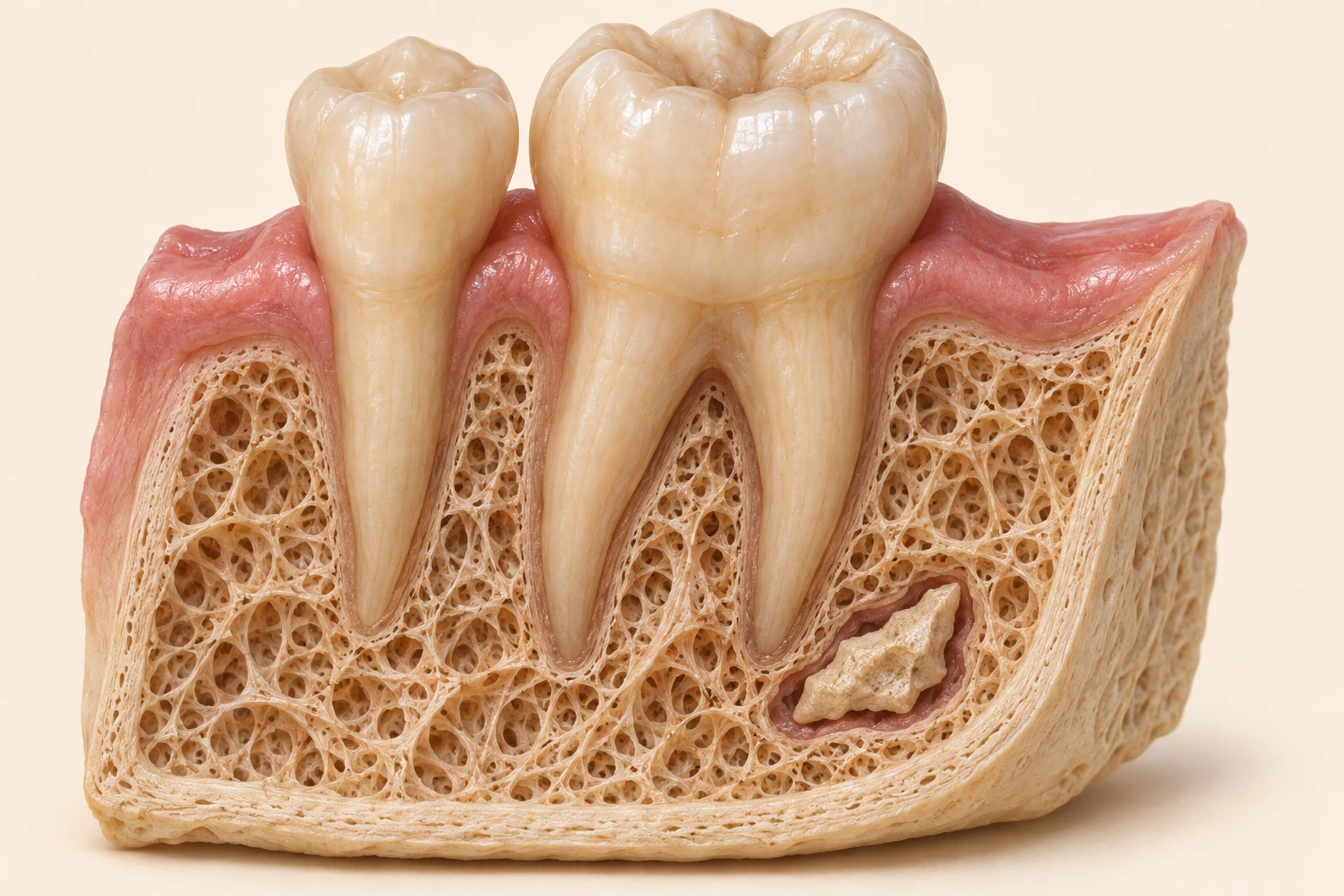
The term describes a devitalised piece of bone separated from surrounding viable bone. Its location and extent can vary.
A sequestrum may accompany chronic bone infection, but does not prove infection by itself. Such a fragment can also form in other types of bone necrosis.
History, examination and imaging where needed help establish the context. Observation, treatment of the cause or removal is decided individually. Do not pull at or cut the fragment yourself.
A separated fragment of dead bone.
Through history, examination and imaging where indicated.
Removing it yourself or manipulating the wound.
Three steps. No audio.
Each scene can also be selected manually.

Silent educational film with German on-screen text and simplified teaching images. Not a patient case or a promised treatment outcome. The full English explanation is available as text.
Bone necrosis means dead bone tissue. A sequestrum is a separated fragment of that tissue, so the terms are not interchangeable.
No. Hard edges and small fragments have several possible explanations. Pain, swelling, exposed bone or delayed healing should prompt a wound review.
No. Dead bone may be infected, but finding a fragment alone does not establish its cause.
That depends on factors including symptoms, size, location and the underlying condition. Do not remove it yourself; the treating clinician decides after assessment.
Describe previous procedures, your symptoms and how they have changed. Bring information about your medical history and medicines.
You can bring this question to your appointment:
Is this a sequestrum, and which possible cause needs assessment?
For new symptoms, contact a dental practice promptly. Emergency warning signs require immediate help.
Contact the practice · 0221 669 401 80Telephone contactImaging may show a separated bone fragment, but its cause requires clinical context. Not every sequestrum is infectious; depending on the findings, tumours are also part of the medical differential diagnosis.
Editorial research: . General information, not an individual diagnosis or treatment recommendation. Teaching illustrations are simplified and do not depict a patient case.