
What does it mean?
A predominantly white mucosal change without another established explanation.

Leukoplakia describes a predominantly white mucosal change that cannot be explained as another known condition. It is not synonymous with cancer, but may contain abnormal cellular changes and in some cases develop into oral cancer. Professional examination and follow-up are therefore important.
For dental trainees & teams
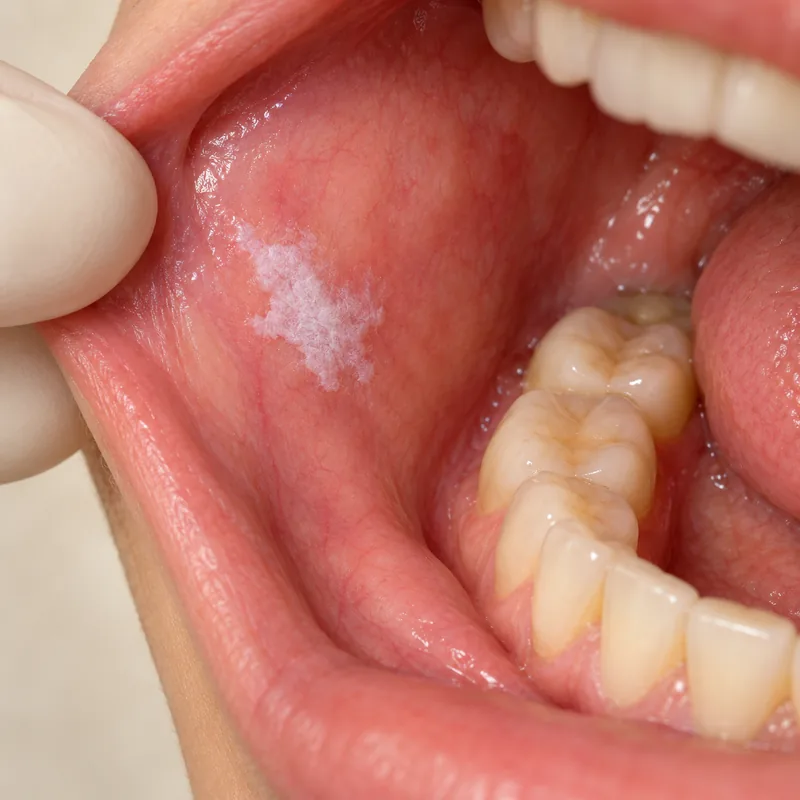
A patch can be painless and still need assessment. A white or red-and-white area that does not disappear should be examined by a dentist or doctor.
Fungal deposits, irritation and other mucosal conditions may look similar. Do not scrape it off yourself or diagnose it from a photograph.
Suspicious findings need a biopsy or specialist referral. Treatment and follow-up depend on the findings and any tissue examination.
A predominantly white mucosal change without another established explanation.
Examination, possibly biopsy and follow-up, not a photograph or self-test.
Prompt dental or medical assessment of a persistent patch.
Three steps. Straight to the point.
Explanations are also shown on screen.

Silent film in German · English explanations in the three views above
White patches have different causes. Examination and, where needed, histology distinguish fungal deposits, irritation and leukoplakia.
No. The term does not prove cancer. However, absence of pain cannot exclude significant cellular changes.
No. A persistent white or red-and-white change should be examined promptly; suspicious findings require timely investigation.
Stopping tobacco is worthwhile and may help the change improve. It does not replace examination or recommended follow-up.
A question to discuss with Dr. med. dent. Niusha Barahmand Pour:
What investigation does this area need, and is a biopsy or specialist referral appropriate?
Individual findings are the basis for discussing appropriate next steps.
Please have a white or red-and-white patch that does not disappear examined promptly.
Arrange assessment of an oral patchChoose an appointment on DoctolibBuild on the simple explanation with clinical terms, key distinctions and a knowledge question.
Leukoplakia is a clinical description after other causes are considered; dysplasia is a microscopic tissue finding.
Editorial research: 23 October 2026. This explanation covers general principles and does not replace a personal examination. Suitable treatment is discussed following individual assessment.