What does it replace?
Several missing teeth when some natural teeth remain.

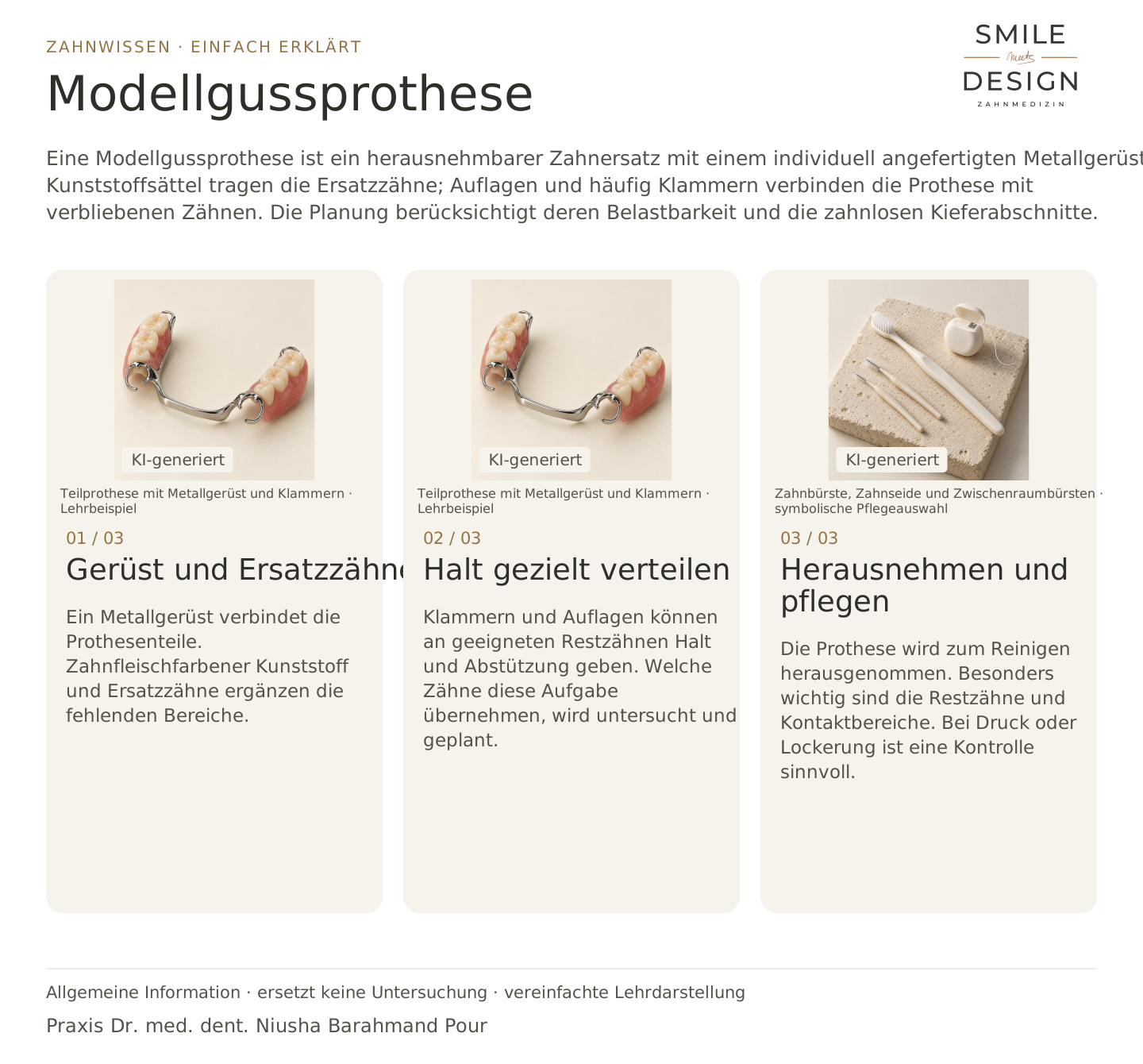
A cast-metal partial denture is a removable restoration with a custom-made metal framework. Acrylic saddles support replacement teeth; rests and often clasps connect it to remaining teeth. Planning considers their support and the toothless areas of the jaw.
For dental trainees & teams
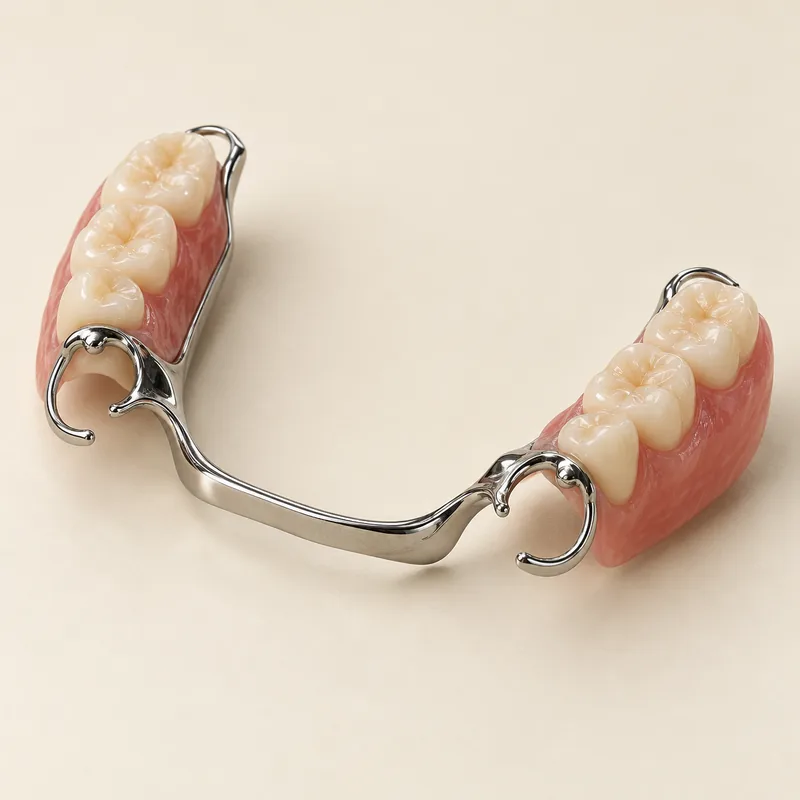
A metal framework connects the denture components. Gum-coloured acrylic and replacement teeth restore the missing areas.
Clasps and rests can provide retention and support from suitable remaining teeth. Which teeth can carry that load requires assessment.
The denture is removed for cleaning. Remaining teeth and contact areas need particular care. Pressure or looseness calls for review.
Several missing teeth when some natural teeth remain.
People whose findings and remaining teeth suit this removable design.
Planning, impressions, fitting and reviews of both denture and teeth.
Three steps. Straight to the point.
Explanations are also shown on screen.

Silent film in German · English explanations in the three views above
Cast-metal here refers to a framework with typical clasp and rest elements. A telescopic denture is retained by interlocking double crowns.
Depending on position and design, metal clasps may show while speaking or smiling.
No. Other designs include acrylic dentures and telescope-retained partial dentures.
No. This may damage the framework or teeth. Adjustments belong with the dental team and laboratory.
A question to discuss with Dr. med. dent. Niusha Barahmand Pour:
How would my remaining teeth be loaded, and how easily could I clean the denture?
At the practice, findings, personal wishes and possible next steps are discussed through a consultation and examination.
A restoration should suit cleaning, handling and the teeth that remain.
Discuss removable tooth replacementChoose an appointment on DoctolibBuild on the simple explanation with clinical terms, key distinctions and a knowledge question.
Remaining teeth form part of the support system and need their own care. Retention should not be increased by bending components yourself.
Editorial research: 23 October 2026. This explanation covers general principles and does not replace a personal examination. Suitable treatment is discussed following individual assessment.