Where can the odour originate?
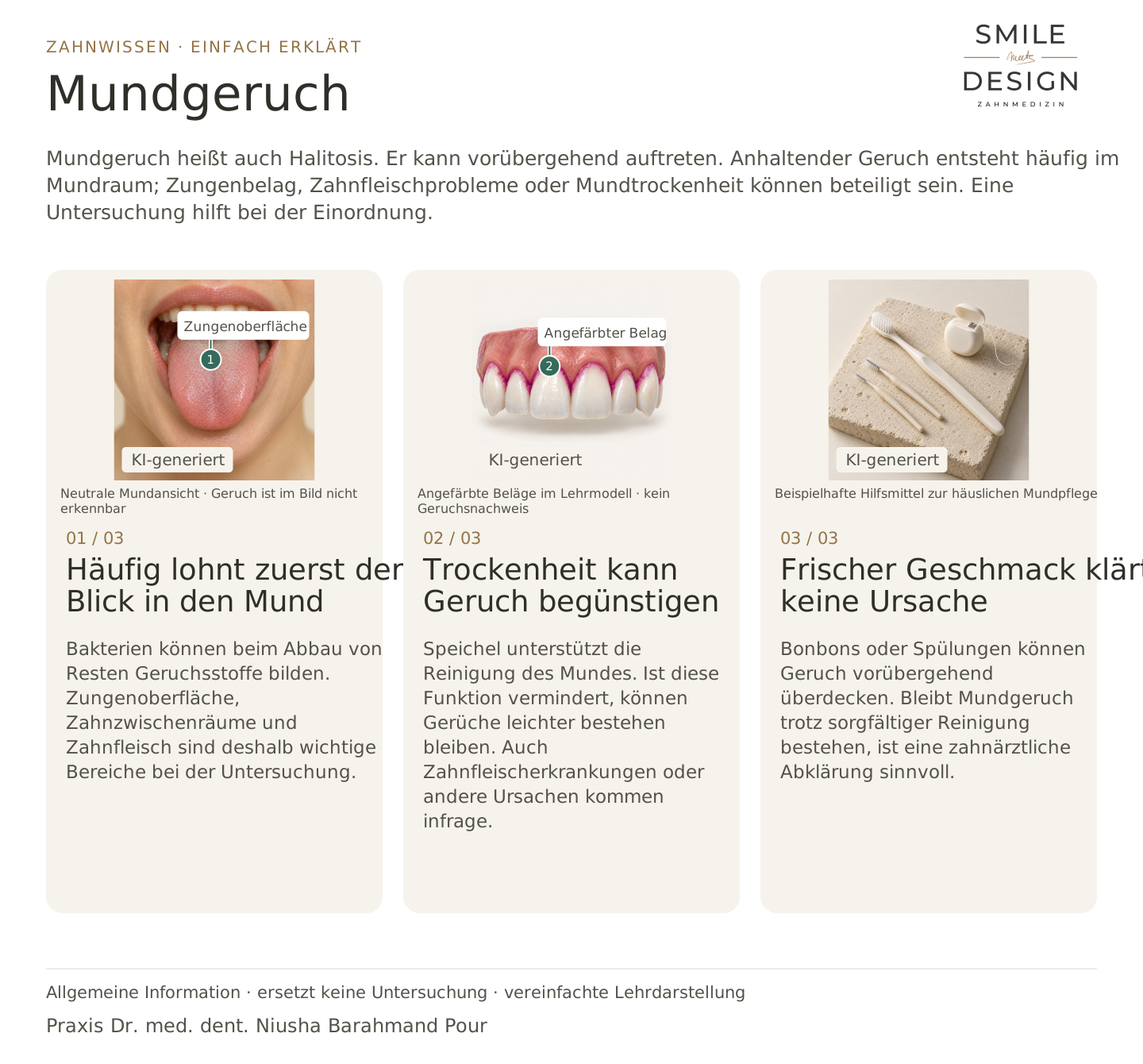
Odorous substances often arise from bacterial breakdown processes in the mouth. The tongue surface, spaces between teeth and gums are therefore important examination areas.

Bad breath is also called halitosis. It may be temporary. Persistent odour often originates in the mouth; tongue coating, gum problems or dry mouth can contribute. An examination helps assess the cause.
For dental trainees & teams
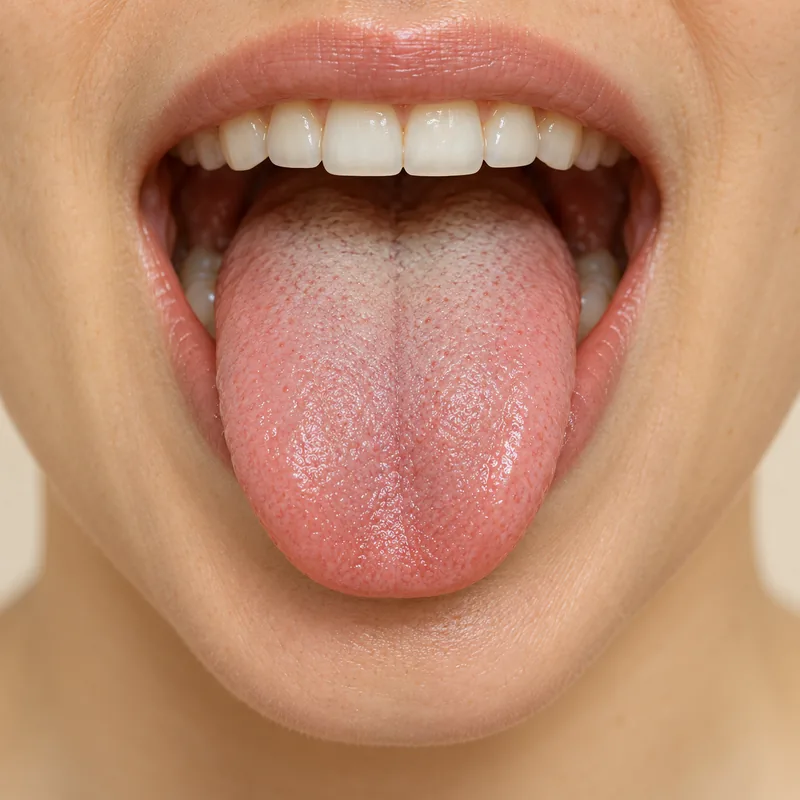
Bacteria can produce odorous substances as they break down debris. The tongue surface, spaces between teeth and gums are therefore important areas to examine.
Saliva helps cleanse the mouth. If this function is reduced, odours may persist more easily. Gum disease or other causes may also be involved.
Sweets or mouthwashes may temporarily mask odour. If bad breath persists despite careful cleaning, a dental assessment is appropriate.
Odorous substances often arise from bacterial breakdown processes in the mouth. The tongue surface, spaces between teeth and gums are therefore important examination areas.
Gum problems and reduced saliva function are among the possibilities. Other causes are also possible; the stomach is not automatically the source.
Sweets or mouthwashes can mask odour without identifying its cause. If it persists despite careful cleaning, a dental assessment is appropriate.
Three steps. Straight to the point.
Explanations are also shown on screen.

Silent film in German · English explanations in the three views above
A fresh taste does not show that the cause has been addressed. What matters is whether deposits, gum problems, dryness or other factors are involved.
Yes, reflux can play a role, for example. But bad breath should not automatically be attributed to the stomach; causes in the mouth are also assessed first.
It replaces neither toothbrushing nor cleaning between the teeth. Persistent odour should be assessed to find out what is behind it.
Gentle tongue cleaning can be useful. Do not scrub painfully or cause injury; if unsure, discuss the appropriate technique at the practice.
A question to discuss with Dr. med. dent. Niusha Barahmand Pour:
Are there identifiable causes of the odour in my mouth, and which cleaning approach suits the findings?
The practice combines prevention and tooth preservation with personal advice. Symptoms are assessed in the context of your concerns and the examination.
Persistent bad breath is worth discussing in person, with an assessment of your teeth, gums and oral care.
Arrange a bad breath assessmentChoose an appointment on DoctolibBuild on the simple explanation with clinical terms, key distinctions and a knowledge question.
Intraoral means inside the mouth; extraoral means outside it. Odour alone does not reliably show where it originates.
Editorial research: 22 October 2026. This explanation covers general principles and does not replace a personal examination. Suitable treatment is discussed following individual assessment.