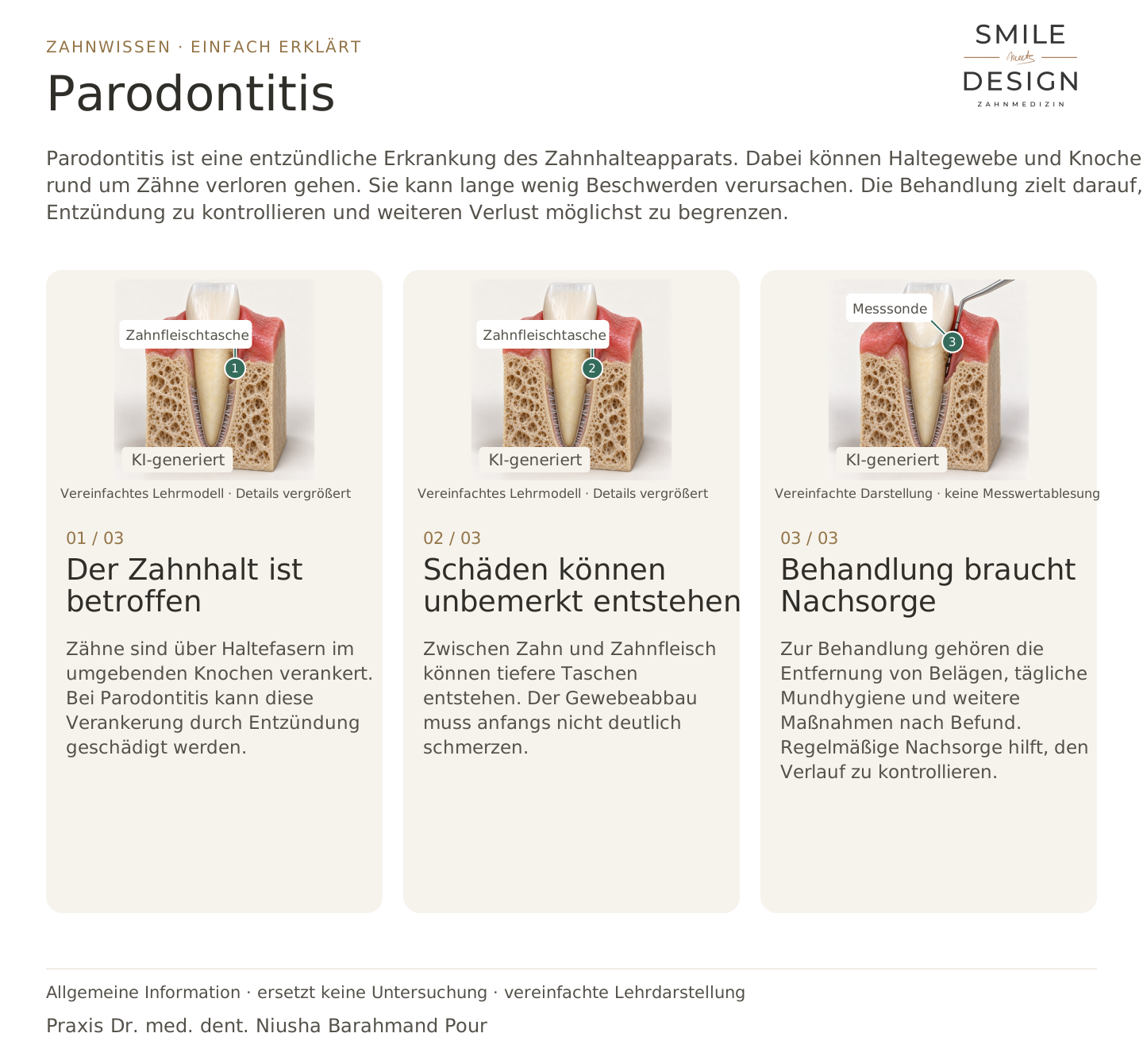
Why is tooth support involved?
Inflammation can damage supporting fibres and surrounding bone. It therefore affects more than the visible gum margin.

Periodontitis is an inflammatory disease of the tissues supporting the teeth. Supporting tissue and bone around teeth can be lost. It may cause few symptoms for a long time. Treatment aims to control inflammation and limit further loss where possible.
For dental trainees & teams
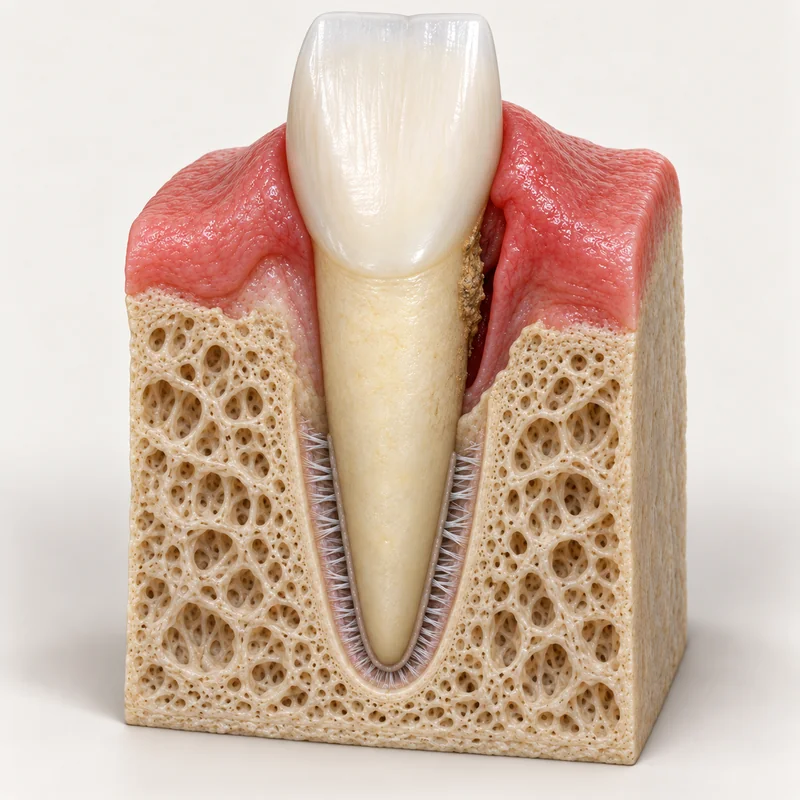
Teeth are anchored in the surrounding bone by supporting fibres. In periodontitis, inflammation can damage this attachment.
Deeper pockets can form between the tooth and gum. Tissue loss may not cause noticeable pain at first.
Treatment includes removing deposits, daily oral hygiene and further measures based on the findings. Regular follow-up helps monitor the condition.
Inflammation can damage supporting fibres and surrounding bone. It therefore affects more than the visible gum margin.
Pocket depths, bleeding and tooth mobility are assessed together. X-rays can additionally show whether bone has been lost.
Inflammation can recur even after active treatment. Home care and individually planned checks help monitor the condition and maintain the result where possible.
Three steps. Straight to the point.
Explanations are also shown on screen.

Silent film in German · English explanations in the three views above
Gingivitis is limited to the gums. Periodontitis also damages the supporting tissues; existing tissue loss does not simply disappear with more thorough brushing.
In everyday German, “Parodontose” often refers to periodontitis. The medical term for this inflammatory disease is periodontitis.
The examination includes the gums, pocket depths and tooth mobility. X-rays can show whether bone has been lost.
The tissues supporting the teeth still need attention. Home care and individually planned follow-up are part of long-term care.
A question to discuss with Dr. med. dent. Niusha Barahmand Pour:
Which findings matter for preserving my teeth, and how will follow-up be tailored to them?
Dr. Barahmand Pour discusses the dental findings alongside personal preferences and possible treatment steps.
We discuss your gums, tooth support and possible next steps based on a personal examination.
Discuss possible periodontitisChoose an appointment on DoctolibBuild on the simple explanation with clinical terms, key distinctions and a knowledge question.
Little inflammation after treatment does not mean lost tooth support has been fully restored. Follow-up remains important.
Editorial research: 22 October 2026. This explanation covers general principles and does not replace a personal examination. Suitable treatment is discussed following individual assessment.