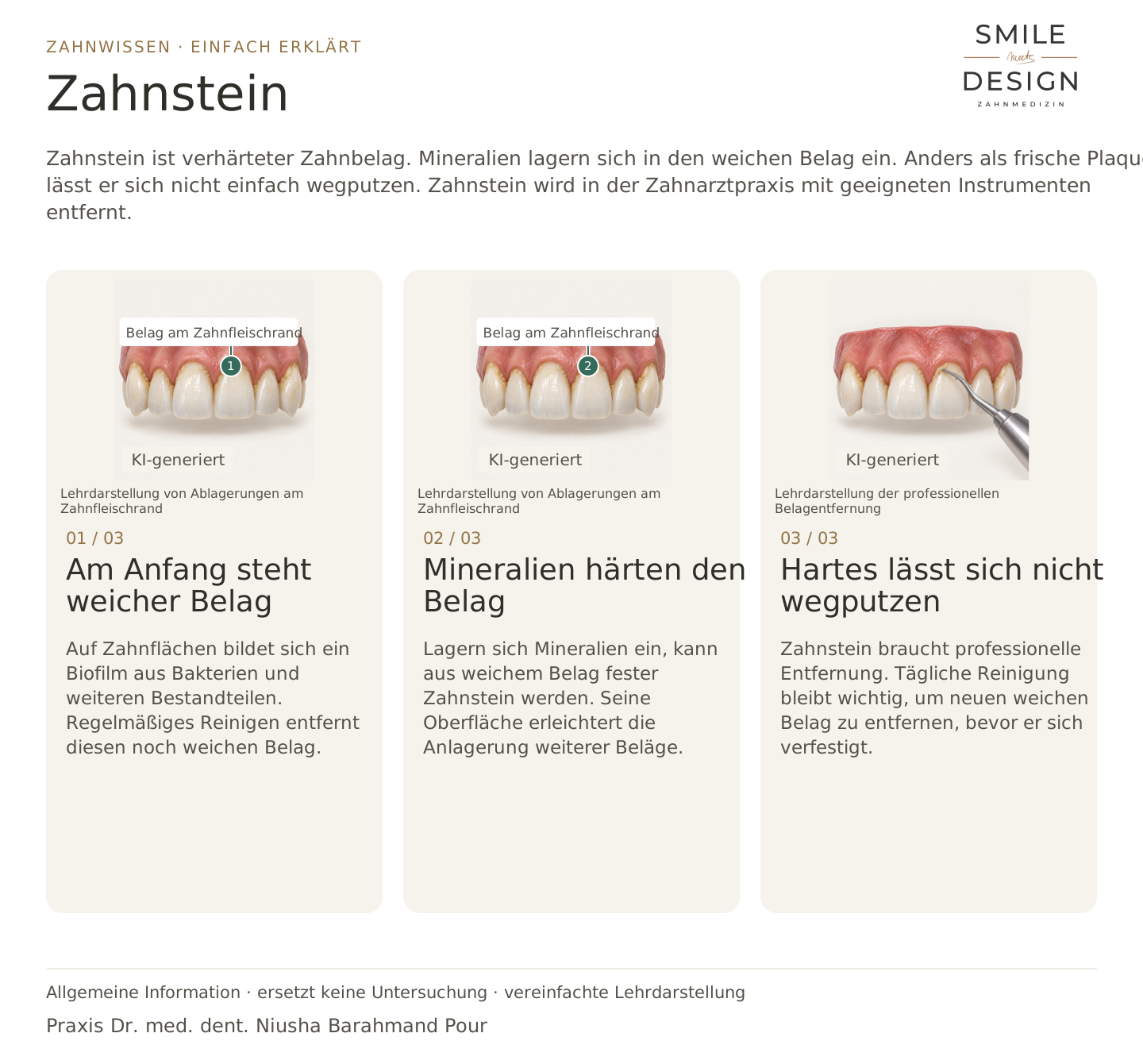
How does soft plaque become hard?
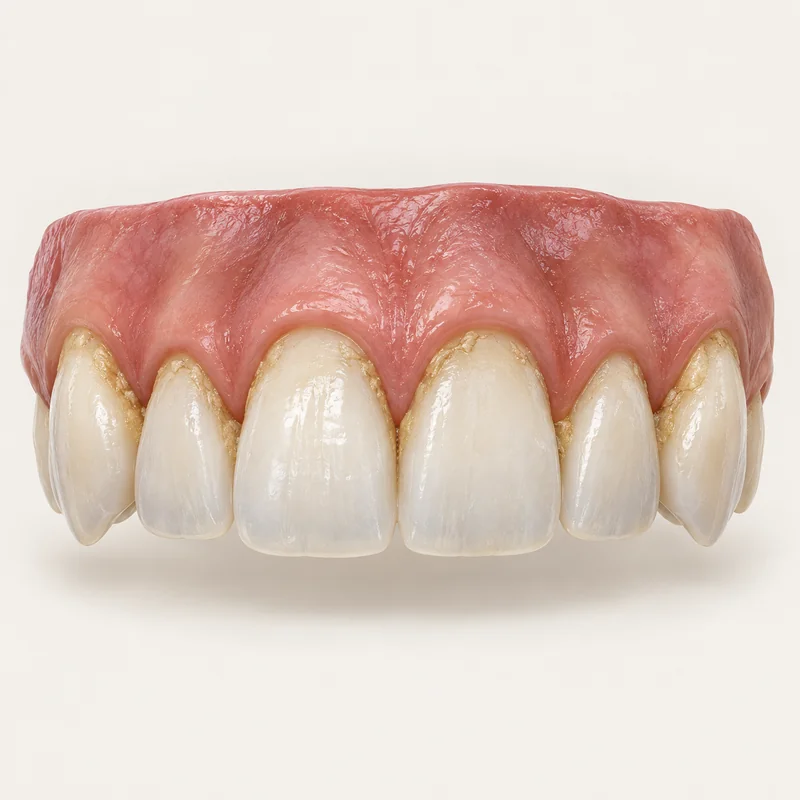
Minerals can become incorporated into soft plaque and harden it. Further deposits can attach more easily to the rough surface.

Tartar is hardened dental plaque. Minerals become incorporated into the soft deposit. Unlike fresh plaque, it cannot simply be brushed away. Tartar is removed at the dental practice using suitable instruments.
For dental trainees & teams
A biofilm of bacteria and other components forms on tooth surfaces. Regular cleaning removes this deposit while it is still soft.
As minerals build up, soft plaque can become hard tartar. Its surface makes it easier for further deposits to accumulate.
Tartar needs professional removal. Daily cleaning remains important to remove new soft plaque before it hardens.
Minerals can become incorporated into soft plaque and harden it. Further deposits can attach more easily to the rough surface.
They can form on visible tooth surfaces and below the gumline. Deposits below the gums are called subgingival calculus.
Already hardened deposits cannot simply be brushed off and need professional removal. Daily cleaning removes plaque while it is still soft.
Three steps. Straight to the point.
Explanations are also shown on screen.

Silent film in German · English explanations in the three views above
Not every dark margin is tartar. Staining changes colour; tartar is a hardened deposit. An examination distinguishes the two.
No. Plaque is a soft biofilm. Tartar forms when minerals cause this deposit to harden.
Hard deposits can also develop below the gumline. These are called subgingival calculus.
No. Hardened deposits should be removed professionally. At home, careful brushing and suitable cleaning between teeth help control soft plaque.
A question to discuss with Dr. med. dent. Niusha Barahmand Pour:
Where have hard deposits formed, and what kind of cleaning is suitable in those areas?
Preventive care, professional dental cleaning and preserving teeth are part of the treatment services described by her practice.
The practice can assess whether visible deposits are tartar and which cleaning approach is suitable.
Have deposits assessedChoose an appointment on DoctolibBuild on the simple explanation with clinical terms, key distinctions and a knowledge question.
Tartar is a hard deposit; staining initially describes only a colour change. Colour alone is not enough to tell them apart.
Editorial research: 22 October 2026. This explanation covers general principles and does not replace a personal examination. Suitable treatment is discussed following individual assessment.