What is its purpose?
Depending on the ingredient: fresh breath, additional cavity prevention or temporary antimicrobial support.

Mouthwashes distribute ingredients around the mouth. Some mainly freshen the breath; others contain fluoride or antiseptics. Their usefulness depends on the ingredient and the individual need.
For dental trainees & teams
Fluoride, antimicrobial ingredients and simple breath freshening serve different purposes. A fresh sensation alone does not show that a disease is being treated.
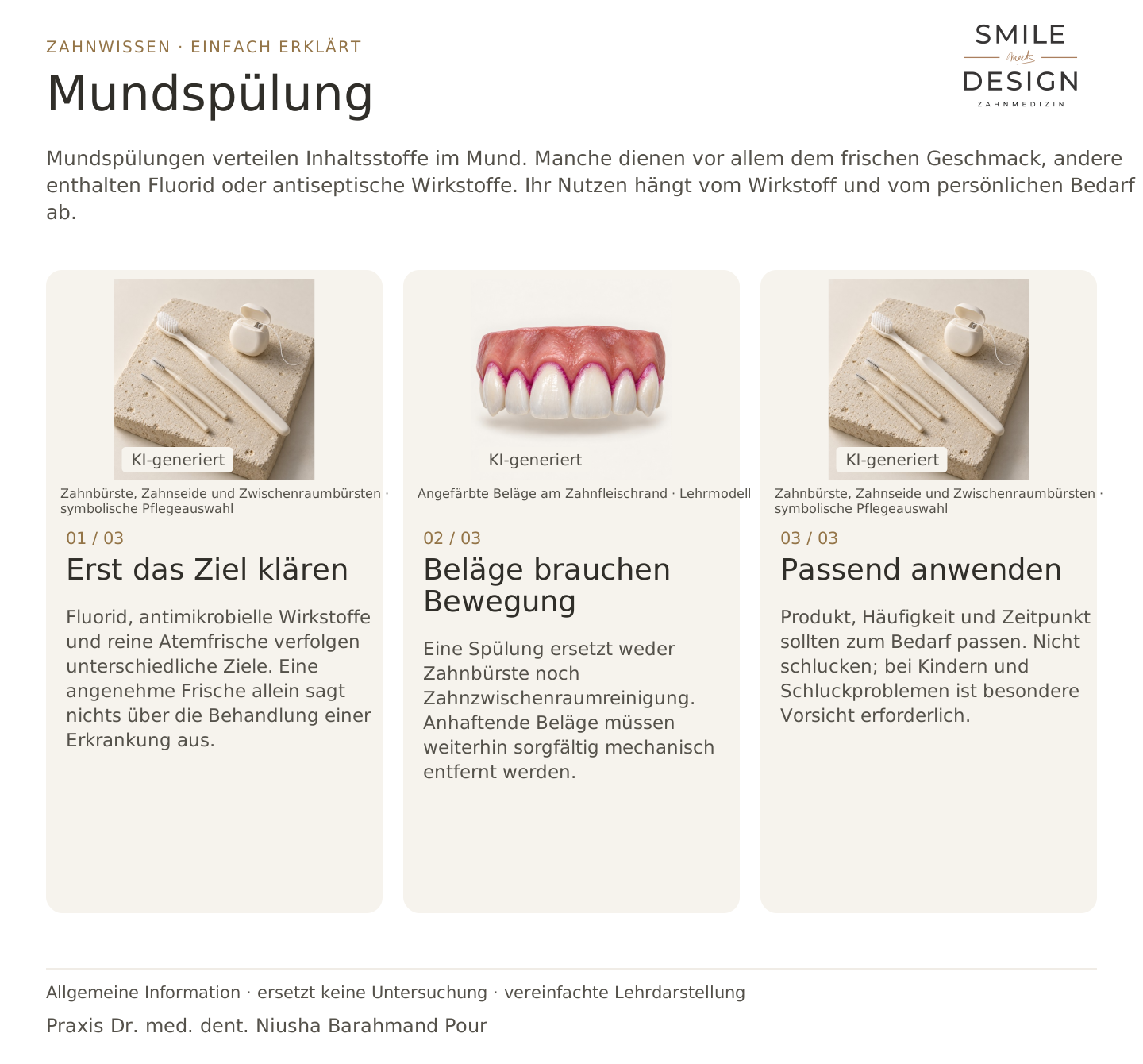
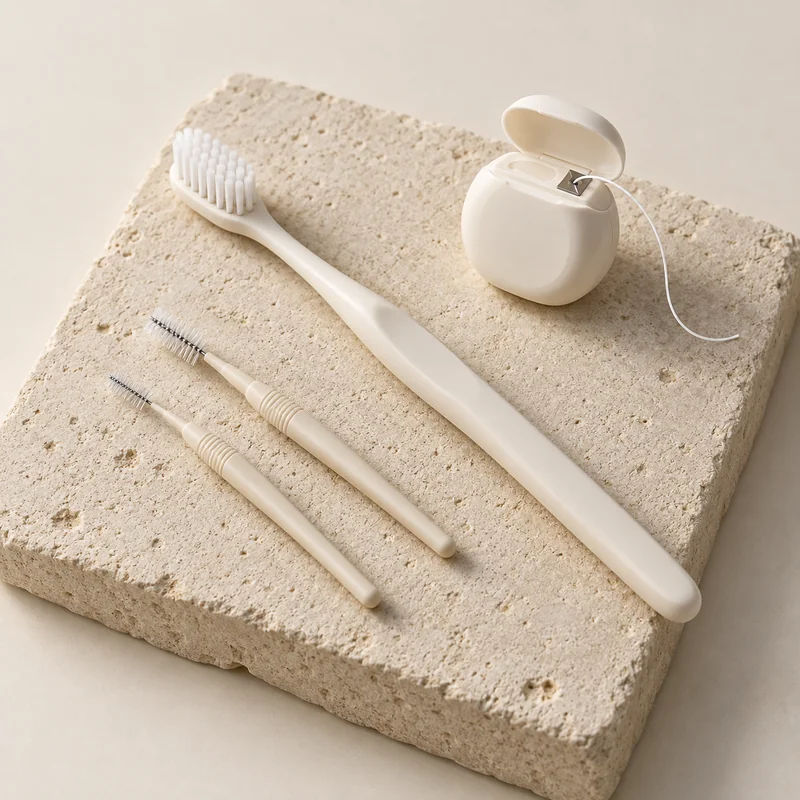
A rinse does not replace brushing or cleaning between teeth. Adherent deposits still need careful mechanical removal.
The product, frequency and timing should match the need. Do not swallow it; children and people with swallowing difficulties need particular care.
Depending on the ingredient: fresh breath, additional cavity prevention or temporary antimicrobial support.
People with a specific need, taking tolerance into account.
Brushing, interdental care and assessment of persistent symptoms.
Three steps. Straight to the point.
Explanations are also shown on screen.

Silent film in German · English explanations in the three views above
Cosmetic mouthwash and a therapeutic rinse do not have the same purpose. The active ingredient matters.
No. It may be a useful addition for a particular purpose, but is not a compulsory step for everyone.
An extra rinse can dilute the concentrated fluoride from toothpaste. Follow the instructions and use at a separate time where advised.
An antiseptic product may provide temporary support. Persistent bleeding needs assessment and effective plaque control.
A question to discuss with Dr. med. dent. Niusha Barahmand Pour:
Do I need a rinse in addition to brushing and cleaning between my teeth?
Individual findings are the basis for discussing appropriate next steps.
An examination can help clarify whether an addition to daily care is useful.
Discuss oral careChoose an appointment on DoctolibBuild on the simple explanation with clinical terms, key distinctions and a knowledge question.
A pleasant taste is not evidence of protection against decay or gum inflammation.
Editorial research: 23 October 2026. This explanation covers general principles and does not replace a personal examination. Suitable treatment is discussed following individual assessment.