Which surfaces receive additional cleaning?
The aim is to clean facing tooth surfaces and the spaces between them. A normal toothbrush cannot reach all these areas effectively.

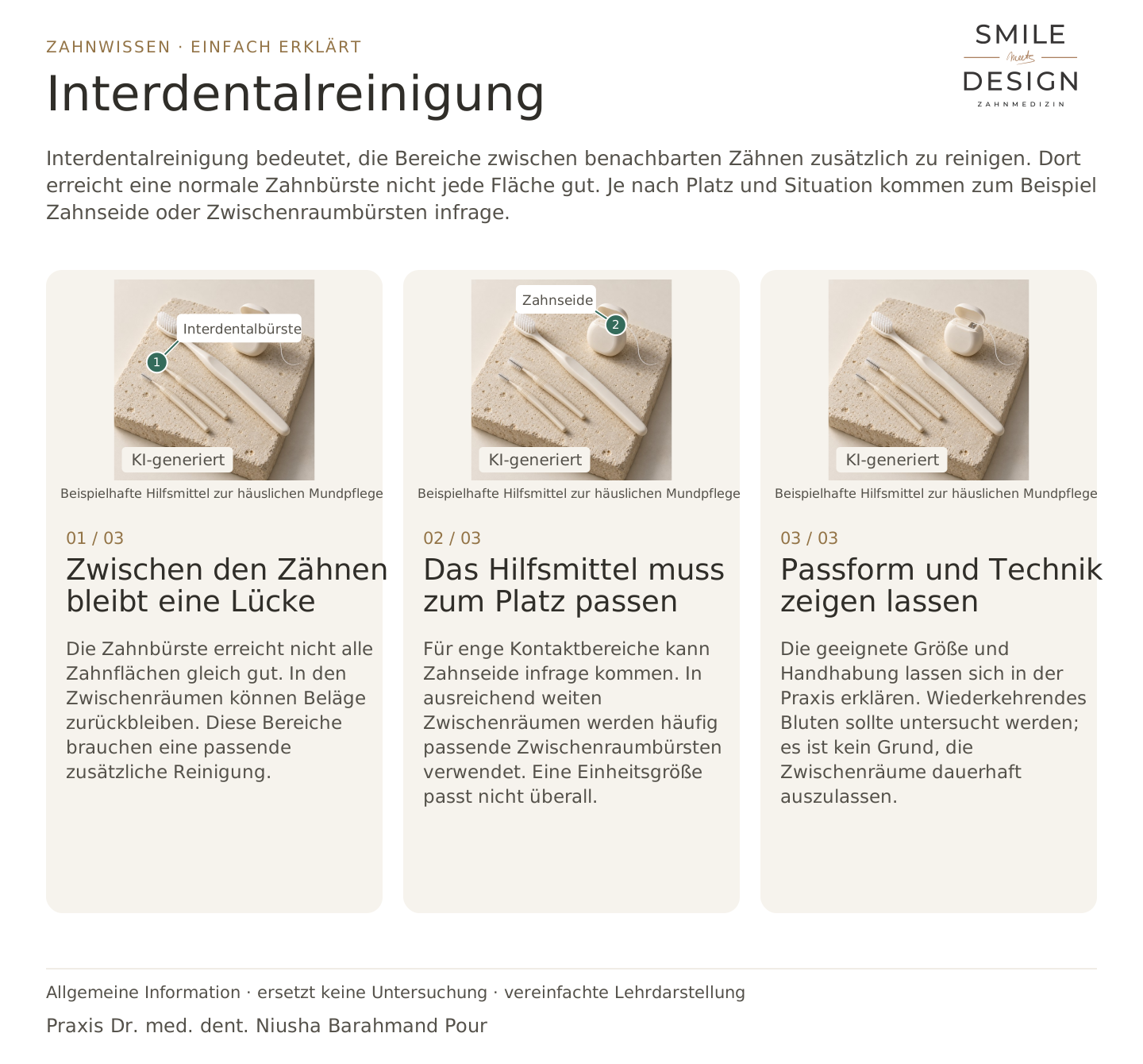
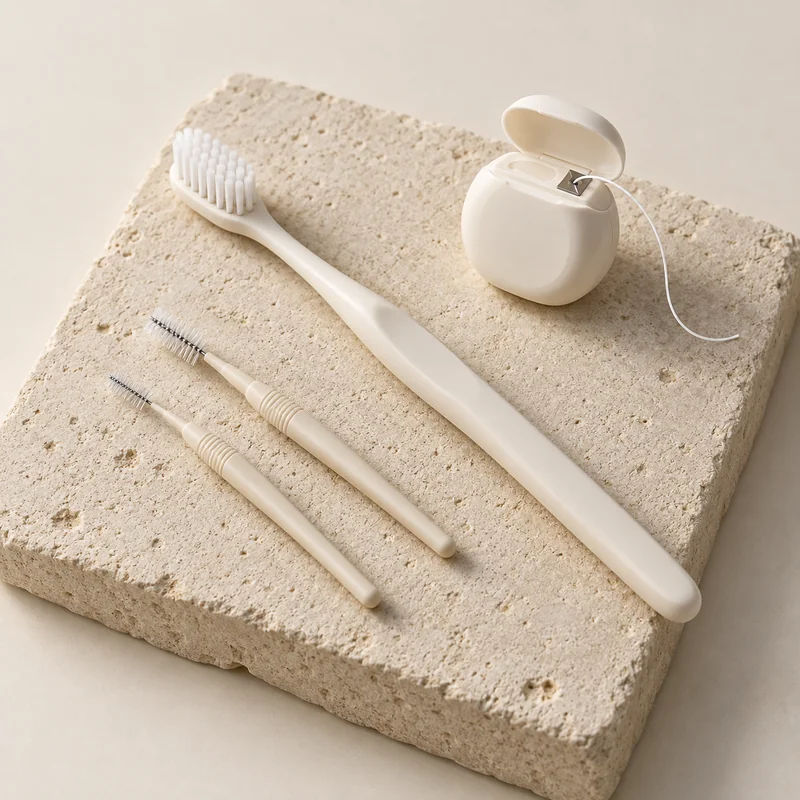
Interdental cleaning means additionally cleaning the areas between neighbouring teeth. A normal toothbrush cannot reach every surface there effectively. Depending on the space and situation, dental floss or interdental brushes may be suitable.
For dental trainees & teams
A toothbrush does not reach every tooth surface equally well. Plaque can remain between the teeth. These areas need suitable additional cleaning.
Dental floss may suit tight contact areas. Appropriately sized interdental brushes are often used where there is enough space. One size does not fit every gap.
The practice can explain the right size and technique. Recurring bleeding should be examined; it is not a reason to stop cleaning between teeth permanently.
The aim is to clean facing tooth surfaces and the spaces between them. A normal toothbrush cannot reach all these areas effectively.
Floss may suit tight contacts, while an interdental brush may be suitable where there is enough room. Different areas may need different sizes or aids.
The practice can demonstrate the right size and technique. Recurring bleeding calls for checks of the gums and technique, rather than permanently avoiding these spaces.
Three steps. Straight to the point.
Explanations are also shown on screen.

Silent film in German · English explanations in the three views above
Both clean between teeth, but are not equally suitable for every situation. What matters is access to surfaces, an appropriate size and safe use.
No. The choice depends on factors such as the space between the teeth and the gums. Several aids or sizes may be useful.
No. It complements a toothbrush and is intended for different surfaces.
Bleeding can indicate inflammation or an unsuitable technique. If it recurs, the gums, cleaning aids and technique should be checked.
A question to discuss with Dr. med. dent. Niusha Barahmand Pour:
Which aid suits each space between my teeth, and can we look at how to use it together?
A personal consultation provides space for questions about daily dental care and your own situation.
Suitable aids for the spaces between your teeth can be demonstrated and discussed personally.
Discuss interdental careChoose an appointment on DoctolibBuild on the simple explanation with clinical terms, key distinctions and a knowledge question.
Floss and interdental brushes complement a toothbrush. The choice depends on the surfaces that can be reached and the individual situation.
Editorial research: 22 October 2026. This explanation covers general principles and does not replace a personal examination. Suitable treatment is discussed following individual assessment.