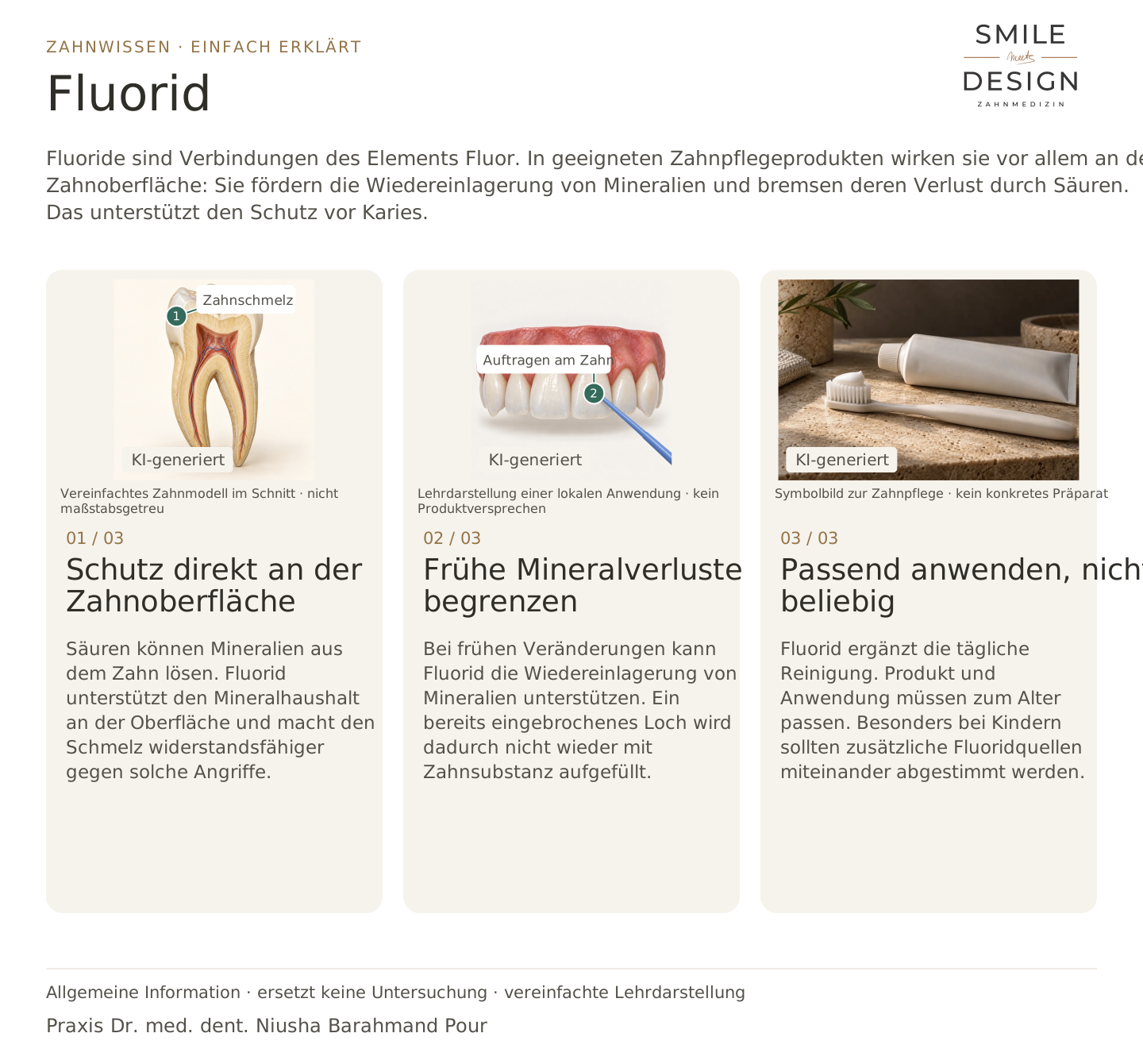
What does fluoride do at the tooth surface?
It supports the return of minerals and limits mineral loss caused by acids. It therefore complements plaque removal in protecting against decay.

Fluorides are compounds of the element fluorine. In suitable dental care products, they act mainly at the tooth surface: they encourage minerals to return and limit mineral loss caused by acids. This helps protect against tooth decay.
For dental trainees & teams
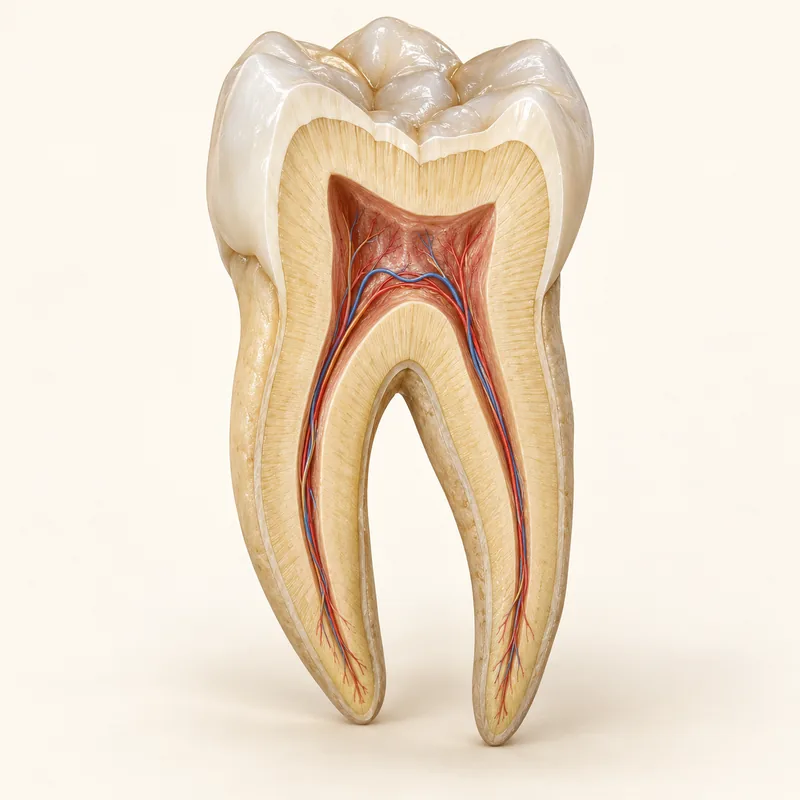
Acids can dissolve minerals from teeth. Fluoride supports the mineral balance at the surface and makes enamel more resistant to these attacks.
In early changes, fluoride can support the return of minerals. It does not refill a cavity where the surface has already broken down.
Fluoride complements daily cleaning. Products and use must be suitable for age. Additional fluoride sources should be coordinated, especially for children.
It supports the return of minerals and limits mineral loss caused by acids. It therefore complements plaque removal in protecting against decay.
Fluoride can influence early mineral loss. It does not replace a surface that has already broken down or missing tooth shape.
The product and amount must suit age and other fluoride sources. Additional products should be coordinated with the treating practice, especially for children.
Three steps. Straight to the point.
Explanations are also shown on screen.

Silent film in German · English explanations in the three views above
Fluoride refers to fluorine in compounds or its negatively charged ion. The properties of these compounds differ from those of elemental fluorine.
No. The reactive element fluorine is not the same as fluoride compounds in dental care products. Their properties and uses differ.
No. Preventing tooth decay involves several elements. Removing plaque remains important, as does being mindful of sugary foods and drinks.
No. Use depends on age and other fluoride sources. Dental and paediatric practices can advise; do not combine additional products without coordinating them.
A question to discuss with Dr. med. dent. Niusha Barahmand Pour:
Which fluoride-containing care suits my age, decay risk and the products I already use?
Care recommendations should suit individual circumstances and help preserve tooth tissue.
You can discuss suitable fluoride use at a personal appointment.
Discuss your dental care questionsChoose an appointment on DoctolibBuild on the simple explanation with clinical terms, key distinctions and a knowledge question.
Fluoride supports mineral balance at the tooth surface. It replaces neither plaque control nor lost tooth shape.
Editorial research: 22 October 2026. This explanation covers general principles and does not replace a personal examination. Suitable treatment is discussed following individual assessment.