Possible dental link?
Yes, particularly around upper back teeth.

Odontogenic sinusitis is maxillary sinus inflammation with a cause in the teeth, supporting tissues or dental treatment area. Infection around an upper tooth root is one possible source. Dental and ENT assessment complement each other to establish the cause and extent.
For training & practice ↓
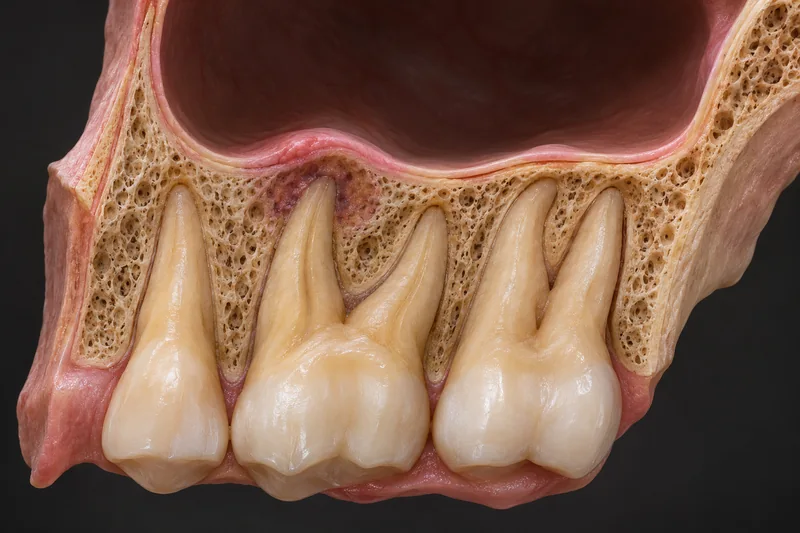
Upper back tooth roots lie close to the maxillary sinus. Proximity alone is normal and does not establish disease.
One-sided or persistent symptoms may prompt investigation of a dental cause. They do not prove it, and toothache may be absent.
Management needs to address the identified cause. Additional ENT measures, medicines or procedures depend on individual findings.
Yes, particularly around upper back teeth.
No.
Dental review with ENT input when needed.
Three steps. No audio.
Each scene can also be selected manually.

Silent educational film with German on-screen text and simplified teaching images. Not a patient case or a promised treatment outcome. The full English explanation is available below.
Upper back tooth roots lie close to the maxillary sinus. Proximity alone is normal and does not establish disease.
One-sided or persistent symptoms may prompt investigation of a dental cause. They do not prove it, and toothache may be absent.
Management needs to address the identified cause. Additional ENT measures, medicines or procedures depend on individual findings.
Not every inflamed maxillary sinus has a dental source. Identifying the cause helps determine appropriate care.
Yes. Absence of toothache does not exclude a dental source; both tooth and sinus are assessed.
No. Other causes exist, so the affected side alone is not diagnostic.
No. Imaging depends on the clinical question and existing findings.
Editorially suggested question to discuss with Dr Niusha Barahmand Pour:
Which findings support or oppose a dental source, and is ENT assessment needed?
Assessment of upper back teeth can form part of investigating recurrent maxillary sinus symptoms.
Discuss a possible dental sourceAppointment selection at DoctolibNot every inflamed maxillary sinus has a dental source. Identifying the cause helps determine appropriate care.
Editorial research: . General information, not an individual diagnosis or treatment recommendation. Teaching illustrations are simplified and do not depict a patient case.