Why surgical?
To obtain appropriate access.

Surgical removal may be needed when a tooth or root fragment cannot be accessed or loosened by a simple approach. The gum may be opened and, when needed, a limited amount of bone removed or the tooth divided. Appropriate steps depend on its position, shape and neighbouring structures.
For training & practice ↓
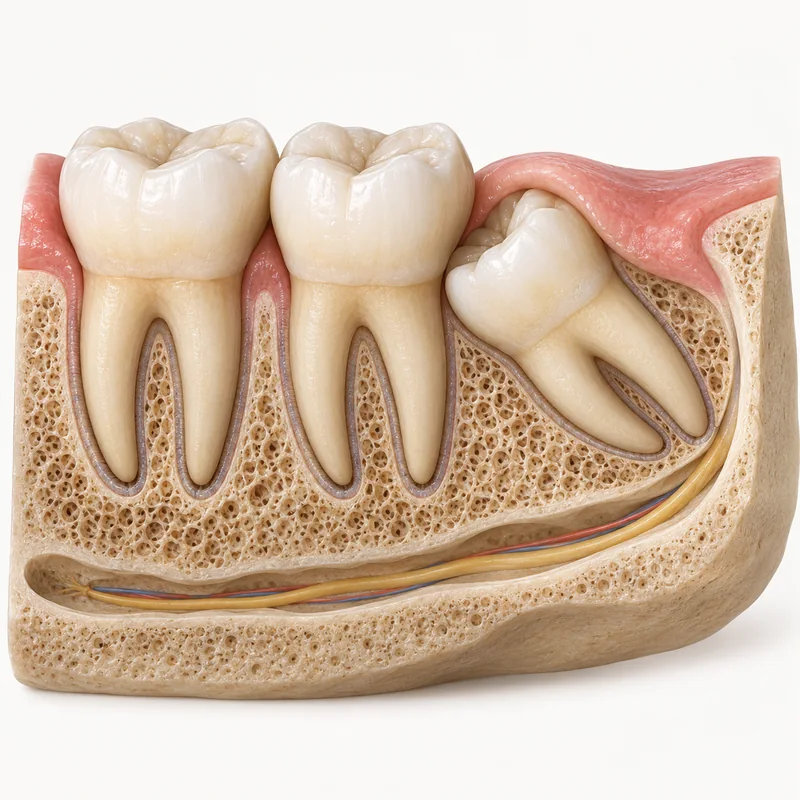
Examination and suitable imaging help assess roots and nearby structures. Preservation options and risks belong in the discussion.
Depending on the situation, access is made and the tooth removed in sections. The teaching model explains a principle, not a self-treatment procedure.
The wound is managed and may be stitched. Cleaning, prescribed medication and reviews depend on the procedure.
To obtain appropriate access.
No.
Wound care and an individual aftercare plan.
Three steps. No audio.
Each scene can also be selected manually.

Silent educational film with German on-screen text and simplified teaching images. Not a patient case or a promised treatment outcome. The full English explanation is available below.
Examination and suitable imaging help assess roots and nearby structures. Preservation options and risks belong in the discussion.
Depending on the situation, access is made and the tooth removed in sections. The teaching model explains a principle, not a self-treatment procedure.
The wound is managed and may be stitched. Cleaning, prescribed medication and reviews depend on the procedure.
Both remove a tooth and leave a wound. Surgical describes additional access or steps such as exposure and division, not automatic general anaesthesia.
No. Local anaesthesia is often an option. Other approaches depend on need and suitability, not simply the word surgical.
No. Access and required steps vary. The aim is the removal needed for the particular findings.
These include bleeding, infection and disturbed healing; depending on position, neighbouring teeth, nerves or the sinus may also matter. Individual risks are explained beforehand.
Editorially suggested question to discuss with Dr Niusha Barahmand Pour:
Why is surgical access needed, and which neighbouring structures matter?
For planned removal, discuss the findings, preservation options and appropriate care pathway.
Discuss planned tooth removalAppointment selection at DoctolibBoth remove a tooth and leave a wound. Surgical describes additional access or steps such as exposure and division, not automatic general anaesthesia.
Editorial research: . General information, not an individual diagnosis or treatment recommendation. Teaching illustrations are simplified and do not depict a patient case.