How?
Selectively and gently.

Palpation means examination by touch. It can assess tenderness, swelling or tissue characteristics. The finding complements the history and other tests. A tender spot alone proves neither an abscess nor the cause of symptoms.
For training & practice ↓
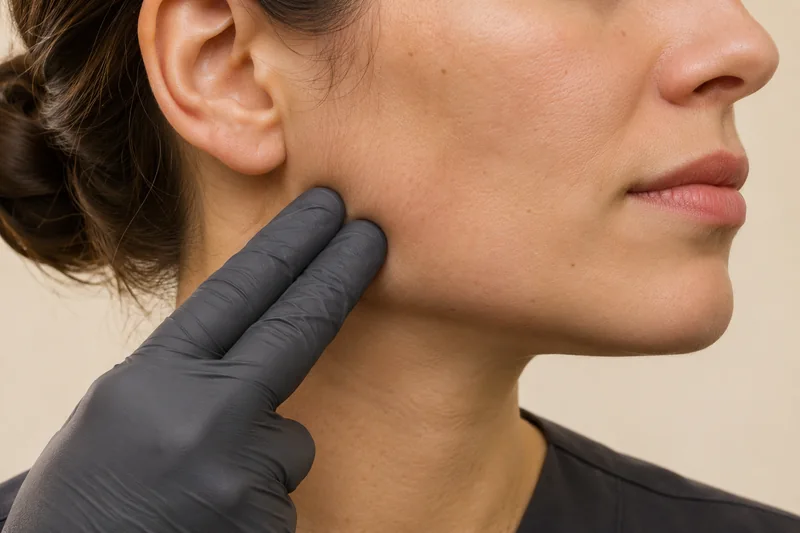
Following the discussion, relevant areas are examined selectively rather than pressing randomly on painful sites.
Responses are compared with neighbouring or opposite areas. Feedback about pain helps interpretation.
Touch findings, visible changes and other tests contribute to the overall picture. One pressure response cannot establish a diagnosis.
Selectively and gently.
Texture and sensitivity.
Not a stand-alone diagnosis.
Three steps. No audio.
Each scene can also be selected manually.

Silent educational film with German on-screen text and simplified teaching images. Not a patient case or a promised treatment outcome. The full English explanation is available as text.
It records a response in an examined area, not the disease or necessary treatment by itself.
No. Palpation examines tissues by touch; percussion involves gentle tapping on a tooth.
No. Do not squeeze or puncture it. New or increasing swelling needs prompt assessment; breathing or swallowing difficulty needs immediate help.
Say so straight away. The intensity and location matter; there is no need to hide the discomfort during examination.
Editorially suggested question to discuss with Dr Niusha Barahmand Pour:
What does the tenderness mean alongside my other findings?
A tender area or swelling deserves examination.
Have a change assessedAppointment selection at DoctolibIt records a response in an examined area, not the disease or necessary treatment by itself.
Editorial research: . General information, not an individual diagnosis or treatment recommendation. Teaching illustrations are simplified and do not depict a patient case.