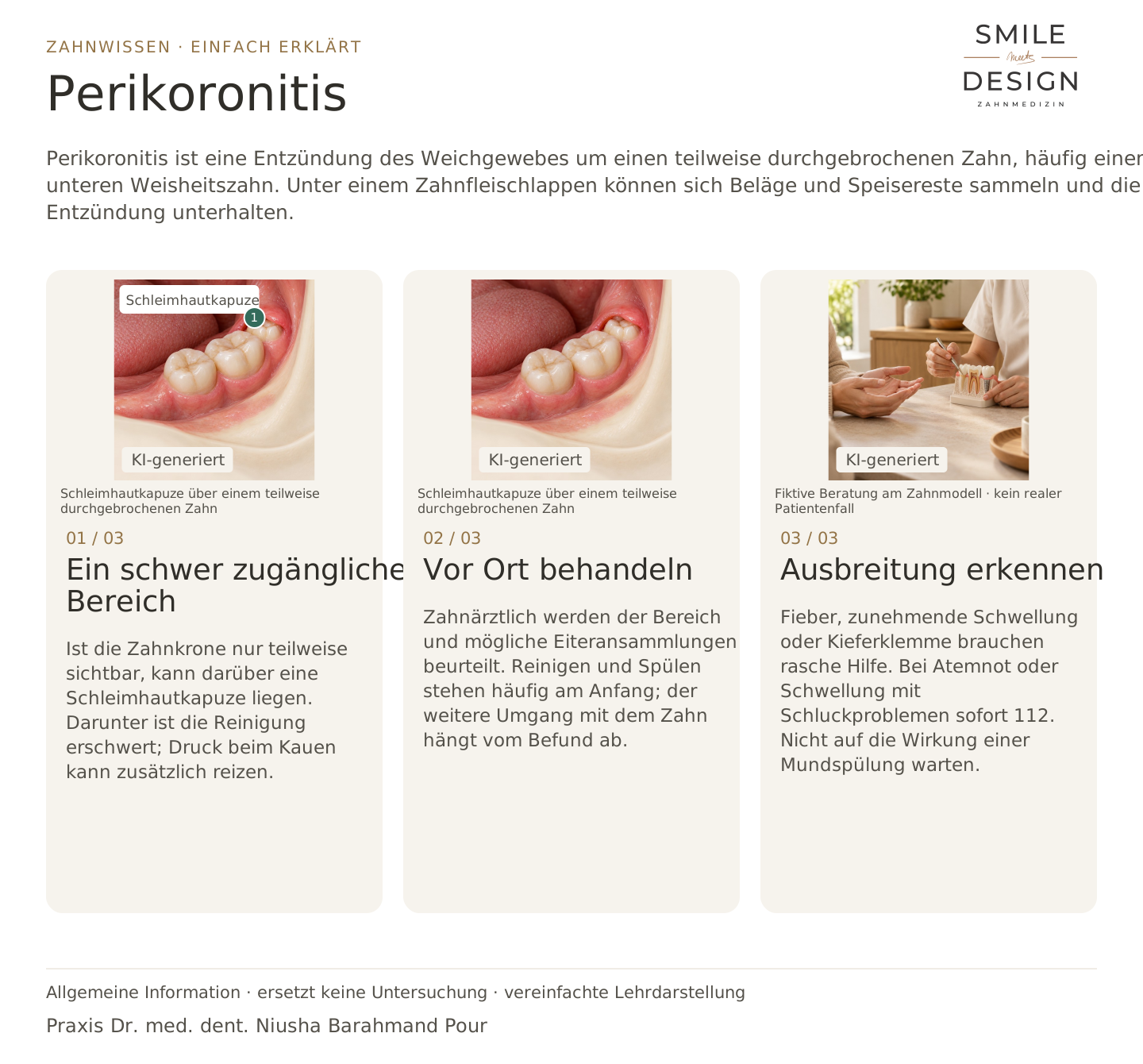
Where does it occur?
Around a partly erupted tooth, often a lower wisdom tooth.

Pericoronitis is inflammation of the soft tissues around a partly erupted tooth, often a lower wisdom tooth. Plaque and food can collect beneath a gum flap and sustain inflammation.
For dental trainees & teams
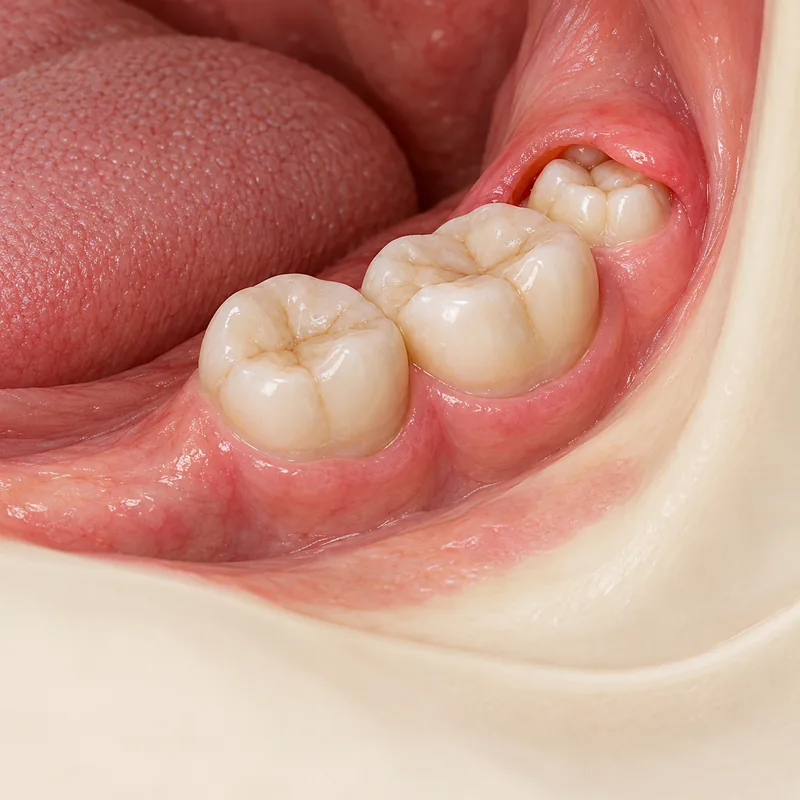
A soft-tissue flap may cover part of the crown. Cleaning beneath it is difficult, and pressure during chewing can add irritation.
The dental team assesses the area and any collection of pus. Cleaning and irrigation are often initial steps; further management depends on the findings.
Fever, increasing swelling or restricted opening needs prompt help. Breathing difficulty or swelling with swallowing problems requires 112 in Germany. Do not wait for a rinse to work.
Around a partly erupted tooth, often a lower wisdom tooth.
By addressing the local cause and adding further measures as indicated.
With fever, spreading swelling, restricted opening or swallowing problems; breathing difficulty is an emergency.
Three steps. Straight to the point.
Explanations are also shown on screen.

Silent film in German · English explanations in the three views above
Mild pressure during eruption differs from inflammation with swelling or pus. Persistent or stronger symptoms need examination.
No. Local measures are often the priority. Antibiotics may be added when clinically justified, especially for spreading infection or general illness.
The term alone does not decide this. Position, space, recurrence and other findings guide the decision.
Keep the area gently clean, do not probe beneath the gum with sharp objects, and seek dental help promptly for symptoms.
A question to discuss with Dr. med. dent. Niusha Barahmand Pour:
Is the inflammation localised, and what is appropriate for this tooth in the longer term?
Acute symptoms require prompt assessment; subsequent discussion depends on the findings.
Describe painful gums around a wisdom tooth directly, especially with swelling or restricted opening.
Seek advice for wisdom-tooth symptomsFor acute symptoms, call for prompt assessmentBuild on the simple explanation with clinical terms, key distinctions and a knowledge question.
Antibiotics do not replace addressing the local cause of an infection originating around a tooth.
Editorial research: 23 October 2026. This explanation covers general principles and does not replace a personal examination. Suitable treatment is discussed following individual assessment.