Purpose?
Supporting-tissue response.

During percussion testing, a tooth is tapped gently and its response compared with other teeth. An unusual response can suggest irritation of its supporting tissues. Alone, it proves neither pulp death nor the need for root canal treatment.
For training & practice ↓
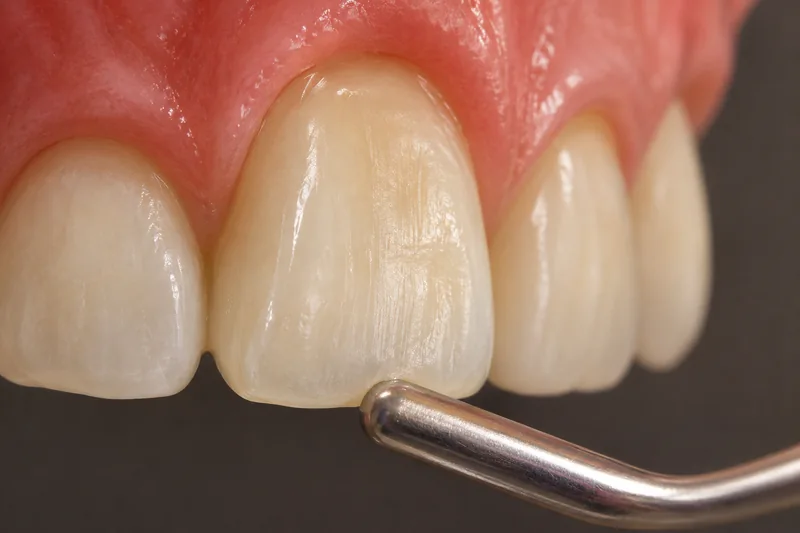
Examination starts gently. Comparable responses matter, not forceful tapping.
A sensitive tooth is considered alongside other teeth and the reported symptoms.
Sensibility tests, bite assessment or indicated imaging may provide further information. Interpretation relies on the whole picture.
Examination starts gently. Comparable responses matter, not forceful tapping.
A sensitive tooth is considered alongside other teeth and the reported symptoms.
Sensibility tests, bite assessment or indicated imaging may provide further information. Interpretation relies on the whole picture.
Supporting-tissue response.
Other teeth.
One specific cause by itself.
Three steps. No audio.
Each scene can also be selected manually.

Silent educational film with German on-screen text and simplified teaching images. Not a patient case or a promised treatment outcome. The full English explanation is available as text.
Tapping principally concerns supporting tissues. Cold or electrical tests assess sensory nerve responses.
No. Tapping assesses the response of supporting tissues. Sensibility testing addresses a different question and also has limits.
No. Other loading or tissue changes are possible. The test alone does not identify the cause.
No. Repeated or forceful tapping does not improve diagnosis. Describe the triggers and course and arrange assessment instead.
Editorially suggested question to discuss with Dr Niusha Barahmand Pour:
Which additional findings explain the tenderness to tapping?
Pain on biting or an unusually sensitive tooth can be examined selectively.
Have tooth sensitivity assessedAppointment selection at DoctolibTapping principally concerns supporting tissues. Cold or electrical tests assess sensory nerve responses.
Editorial research: . General information, not an individual diagnosis or treatment recommendation. Teaching illustrations are simplified and do not depict a patient case.