What is tested?
A tooth’s response to a stimulus such as cold.

A pulp sensibility test checks whether and how a tooth responds to a stimulus, often cold. It offers information about nerve function inside the tooth. It does not directly measure blood flow and cannot alone prove that the pulp is healthy or dead.
For dental trainees & teams
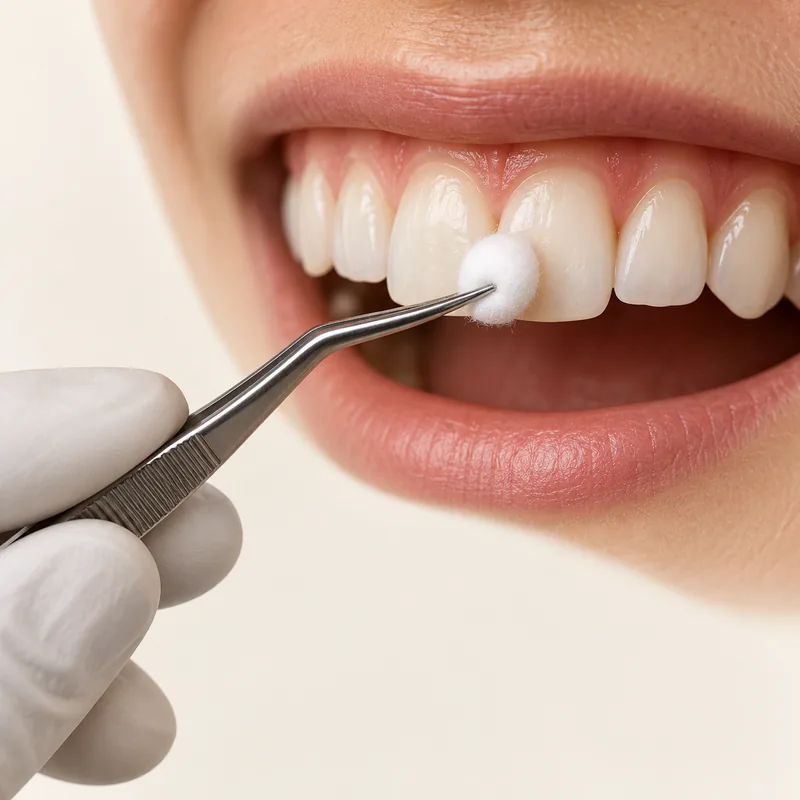
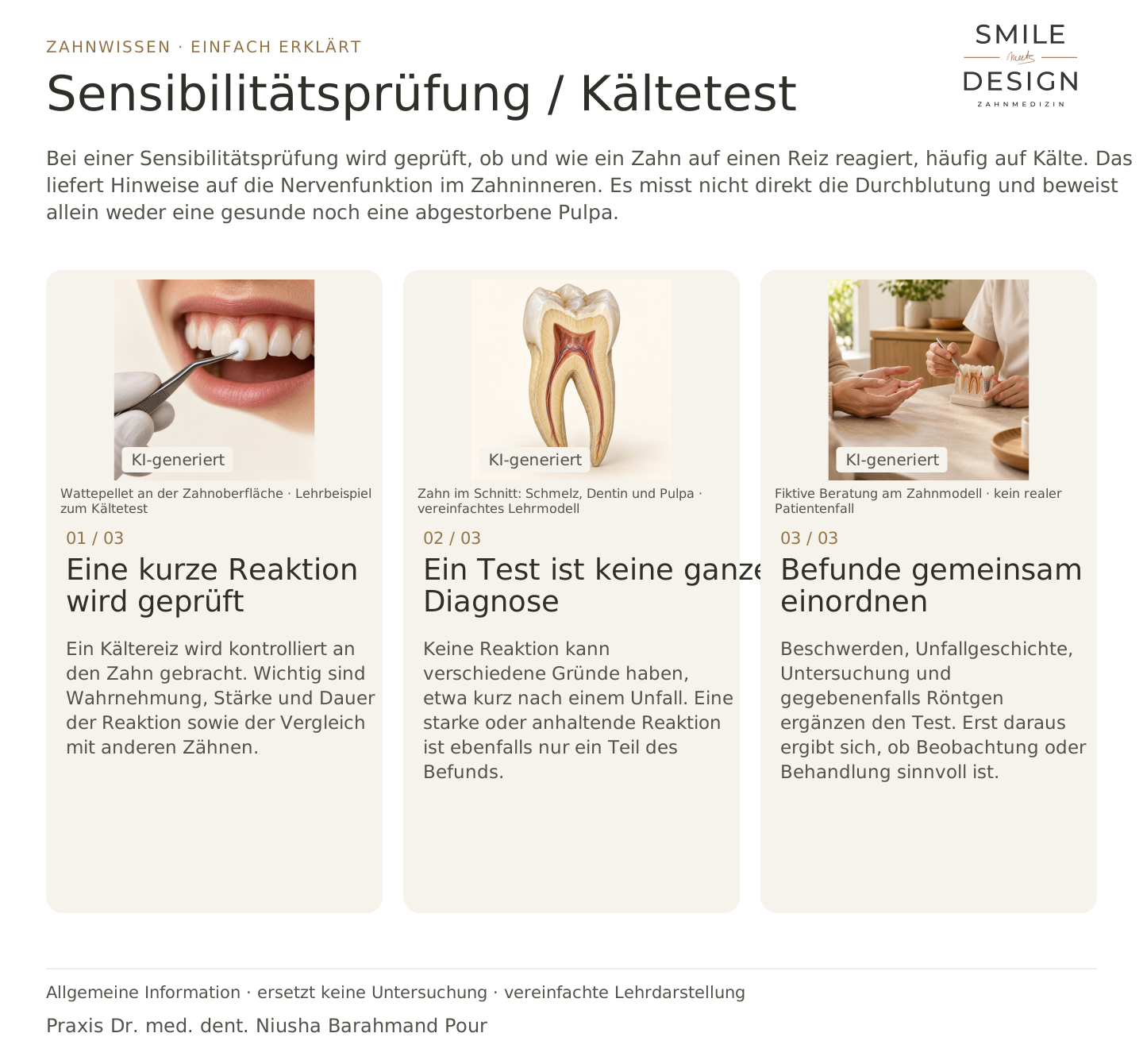
Cold is applied to the tooth in a controlled way. Perception, strength and duration of the response matter, along with comparison with other teeth.
No response can have several explanations, including a recent injury. A strong or lingering response is also only one part of the findings.
Symptoms, injury history, examination and X-rays when indicated complement the test. Together they help determine whether monitoring or treatment is appropriate.
A tooth’s response to a stimulus such as cold.
A clue about nerve function, not a stand-alone diagnosis.
Symptom history, comparison teeth, examination and imaging when needed.
Three steps. Straight to the point.
Explanations are also shown on screen.

Silent film in German · English explanations in the three views above
Sensibility means a nerve response to stimulation. Vitality refers to living, perfused tissue. The terms are often interchanged but do not mean exactly the same thing.
It is often called that in everyday use. Strictly, it tests nerve sensibility. True vitality methods assess blood supply, which is not the same thing.
No. Results can be unclear after trauma or when the stimulus does not transmit normally. Comparison tests, follow-up and other findings help interpretation.
A home test does not replace standardised examination. Uncontrolled stimuli and lack of comparison can mislead. Have the cause of symptoms assessed instead.
A question to discuss with Dr. med. dent. Niusha Barahmand Pour:
How does my tooth’s response fit the other findings, and would a follow-up check help?
Symptoms, examination findings and personal wishes form the basis of individual treatment planning.
A tooth responds differently than before? Its cause can be assessed specifically.
Have tooth sensitivity assessedChoose an appointment on DoctolibBuild on the simple explanation with clinical terms, key distinctions and a knowledge question.
The cold test must be interpreted with history and clinical examination. One positive or negative result cannot establish a precise histological pulp diagnosis.
Editorial research: 23 October 2026. This explanation covers general principles and does not replace a personal examination. Suitable treatment is discussed following individual assessment.