What does phlegmon mean?
A diffuse bacterial inflammation within tissue layers.

A phlegmon is a spreading bacterial inflammation within tissue without a clearly defined pus-filled cavity. In the mouth and jaw region it may arise from a dental infection. Prompt medical or dental assessment is needed because spread into deeper spaces can be dangerous.
For training & practice ↓
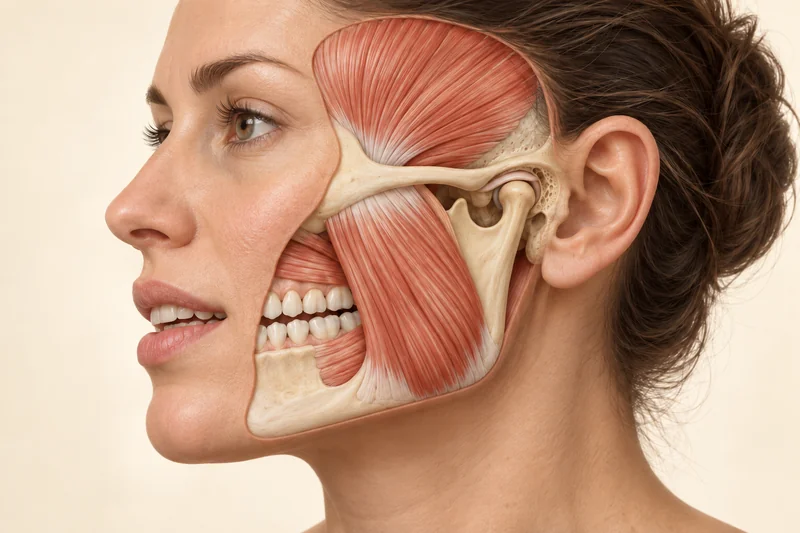
Inflammation may extend between tissue layers. Unlike a localised abscess, there may be no single encapsulated collection of pus.
Examination and, where indicated, imaging help establish the source and extent. Swelling alone does not establish a phlegmon; other causes are possible.
Treatment depends on the extent and the person’s general condition. It may include treating the source, antibiotics and surgery where needed. Warning signs require help without waiting for a routine appointment.
A diffuse bacterial inflammation within tissue layers.
Promptly; immediately for breathing or swallowing difficulties or rapid spread.
The source, extent, general condition and possible complications.
Three steps. No audio.
Each scene can also be selected manually.

Silent educational film with German on-screen text and simplified teaching images. Not a patient case or a promised treatment outcome. The full English explanation is available as text.
The distinction concerns the pattern: a contained pus-filled cavity in an abscess and diffuse spread in a phlegmon.
No. An abscess is a localised collection of pus. Phlegmon describes diffuse tissue inflammation; both patterns may coexist as an infection evolves.
Yes. Infection arising from a tooth can spread to nearby soft tissues. Its source cannot be established from the external swelling alone.
No. The source of infection also needs treatment. Examination determines the appropriate measures and whether hospital care is needed.
Seek immediate medical help for breathing or swallowing difficulties, rapidly increasing mouth or neck swelling, or feeling severely unwell; call 112 for a life-threatening emergency.
You can bring this question to your appointment:
Where is the source of infection, and do I need hospital treatment?
For new symptoms, contact a dental practice promptly. Emergency warning signs require immediate help.
Contact the practice · 0221 669 401 80Telephone contactIn radiology reports, the non-specific term phlegmon is sometimes replaced by a more precise description such as cellulitis or myositis without an abscess. This does not mean the clinical term is universally obsolete.
Editorial research: . General information, not an individual diagnosis or treatment recommendation. Teaching illustrations are simplified and do not depict a patient case.