Always painful?
No; it may be painless.

A pyogenic granuloma is a benign, blood-vessel-rich growth that can occur on the gums. Despite its name, it is not a pus-forming infection. A new, growing or readily bleeding lesion needs examination.
For training & practice ↓
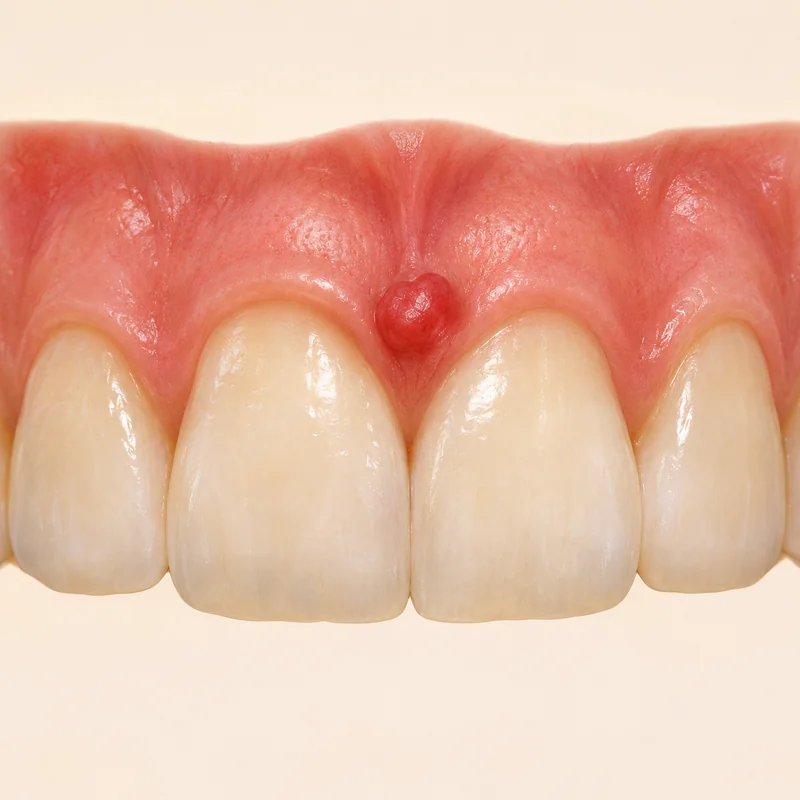
The lesion may look red and soft and bleed easily when touched. Appearance alone does not confirm the diagnosis.
Local irritation and hormonal influences may contribute. An unusual lump during pregnancy should still be assessed separately.
Management may involve removing irritants and, depending on the finding, removing and examining the lesion. Recurrence is possible, so review forms part of the plan.
No; it may be painless.
Yes, including after treatment.
Seek urgent dental or medical help.
Three steps. No audio.
Each scene can also be selected manually.

Silent educational film with German on-screen text and simplified teaching images. Not a patient case or a promised treatment outcome. The full English explanation is available as text.
Other oral lesions can look similar. Clinical assessment and, where needed, tissue examination help distinguish them.
No. It is a historical name that does not reliably describe the cause.
It may shrink, but complete disappearance is not certain. Symptoms or bleeding should be assessed beforehand.
Do not pierce, cut or apply caustic products to it. Treatments intended for skin are not instructions for oral tissue.
You can bring this question to your appointment:
How will the diagnosis be confirmed, and which irritants need attention?
An examination can clarify the finding and any need for referral.
Arrange an assessmentAppointment selection at DoctolibOther oral lesions can look similar. Clinical assessment and, where needed, tissue examination help distinguish them.
Editorial research: . General information, not an individual diagnosis or treatment recommendation. Teaching illustrations are simplified and do not depict a patient case.