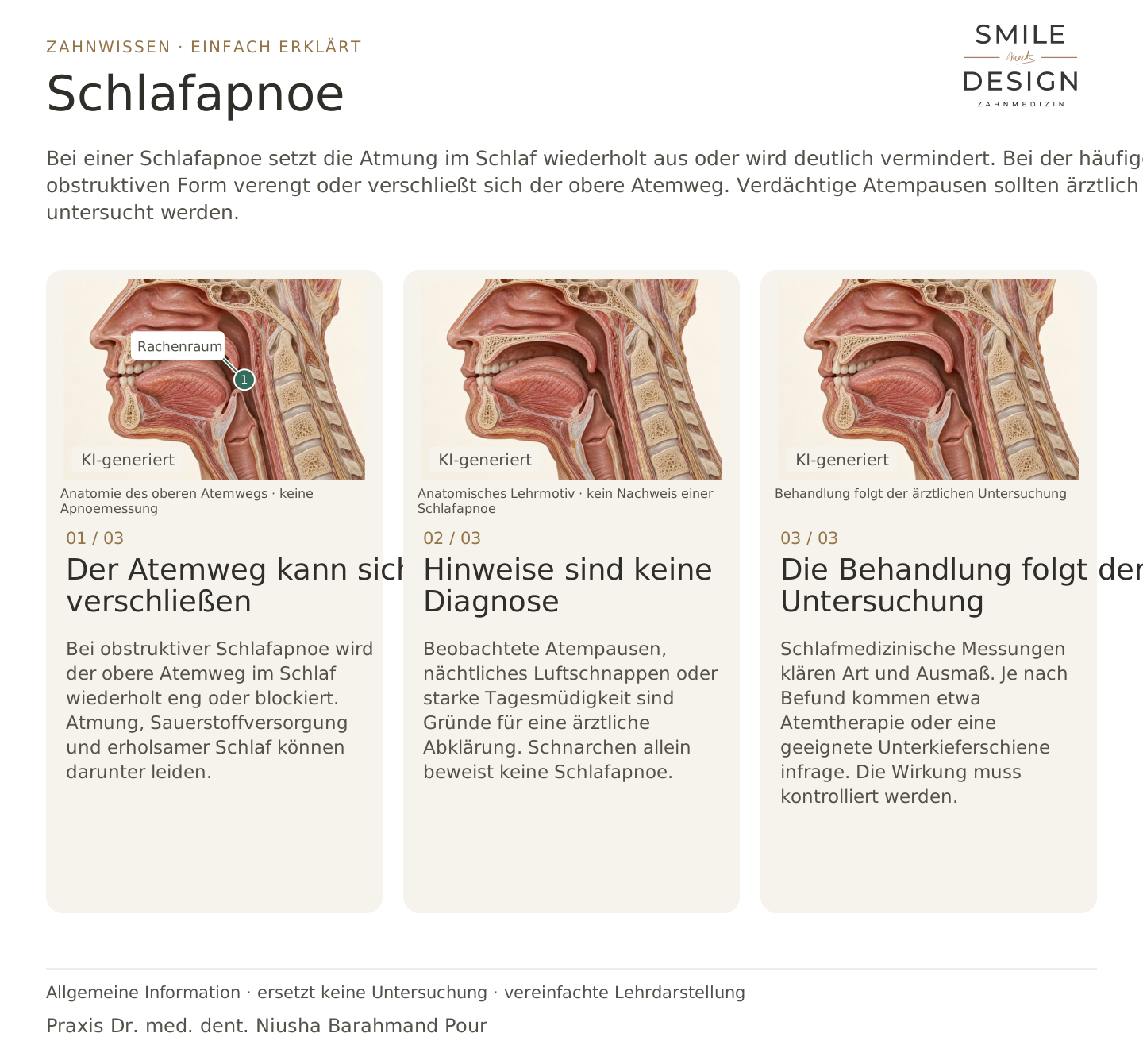
What does sleep apnoea mean?
Repeated pauses or markedly reduced breathing during sleep. In the obstructive form, the upper airway is affected.

In sleep apnoea, breathing repeatedly stops or is markedly reduced during sleep. In the common obstructive form, the upper airway narrows or closes. Suspected breathing pauses should be assessed by a doctor.
For dental trainees & teams
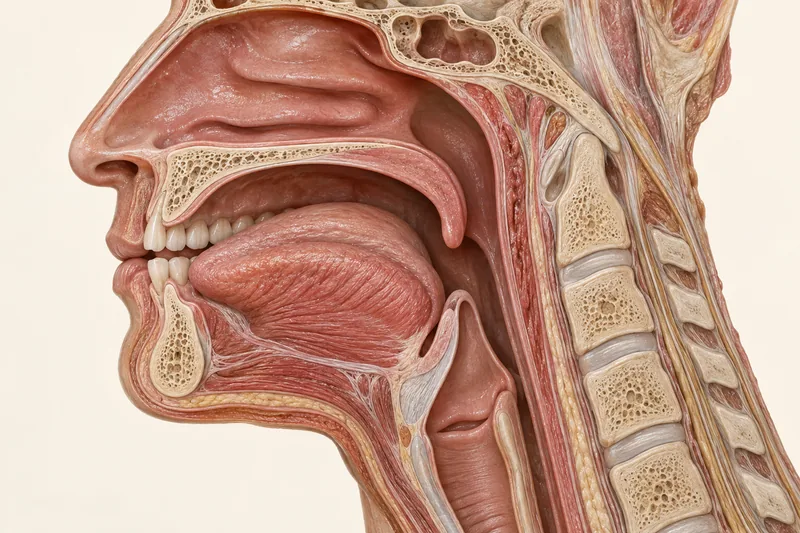
In obstructive sleep apnoea, the upper airway repeatedly narrows or becomes blocked during sleep. This can affect breathing, oxygen supply and restful sleep.
Witnessed breathing pauses, gasping at night or marked daytime sleepiness are reasons for medical assessment. Snoring alone does not prove sleep apnoea.
Sleep investigations establish the type and severity. Depending on the findings, options may include breathing therapy or a suitable mandibular advancement device. Effectiveness must be checked.
Repeated pauses or markedly reduced breathing during sleep. In the obstructive form, the upper airway is affected.
Witnessed breathing pauses, gasping and marked daytime sleepiness. Snoring alone does not allow a diagnosis.
By a doctor through medical history and sleep investigations. Treatment and follow-up depend on the type and severity of the breathing disorder.
Three steps. Straight to the point.
Explanations are also shown on screen.

Silent film in German · English explanations in the three views above
Snoring is a breathing sound. Sleep apnoea involves repeated disruption of breathing. Both can occur together, but loudness does not distinguish them.
Not reliably. Loudness or a phone recording is not enough for a diagnosis. Witnessed breathing pauses and marked daytime sleepiness should be discussed with a doctor.
Yes. In the obstructive form, the airway is narrowed or blocked. In the central form, the control of breathing is impaired. Treatment depends on the type.
No. A mandibular advancement device may be suitable for selected people with obstructive sleep apnoea. Medical assessment, a dental suitability check and effectiveness checks are necessary.
A question to discuss with Dr. med. dent. Niusha Barahmand Pour:
Which sleep investigations are needed, and which dental questions would need assessment for an oral appliance?
A dental assessment can establish the conditions in the mouth. Sleep apnoea also requires medical assessment and ongoing care.
Please have breathing pauses or marked daytime sleepiness assessed by a doctor. You can contact us with dental questions about an oral appliance.
Discuss questions about an oral applianceArrange an appointment with the practiceBuild on the simple explanation with clinical terms, key distinctions and a knowledge question.
Obstructive events result from an impaired airway; central events involve disturbed respiratory drive. Treatment must distinguish between them.
Editorial research: 23 October 2026. This explanation covers general principles and does not replace a personal examination. Suitable treatment is discussed following individual assessment.