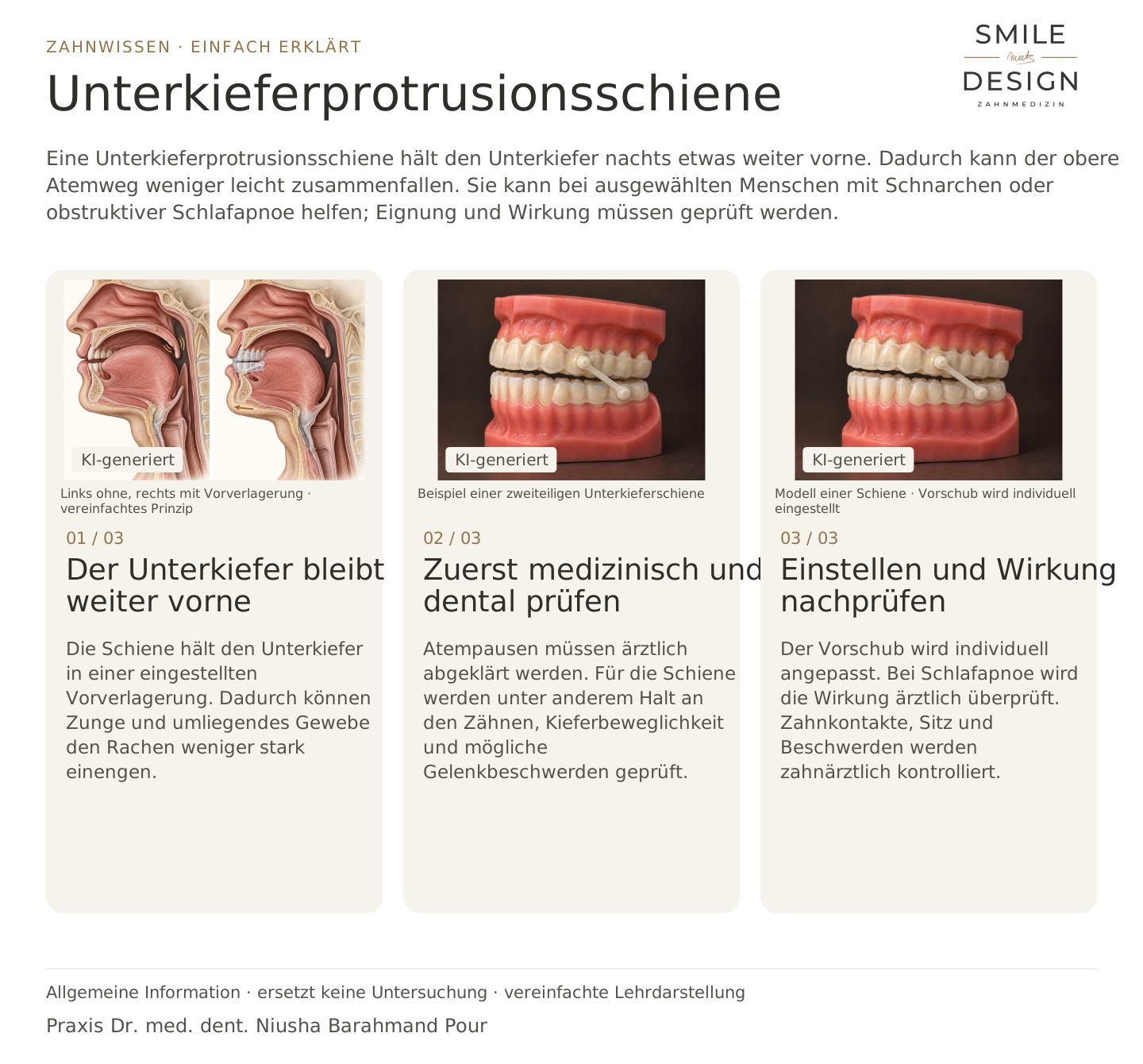
What does an advancement device do?
It holds the lower jaw further forwards at night and can thereby reduce narrowing of the upper airway.

A mandibular advancement device holds the lower jaw slightly further forwards at night. This can make the upper airway less likely to collapse. It may help selected people with snoring or obstructive sleep apnoea; suitability and effectiveness must be checked.
For dental trainees & teams
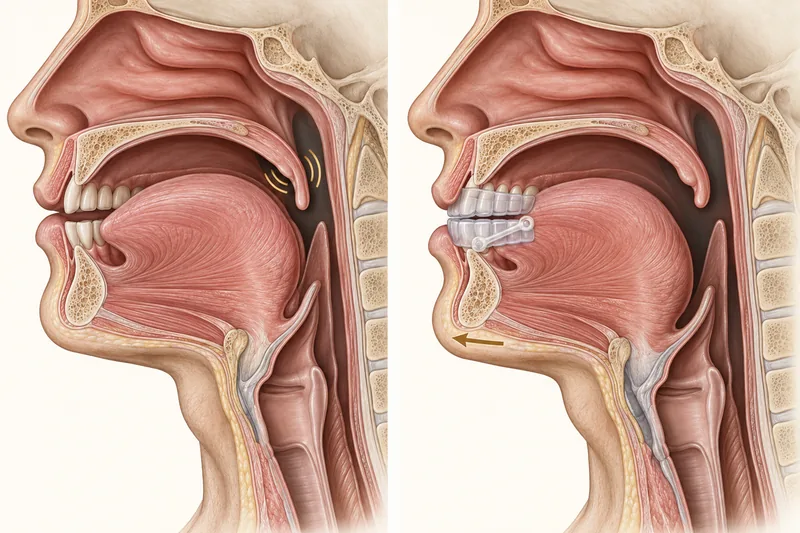
The device holds the lower jaw at an adjusted forward position. This can reduce narrowing of the throat by the tongue and surrounding tissue.
Breathing pauses need medical assessment. Dental checks for the device include support from the teeth, jaw movement and any joint symptoms.
The amount of advancement is adjusted individually. In sleep apnoea, a doctor checks its effectiveness. The dentist checks tooth contacts, fit and symptoms.
It holds the lower jaw further forwards at night and can thereby reduce narrowing of the upper airway.
Selected people following medical assessment and a dental suitability check. It is not a general solution for every breathing disorder.
The device is custom-made and adjusted. In sleep apnoea, its effect is checked medically; fit, tooth contacts and tolerability are monitored by the dentist.
Three steps. Straight to the point.
Explanations are also shown on screen.

Silent film in German · English explanations in the three views above
A bite splint is mainly used for protection and relief of strain within the chewing system. An advancement device deliberately changes the lower-jaw position at night to influence the airway.
No. A mandibular advancement device deliberately holds the lower jaw further forwards. A conventional bite splint does not have this purpose and is not a substitute.
No. The breathing disorder may persist despite quieter sleep. In sleep apnoea, effectiveness must be checked medically; the sound alone is not enough.
Pressure on the teeth, increased saliva, dry mouth or jaw discomfort are possible. Tooth contacts can also change. Report symptoms at a review; do not increase the advancement yourself.
A question to discuss with Dr. med. dent. Niusha Barahmand Pour:
Are my teeth and jaw suitable for an advancement device, and how will its effectiveness be checked medically?
Dental planning considers the starting situation and function. In sleep apnoea, this is complemented by the necessary medical assessment and monitoring.
Following medical assessment, the conditions in the mouth can be checked for an oral appliance.
Arrange an oral appliance consultationArrange an appointment with the practiceBuild on the simple explanation with clinical terms, key distinctions and a knowledge question.
In sleep apnoea, dental checks of fit and tolerability do not replace medical assessment of the breathing disorder.
Editorial research: 23 October 2026. This explanation covers general principles and does not replace a personal examination. Suitable treatment is discussed following individual assessment.