Does bruxism have to be audible?
No. Silent clenching is one possible form. Chewing muscle activity can occur during sleep as well as while awake.

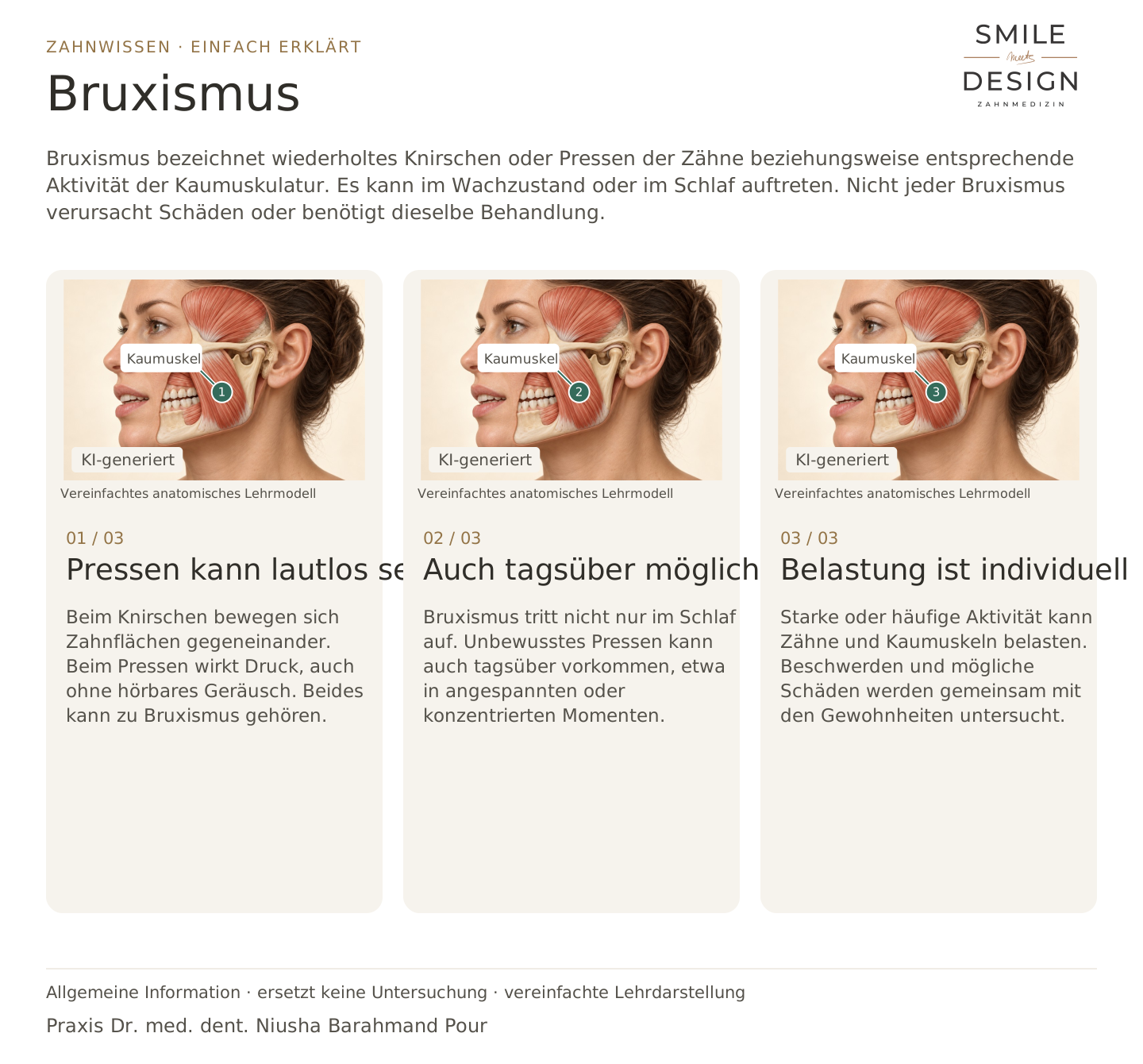
Bruxism refers to repeated teeth grinding or clenching, or related activity of the chewing muscles. It can occur while awake or asleep. Not all bruxism causes damage or needs the same treatment.
For dental trainees & teams
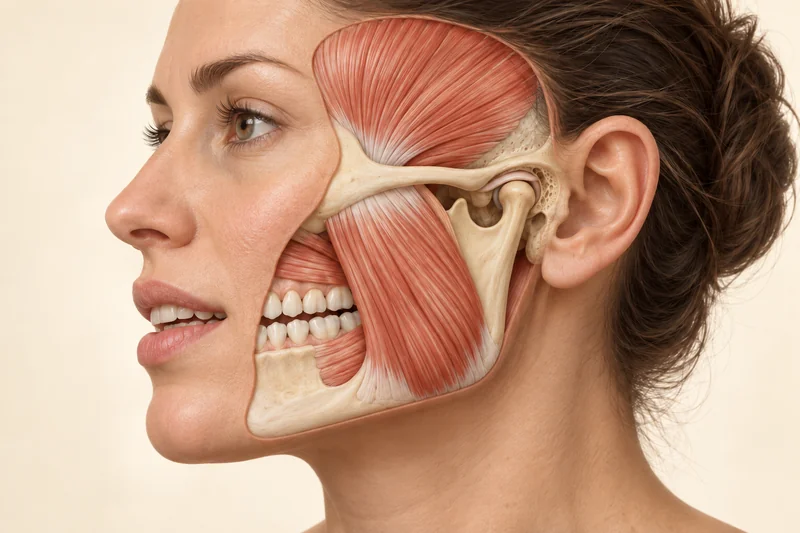
Grinding involves tooth surfaces moving against each other. Clenching applies pressure, even without an audible sound. Both can be forms of bruxism.
Bruxism does not occur only during sleep. Unconscious clenching can also happen during the day, for example when feeling tense or concentrating.
Strong or frequent activity can strain the teeth and chewing muscles. Symptoms and possible damage are assessed alongside habits.
No. Silent clenching is one possible form. Chewing muscle activity can occur during sleep as well as while awake.
Stress, predisposition, certain medicines or substance use may play a role, among other factors. A single cause cannot always be identified.
Strong or frequent strain can affect the teeth and chewing muscles. Whether protection or treatment is useful depends on symptoms and examination findings.
Three steps. Straight to the point.
Explanations are also shown on screen.

Silent film in German · English explanations in the three views above
Bruxism describes muscle activity such as clenching and grinding. Temporomandibular disorders (TMD, known as CMD in German) involve symptoms and functional problems in the jaw system. The terms do not mean the same thing.
No. Several factors may contribute, including stress, predisposition, certain medicines or substance use. A single cause cannot always be identified.
No. Tooth wear can have different causes. Assessment requires an examination and information about symptoms and habits.
No. The level of strain, symptoms and examination findings matter, among other factors. A splint may be useful to protect the teeth.
A question to discuss with Dr. med. dent. Niusha Barahmand Pour:
Are there effects on my teeth or chewing muscles that need treatment, and what would treatment aim to achieve?
Alongside preserving teeth, Dr. Barahmand Pour's practice profile explicitly considers how the bite functions.
Observed grinding, clenching or jaw symptoms can be assessed through a discussion and examination.
Discuss grinding and clenchingChoose an appointment on DoctolibBuild on the simple explanation with clinical terms, key distinctions and a knowledge question.
Bruxism describes muscle activity. TMD refers to symptoms or functional problems. They may occur together, but are not the same thing.
Editorial research: 22 October 2026. This explanation covers general principles and does not replace a personal examination. Suitable treatment is discussed following individual assessment.