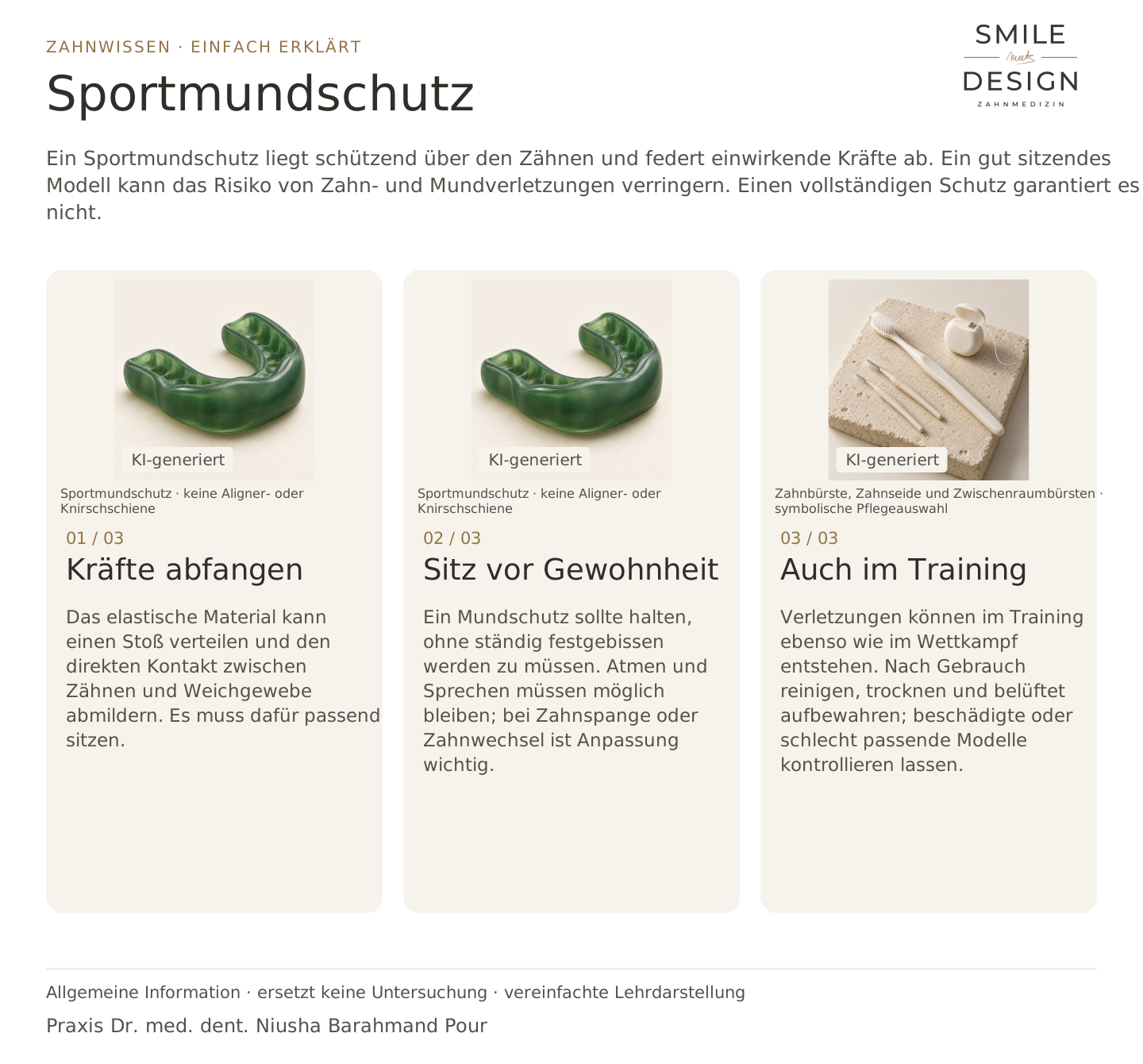
What does it protect?
Mainly teeth and nearby soft tissues during impacts.

A sports mouthguard covers the teeth and cushions impact. A well-fitting guard can reduce the risk of dental and oral injury. It does not guarantee complete protection.
For dental trainees & teams
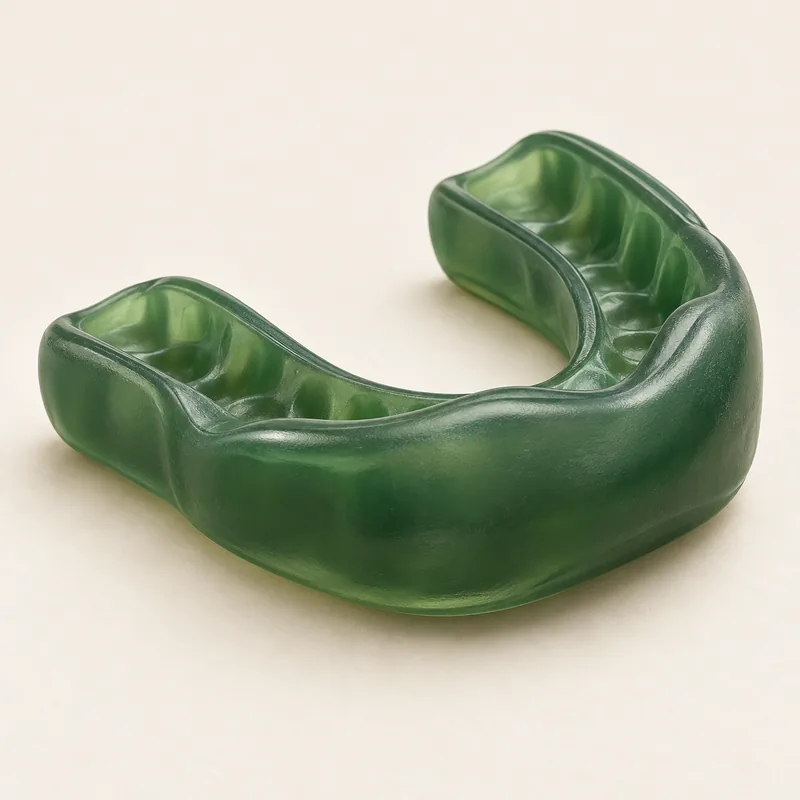
Resilient material can distribute impact forces and soften contact between teeth and soft tissues. It needs to fit appropriately to do so.
A mouthguard should stay in place without constant clenching. Breathing and speaking should remain possible; braces or changing teeth require attention to fit.
Injuries happen during training as well as competition. Clean after use, allow it to dry and store it ventilated; have damage or poor fit checked.
Mainly teeth and nearby soft tissues during impacts.
People taking part in activities with meaningful oral-injury risk.
Fit, condition, breathing and changes caused by growth or dental treatment.
Three steps. Straight to the point.
Explanations are also shown on screen.

Silent film in German · English explanations in the three views above
Sports guards are intended for impact protection; a bite splint is made for a different dental purpose.
Not automatically. Grinding splints, aligners and sports mouthguards have different purposes and material requirements.
No. Ball, contact and other sports involving falls or impacts may also warrant protection.
That cannot be guaranteed. It replaces neither an appropriate helmet nor other required safety equipment.
A question to discuss with Dr. med. dent. Niusha Barahmand Pour:
Which kind of mouthguard suits my sport and tooth positions?
Individual findings are the basis for discussing appropriate next steps.
The sport, tooth positions and any existing appliances should be considered together.
Discuss suitable mouth protectionChoose an appointment on DoctolibBuild on the simple explanation with clinical terms, key distinctions and a knowledge question.
A sports-protection purpose cannot be assumed merely because something is called a dental appliance.
Editorial research: 23 October 2026. This explanation covers general principles and does not replace a personal examination. Suitable treatment is discussed following individual assessment.